
Weaving process for anti-electromagnetic-radiation air layer weft knitted fabric
An anti-electromagnetic radiation, knitted fabric technology, applied in weft knitting, knitting, textiles and papermaking, etc., can solve the problems of high price, influence of fiber main performance, electromagnetic radiation leakage, etc., to achieve strong anti-electromagnetic radiation performance, electromagnetic shielding High efficiency, avoids the effect of high buckling
- Summary
- Abstract
- Description
- Claims
- Application Information
AI Technical Summary
Problems solved by technology
Method used
Image

Examples
Embodiment 1
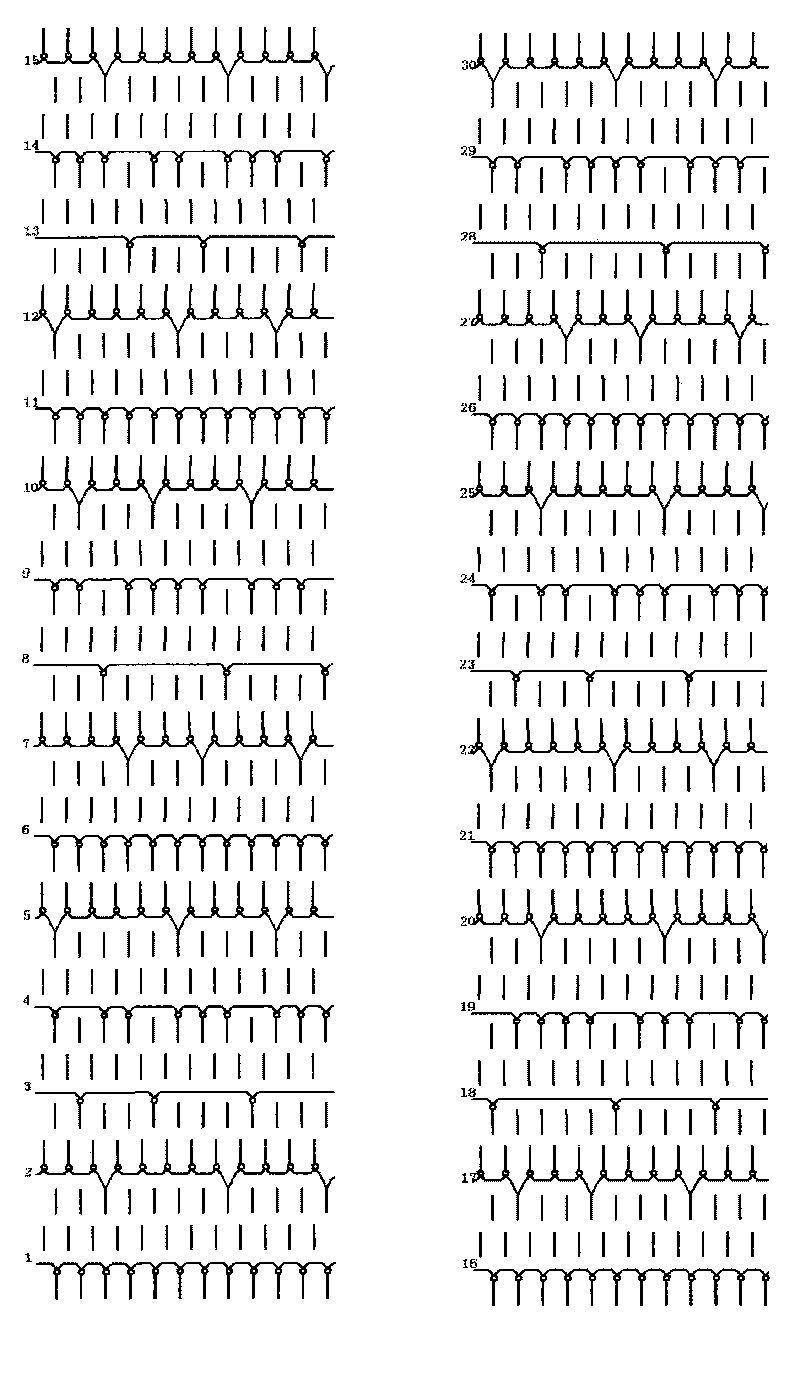
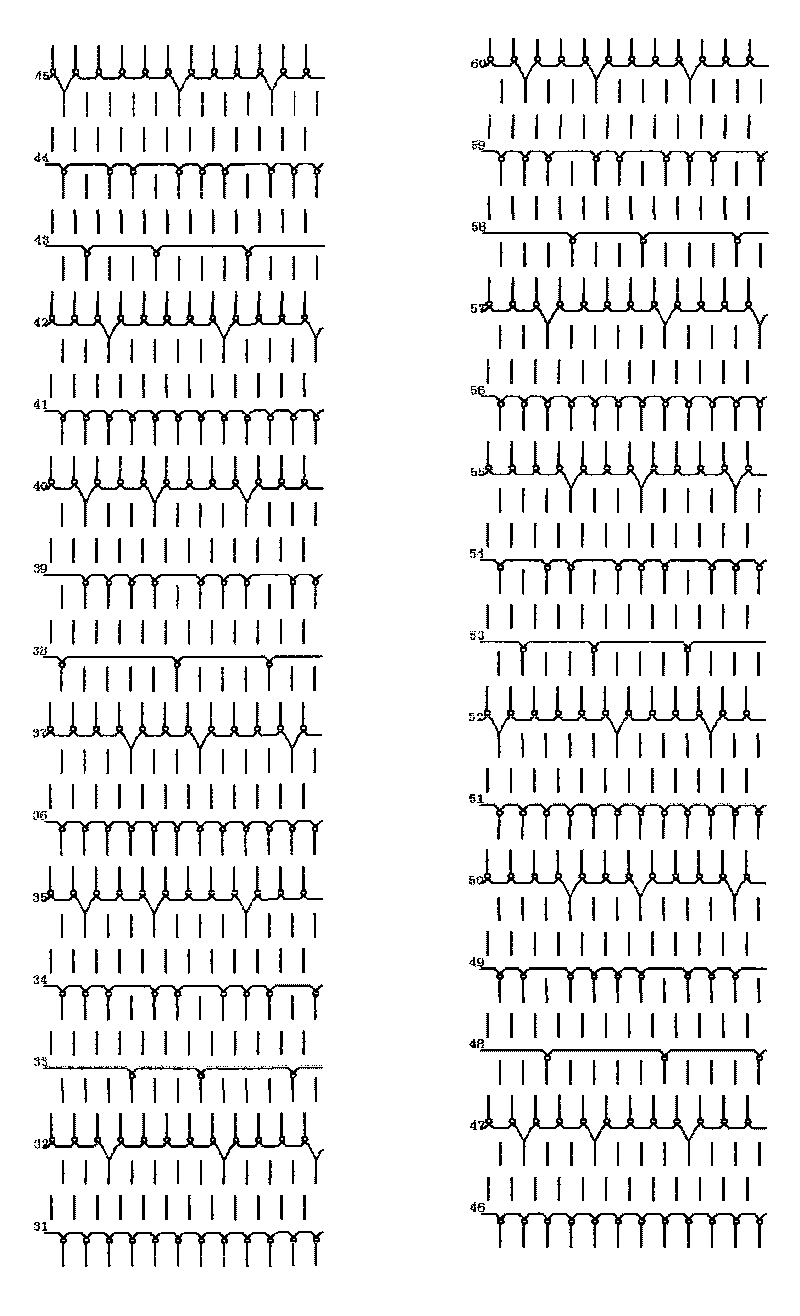
[0012] A weaving process of anti-electromagnetic radiation air layer weft-knitted fabric, the front and back of the knitted fabric are made of cotton or polyester-cotton blended as raw material through loom weaving, the invention adopts double-sided small jacquard air layer structure to produce the weave of the fabric, In the knitted fabric, stainless steel filaments are woven in parallel, and the stainless steel filaments form coils in a local loop on the front of the fabric, while the floating length between adjacent stainless steel filament coils is in the middle of the air layer structure. like figure 1 As shown, the production process of the double-sided dobby air layer structure refers to the loom on the , 42, 45, 47, 50, 52, 55, 57, 60 Weaving cotton or polyester-cotton blended raw materials to form the reverse side of the fabric, No. 1, 3, 4, 6, 8, 9, 11, 13, 14, 16, 18 , 19, 21, 23, 24, 26, 28, 29, 31, 33, 34, 36, 38, 39, 41, 43, 44, 46, 48, 49, 51, 53, 54, 56, 58, 5...
PUM
 Login to View More
 Abstract
Description
Claims
Application Information
 Login to View More