
Intermediate temperature retarder in oil well cement
A technology of oil well cement and temperature slowing, applied in the direction of drilling composition, chemical instruments and methods, etc., can solve the problems of no gelation, etc., achieve short thickening transition time, good regularity and operability, and apply Wide temperature range effect
- Summary
- Abstract
- Description
- Claims
- Application Information
AI Technical Summary
Problems solved by technology
Method used
Image

Examples
Embodiment 1
[0018] Weigh various samples according to the following parts by weight:
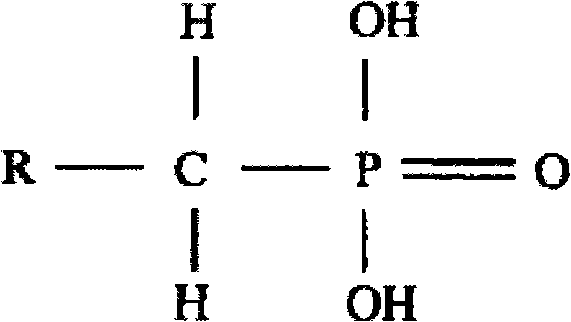
[0019] Water: sodium hydroxyethylidene diphosphonate: citric acid: boric acid: alkylene phosphonic acid = 1: 0.02: 0.02: 0.05: 0.01
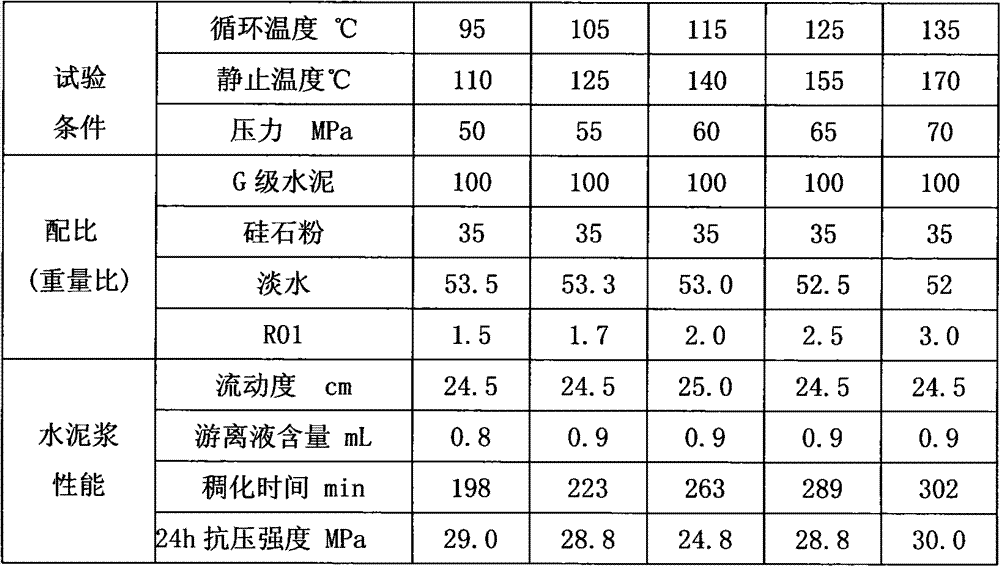
[0020] Add the above-mentioned materials in turn into the stirring cup, turn on the stirrer, the stirring speed is 4000r / min, and the stirring time is 5min to make a medium temperature retarder. Use R01 as the retarder code.
[0021] Mix the cement slurry performance of this retarder under the different test conditions of table 1
[0022]
Embodiment 2
[0024] Weigh various samples according to the following proportions:
[0025] Water: sodium hydroxyethylidene diphosphonate: glucoheptanoic acid: boric acid: alkylene phosphonic acid = 1: 0.01: 0.03: 0.08: 0.01
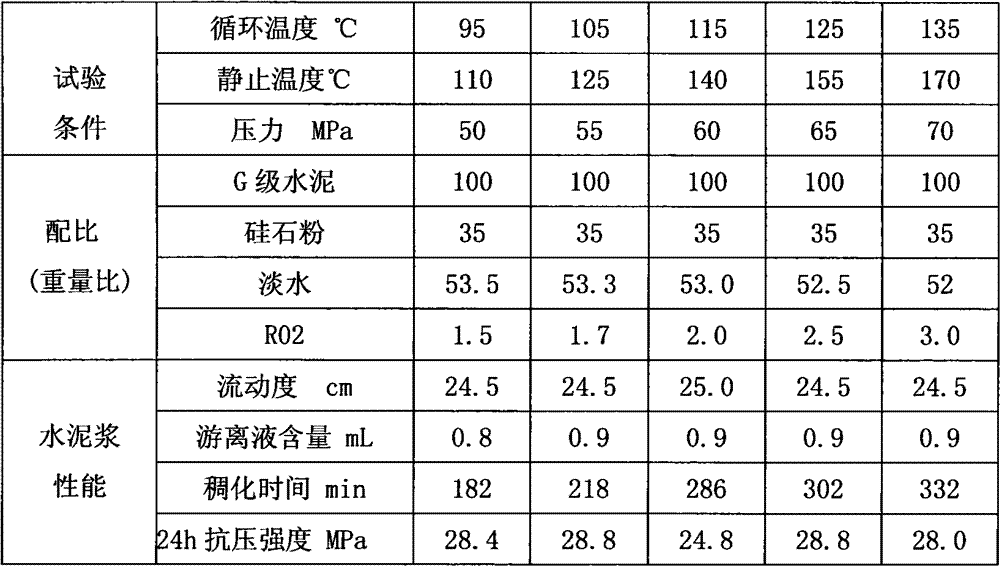
[0026] Add the above-mentioned materials in turn into the stirring cup, turn on the stirrer, the stirring speed is 4000r / min, and the stirring time is 5min to make a medium temperature retarder. Use R02 as the retarder code.
[0027] Mix the cement slurry performance of this retarder under the different test conditions of table 2
[0028]
Embodiment 3
[0030] Weigh various samples according to the following proportions:
[0031] Water: sodium hydroxyethylidene diphosphonate: gluconic acid: boric acid: alkylene phosphonic acid = 1: 0.05: 0.02: 0.10: 0.02
[0032] Add the above-mentioned materials in turn into the stirring cup, turn on the stirrer, the stirring speed is 4000r / min, and the stirring time is 5min to make a medium temperature retarder. Use R02 as the retarder code.
[0033] Mix the cement slurry performance of this retarder under the different test conditions of table 2
[0034]
PUM
 Login to View More
 Abstract
Description
Claims
Application Information
 Login to View More