
Ground moving target detection and parameter estimation method
A ground moving target and moving target technology, applied in the field of synthetic aperture radar signal processing, can solve the problems of increasing the number of antennas, hardware and storage burden, blurring the range and speed, and increasing the complexity of the system.
Patent Information
- Authority / Receiving Office
- CN · China
- Patent Type
- Patents(China)
- Current Assignee / Owner
- Publication Date
- 2013-04-03
- Estimated Expiration
- Not applicable · inactive patent
Smart Images
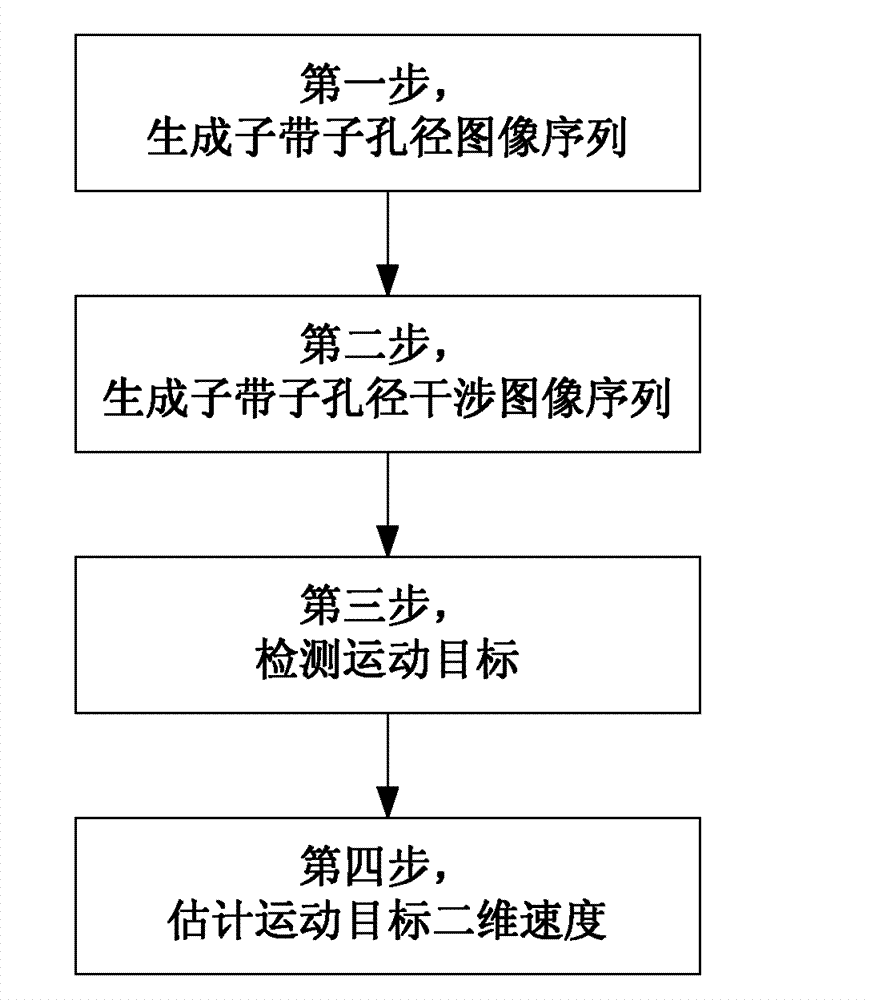
Figure 1 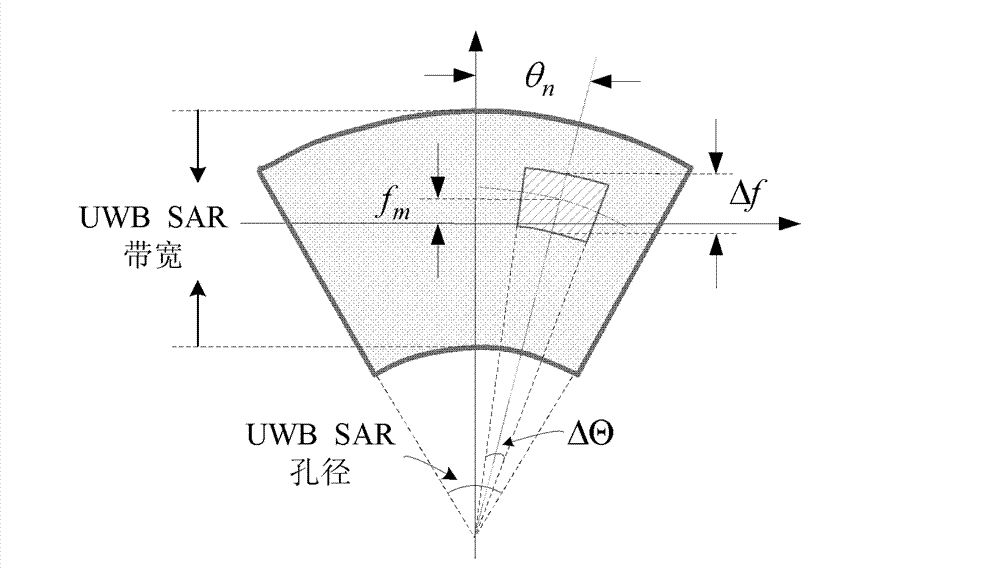
Figure 2 
Figure 3
Abstract
Description
technical field
[0001] The invention belongs to the technical field of synthetic aperture radar signal processing, and relates to a ground moving target detection and parameter estimation method, especially using three-channel UWB SAR (Ultra Wide-band Synthetic Aperture Radar, Ultra Wide-band Synthetic Aperture Radar) images to detect ground moving targets Detection and parameter estimation methods. Background technique
[0002] The UWB SAR system is an imaging radar capable of penetrating foliage and capable of obtaining two-dimensional high-resolution simultaneously. The multi-channel UWB SAR system is used to realize the GMTI (Ground Moving Target Indication, Ground Moving Target Indication) function, which can conduct reconnaissance, surveillance and imaging of stationary and moving targets in a wide range of open flat or leaf-covered areas. UWB SAR images use the phase difference between moving and stationary targets to detect moving targets. Due to the longer coherent...
Examples
Embodiment Construction
[0048] figure 1 It is the realization flow chart of the present invention. The whole process is mainly divided into four steps: the first step is to generate the sub-strip sub-aperture image sequence, the second step is to generate the sub-strip sub-aperture interference image sequence, the third step is to detect the moving target, and the fourth step is to estimate the radial velocity and two-dimensional velocity of the moving target.
[0049] The first step is to pay attention to the selection of sub-band bandwidth, sub-aperture accumulation angle, sub-band center frequency, and sub-aperture viewing angle in the process of sub-band sub-aperture image generation. The relationship between resolution and defocus of moving objects needs to be considered. If the target speed is high, a lower resolution is required, and the sub-band bandwidth and sub-aperture accumulation angle can be smaller; if the target speed is low, a higher resolution is required, and the sub-band bandwidt...