
Method of advanced treatment of high concentration phosphorus sewage and recycling of phosphorus
A technology of advanced treatment and phosphorus recovery, which is applied in the directions of water/sewage multi-stage treatment, light water/sewage treatment, water/sludge/sewage treatment, etc. Large area and other issues
- Summary
- Abstract
- Description
- Claims
- Application Information
AI Technical Summary
Problems solved by technology
Method used
Image

Examples
Embodiment 1
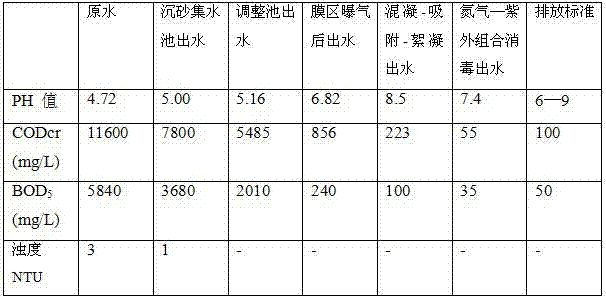
[0033] In this embodiment, the sewage discharged from a certain chemical factory in Nanjing, which is inferior to Class V, is subjected to advanced treatment to reach the level of surface water Class III (TN < 15 mg / L), and the daily treatment capacity is 10 tons.
[0034] The micro-polluted water treatment steps of this embodiment are as follows:
[0035] a) Precipitation
[0036] The sewage collected by the sewage pipeline is filtered through the coarse grid to remove solid impurities and then enters the sand settling sump.
[0037] The water pump pumps up the sewage from the sand settling tank, filters a small amount of mud and sand through a fine grid, and then enters the adjustment tank. Through the circulating water pump and the connected jet device, the perforated aeration pipe installed at the bottom of the tank is used to aerate and stir the water body to maintain The water quality is relatively stable.
[0038] b) Convert phosphorus in sewage into phosphine and rem...
Embodiment 2
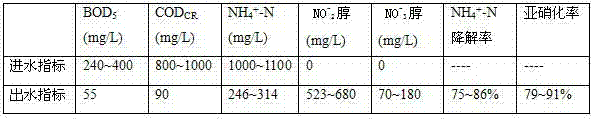
[0066] In this embodiment, the sewage discharged from a certain chemical factory in Nanjing, which is inferior to Class V, is subjected to advanced treatment to reach the level of surface water Class III (TN < 15 mg / L), and the daily treatment capacity is 10 tons.
[0067] The micro-polluted water treatment steps of this embodiment are as follows:
[0068] a) Precipitation
[0069] The sewage collected by the sewage pipeline is filtered through the coarse grid to remove solid impurities and then enters the sand settling sump.
[0070] The water pump pumps up the sewage from the sand settling tank, filters a small amount of mud and sand through a fine grid, and then enters the adjustment tank. Through the circulating water pump and the connected jet device, the perforated aeration pipe installed at the bottom of the tank is used to aerate and stir the water body to maintain The water quality is relatively stable.
[0071] b) Convert phosphorus in sewage into phosphine and rem...
Embodiment 3
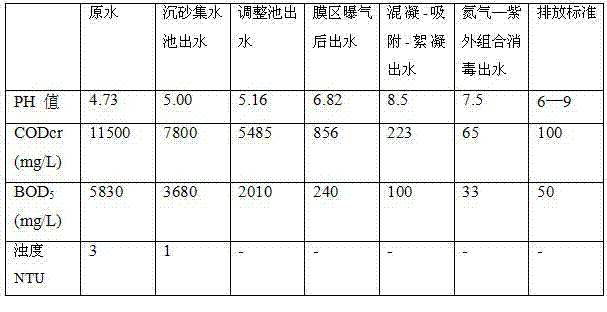
[0099] In this embodiment, the sewage discharged from a certain pesticide factory in Nanjing, which is inferior to Class V, is subjected to advanced treatment to reach the level of surface water Class III (TN < 15 mg / L), with a daily treatment capacity of 15 tons.
[0100] The micro-polluted water treatment steps of this embodiment are as follows:
[0101] a) Precipitation
[0102] The sewage collected by the sewage pipeline is filtered through the coarse grid to remove solid impurities and then enters the sand settling sump.
[0103] The water pump pumps up the sewage from the sand settling tank, filters a small amount of mud and sand through a fine grid, and then enters the adjustment tank. Through the circulating water pump and the connected jet device, the perforated aeration pipe installed at the bottom of the tank is used to aerate and stir the water body to maintain The water quality is relatively stable.
[0104] b) Convert phosphorus in sewage into phosphine and rem...
PUM
 Login to View More
 Abstract
Description
Claims
Application Information
 Login to View More