Texture image segmentation method based on immunity cloning and multitarget optimizing

A multi-objective optimization and texture image technology, applied in the field of image processing, can solve the problems of only optimizing category compactness and only optimizing space separation, so as to achieve optimal image segmentation effect and improve efficiency

CN103310441AInactive Publication Date: 2013-09-18陕西国博政通信息科技有限公司
3 Cites 6 Cited by

Patent Information

Authority / Receiving Office
CN · China
Current Assignee / Owner
Publication Date
2013-09-18
Estimated Expiration
Not applicable · inactive patent

Smart Images

  • Figure 1
    Figure 1
  • Figure 2
    Figure 2
  • Figure 3
    Figure 3
Patent Text Reader

Abstract

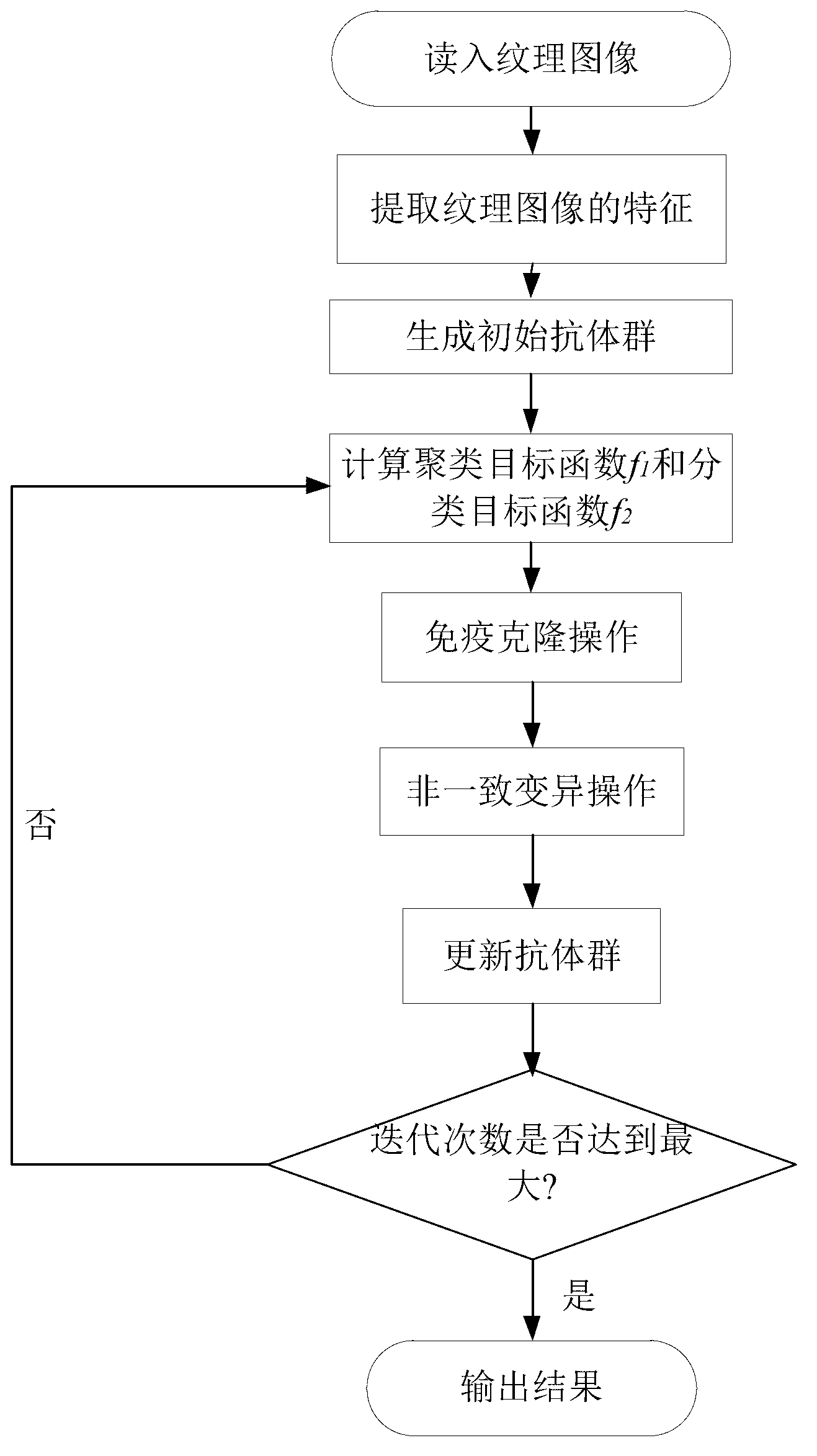
The invention provides an immunity cloning and multitarget optimizing texture image segmentation method. The method is mainly used for solving the problem in the prior art that the segmentation effect is poor caused by the fact that only spatial separation degree or category compactness is optimized. The method comprises the implementation steps: (1) reading a texture image and extracting a characteristic matrix G from the texture image; (2) generating an initial antibody group V(t) and carrying out initial setting; (3) calculating a clustering objective function f1 and a categorization objective function f2 according to the characteristic matrix G and the antibody group V(t); (4) carrying out immunity cloning operation on the antibody group V(t) so as to obtain a cloned antibody group Vc(t); (5) carrying out non-uniform mutation operation on the cloned antibody group Vc(t) so as to obtain an antibody group Vm(t) subjected to non-uniform mutation; (6) carrying out population updating operation on the antibody group Vm(t) subjected to non-uniform mutation so as to obtain an updated antibody group Vm(t+1); and (7) calculating the categories of all pixels in the texture image according to the updated antibody group Vm(t+1) and the characteristic matrix G. The method has the advantages of high segmentation efficiency and good image segmentation effect and can be used for extracting and obtaining detailed information on the texture image.
Need to check novelty before this filing date? Find Prior Art

Description

technical field

[0001] The invention belongs to the field of image processing and relates to image segmentation, in particular to a texture image segmentation method which can be used to extract and obtain detailed information of texture images. Background technique

[0002] Texture image segmentation is one of the key technologies in computer vision and image processing, and it is also a research hotspot in the fields of artificial intelligence and pattern recognition.

[0003] Texture image segmentation can be considered as the problem of clustering the pixels of the image. Clustering is the process of dividing the data points in the data set into several categories that are similar in nature through certain rules. So far, most clustering-based image segmentation only optimizes an objective function, and these objective functions are usually only based on a certain type of feature of the dataset, such as spatial separation, or category compactness.

[0004] Currently the ...

Examples

Embodiment Construction

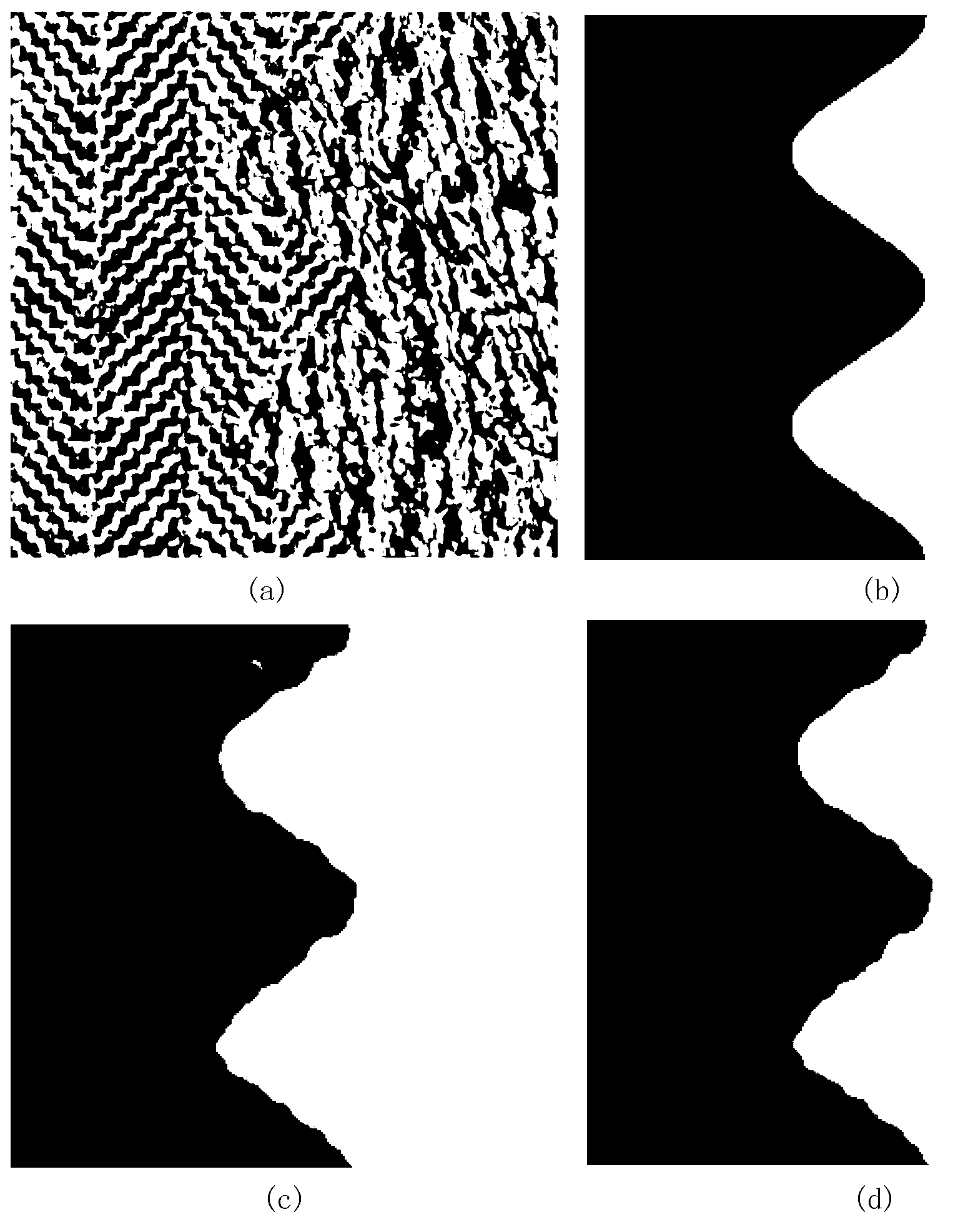
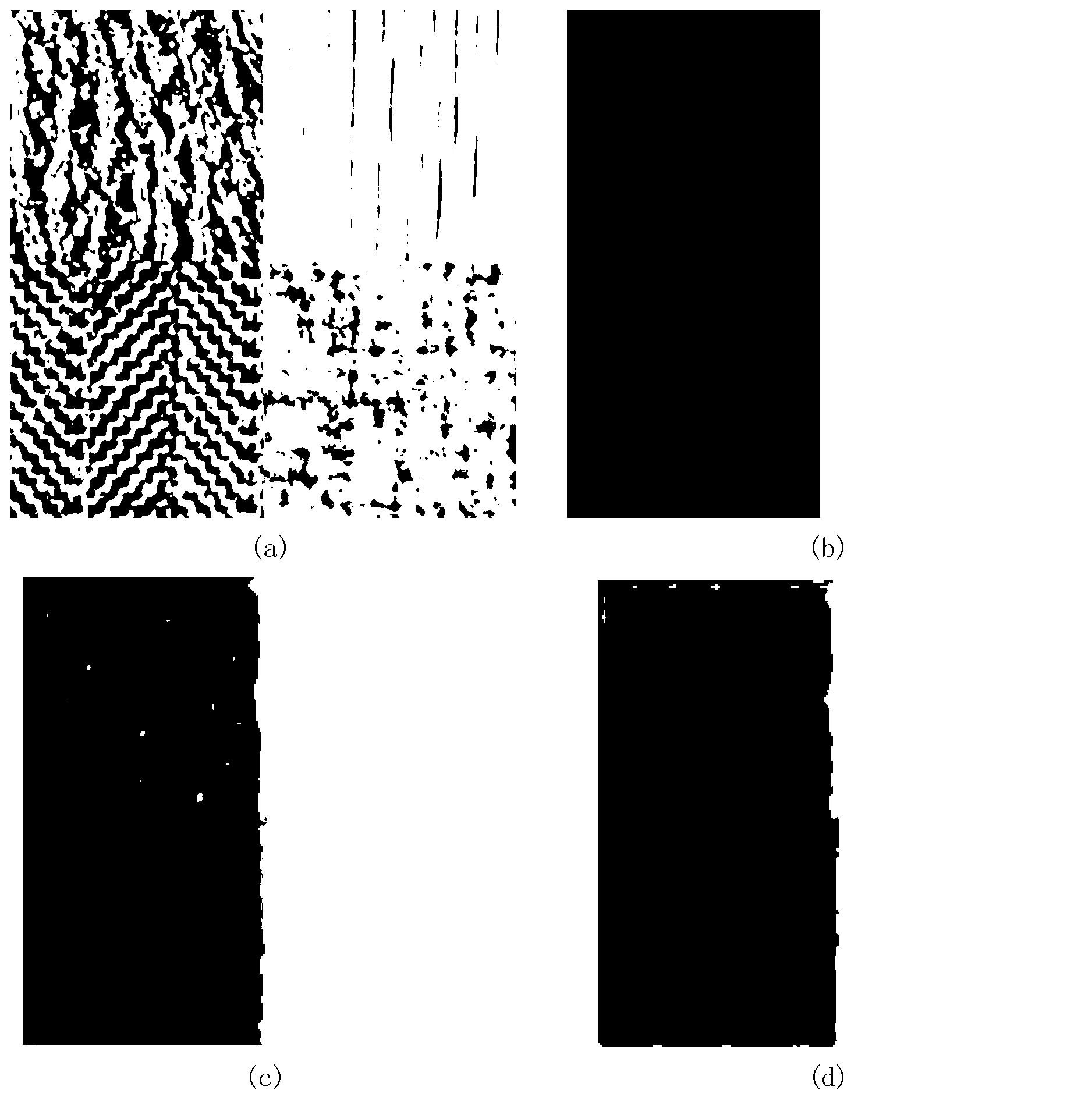
[0035] The technical solutions and technical effects of the present invention will be further described in detail below in conjunction with the accompanying drawings.

[0036] refer to figure 1 , the specific implementation steps of the present invention are as follows

[0037] Step 1, read the texture image.

[0038] In the example of the present invention, a texture image with a size of P is read in, and P=256×256.

[0039] Step 2, extracting the feature matrix of the texture image.

[0040] The method for extracting texture image feature matrix generally has wavelet decomposition, LBP, Gabor filtering and gray level co-occurrence matrix, in the example of the present invention, use but not limited to Gabor filter and gray level co-occurrence matrix to extract the feature matrix of texture image, will extract The characteristic matrix G is expressed as: G 2 [g 1 , g 2 ..., g i ,... g P ], where g i is the i-th feature in the feature matrix, i=1,...,P.

[0041] Step ...