Unlock instant, AI-driven research and patent intelligence for your innovation.

Pass-pattern authentication for computer-based security

A technology of direction mode and verification mechanism, applied in the direction of digital data authentication, etc., can solve problems such as violating the original intention of passwords, difficulty in remembering passwords for users, and increased vulnerability to attacks

Inactive Publication Date: 2013-10-30
IBM CORP
View PDF5 Cites 1 Cited by
  • Summary
  • Abstract
  • Description
  • Claims
  • Application Information

AI Technical Summary

Problems solved by technology

However, the more stringent the password creation requirements, the greater the likelihood that users will have difficulty remembering the password
If the password is too difficult to remember, users will tend to write it down and carry it with them or keep it near the device used for authentication, which greatly increases the vulnerability and may even defeat the original purpose of setting the password

Method used

the structure of the environmentally friendly knitted fabric provided by the present invention; figure 2 Flow chart of the yarn wrapping machine for environmentally friendly knitted fabrics and storage devices; image 3 Is the parameter map of the yarn covering machine
View more

Image

Smart Image Click on the blue labels to locate them in the text.
Viewing Examples
Smart Image
  • Pass-pattern authentication for computer-based security
  • Pass-pattern authentication for computer-based security
  • Pass-pattern authentication for computer-based security

Examples

Experimental program
Comparison scheme
Effect test

Embodiment Construction

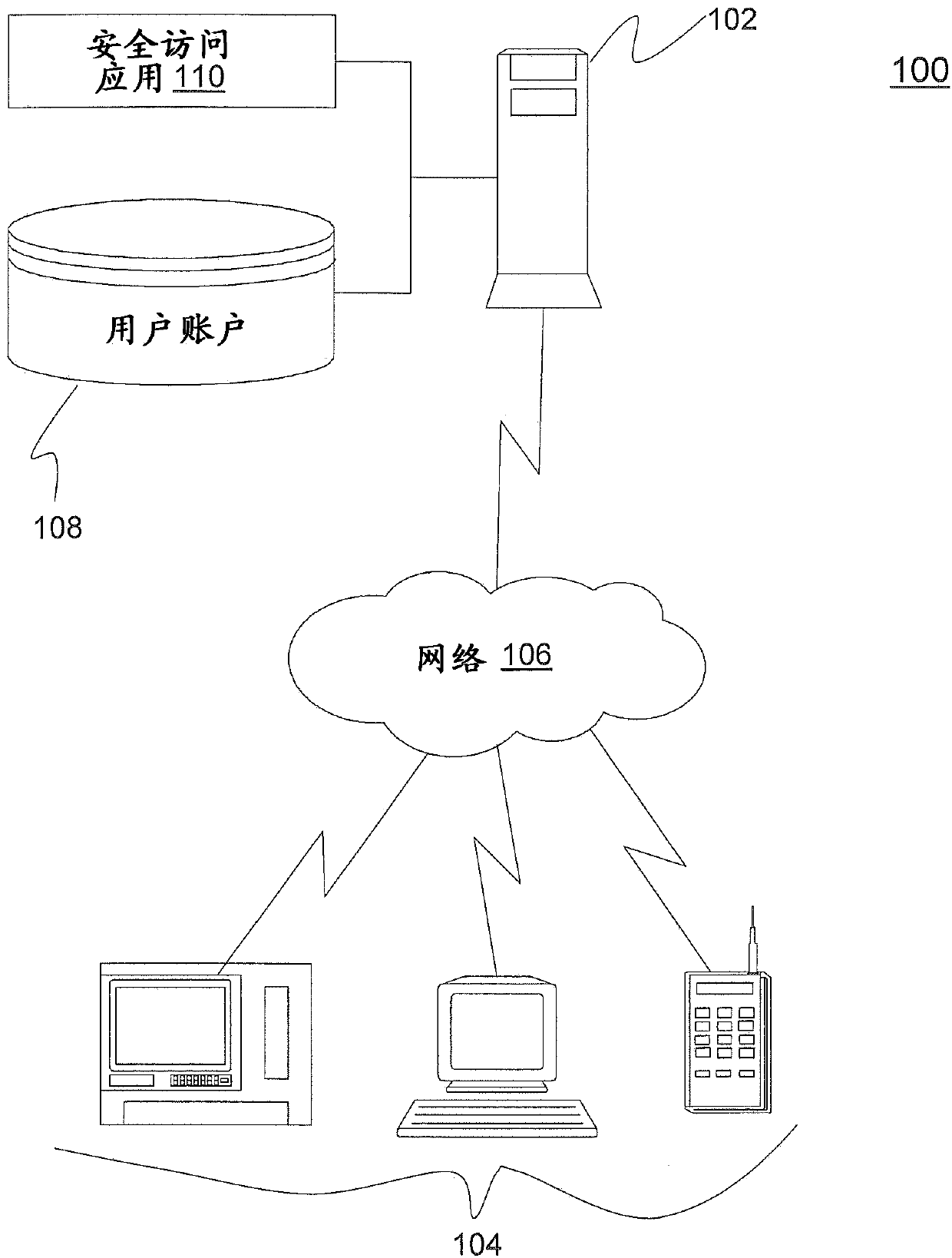
[0015] According to one exemplary embodiment, there is provided a pass-mode verification for a computer-based secure access (also referred to herein as "secure access") process. The secure access process provides a secure authentication technique using a unique sequence of directional patterns selected by the user or assigned to the user's input. A direction pattern sequence contains a series of directional instructions that are followed based on the starting position on the input device and are completely independent of the underlying specified input device characters (i.e., validation is not dependent on or limited to devices such as the keyboard, keypad any specific character letter, symbol or value on an input device such as a , touch screen, etc.). Authentication of the user is based entirely on a sequence of directional patterns entered by the user starting from a random starting point on the input device.

[0016] The starting point on the interface of the input device...

the structure of the environmentally friendly knitted fabric provided by the present invention; figure 2 Flow chart of the yarn wrapping machine for environmentally friendly knitted fabrics and storage devices; image 3 Is the parameter map of the yarn covering machine
Login to View More

PUM

No PUM Login to View More

Abstract

Implementing security access includes mapping input elements of an input device to a coordinate system. Each of the input elements is assigned to a point on the coordinate system that is defined by respective coordinate values. The security access also includes receiving a number of inputs via corresponding input elements. An input element assigned to a first input of the number of inputs is denoted as a starting point for a sequence. Beginning with an input in the sequence that immediately follows the first input in the sequence, the security access further includes identifying a directional orientation of each of the input elements as compared to an input element immediately preceding the input element in the sequence, creating a directional pattern sequence from the directional orientation identified for each of the input elements, and providing access to an information source using the directional pattern sequence as an authentication mechanism.

Description

technical field [0001] The present invention relates to computer-based security, and more particularly, to pass pattern authentication for computer-based security. Background technique [0002] The use of passwords as a means of authentication is a constant source of vulnerability. To enhance the likelihood of remembering a password, people tend to choose common or familiar words, phrases, names or days associated with the user. But doing so may make passwords more vulnerable to compromise. According to a recent study, some of the most common passwords are "123456," "password," and "qwerty." These passwords can be easily cracked by someone who can use common password cracking tools to determine the user's password and gain access to the user's account. Furthermore, these passwords are also easily detected by others through direct observation (such as when a user enters a password at an ATM machine by another person). [0003] In some cases, techniques have been developed...

Claims

the structure of the environmentally friendly knitted fabric provided by the present invention; figure 2 Flow chart of the yarn wrapping machine for environmentally friendly knitted fabrics and storage devices; image 3 Is the parameter map of the yarn covering machine
Login to View More

Application Information

Patent Timeline
no application Login to View More
Patent Type & Authority Applications(China)
IPC IPC(8): G06F21/44
CPCG06F21/36
Inventor G·瓦罗A·胡肯斯J·G·姆西亚尔S·R·帕蒂尔
Owner IBM CORP
Features
  • R&D
  • Intellectual Property
  • Life Sciences
  • Materials
  • Tech Scout
Why Patsnap Eureka
  • Unparalleled Data Quality
  • Higher Quality Content
  • 60% Fewer Hallucinations
Social media
Patsnap Eureka Blog
Learn More