
Method and device for braking a crane
A braking device and crane technology, applied in the direction of hoisting device, safety device, transportation and packaging, etc., can solve the problem that the safety of lifting work cannot be guaranteed, so as to strengthen the braking force, improve the safety factor, guarantee The effect of personal safety
- Summary
- Abstract
- Description
- Claims
- Application Information
AI Technical Summary
Problems solved by technology
Method used
Image

Examples
Embodiment 1
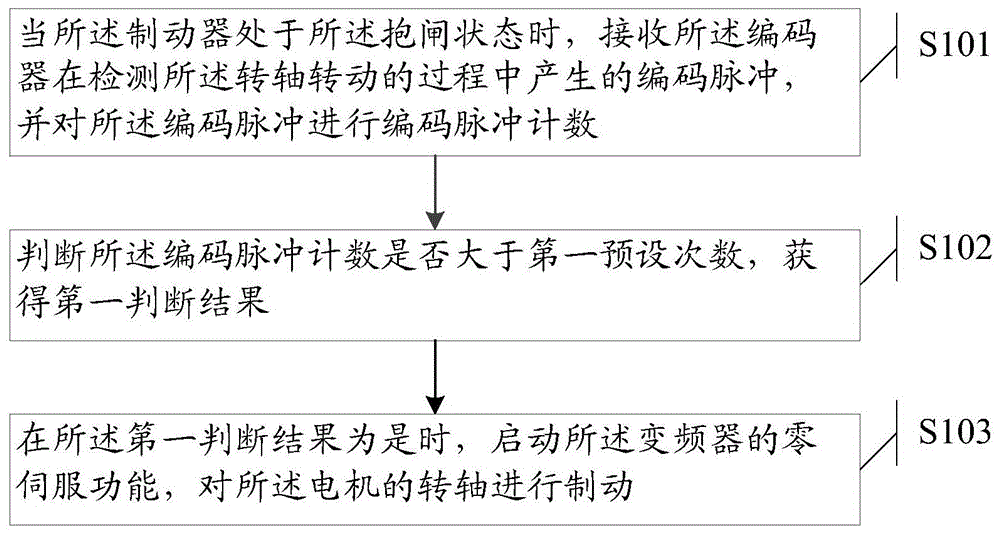
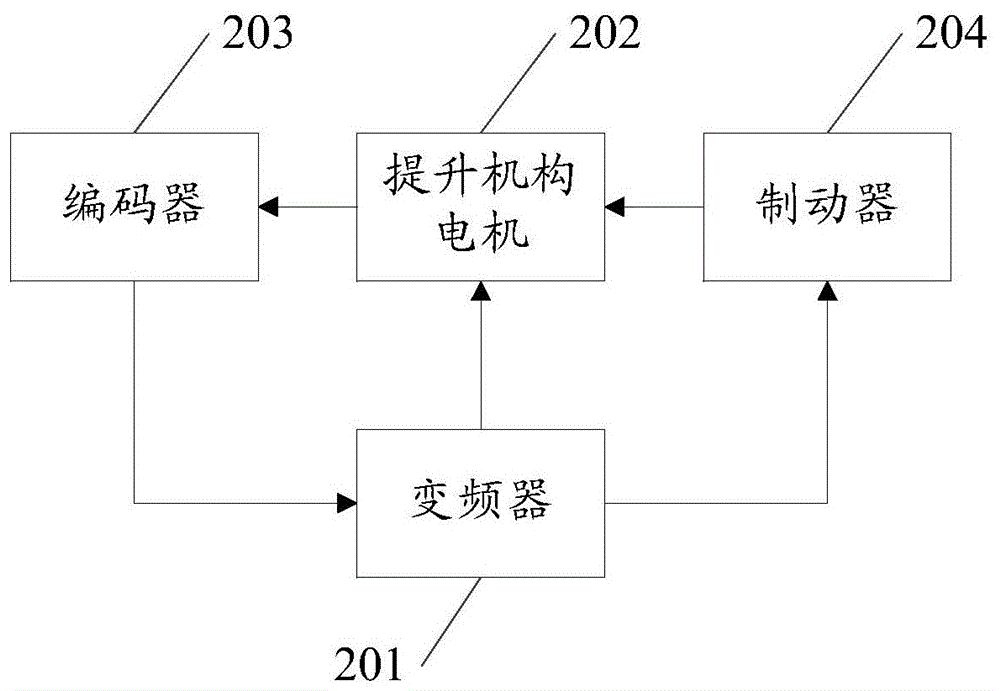
[0050] Please refer to figure 1 , the embodiment of the present application provides a method for braking a crane, the crane is provided with a braking system, and the braking system includes a frequency converter, a brake, a motor (the "motor" mentioned in the embodiment of the present application Both are "lifting mechanism motor") and an encoder, wherein, when the brake receives the braking command sent by the frequency converter, the brake enters the brake state and brakes the rotating shaft of the motor. The methods described include:
[0051] S101: When the brake is in the brake state, receive an encoding pulse generated by the encoder during the process of detecting the rotation of the rotating shaft, and count the encoding pulse;
[0052] S102: Judging whether the coded pulse count is greater than a first preset number of times, and obtaining a first judging result;
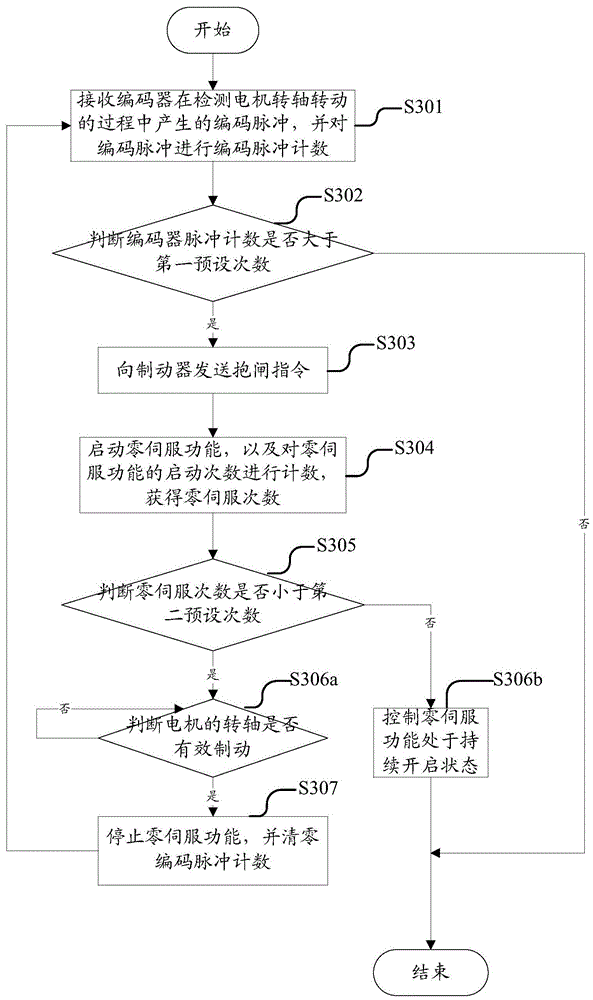
[0053] S103: When the first determination result is yes, start the zero-servo function of the freque...
Embodiment 2
[0082] Based on the same inventive concept, the embodiment of the present application also provides a braking device for a crane, the crane is provided with a braking system, and the braking system includes a frequency converter, a brake, a motor and an encoder, wherein, when When the brake receives the braking command sent by the frequency converter, the brake enters the brake state and brakes the rotating shaft of the motor. Please refer to Figure 4 , the device includes:
[0083] The receiving unit 401 is configured to receive the encoding pulses generated by the encoder during the process of detecting the rotation of the rotating shaft when the brake is in the brake state, and count the encoding pulses;
[0084] A judging unit 402, configured to judge whether the coded pulse count is greater than a first preset number of times, and obtain a first judging result;
[0085] The control unit 403 is configured to control and start the zero-servo function of the frequency conv...
PUM
 Login to View More
 Abstract
Description
Claims
Application Information
 Login to View More