
Handling and carrying device for large workpieces
A technology for loading, unloading, and large workpieces. It is applied in the direction of manufacturing tools, grinding feed movement, and metal processing equipment. It can solve the problems of low degree of mechanization, low production efficiency, and high labor intensity of workers, and achieve strong practical value. Ensure personal safety, flexible and convenient operation
- Summary
- Abstract
- Description
- Claims
- Application Information
AI Technical Summary
Problems solved by technology
Method used
Image

Examples
Embodiment Construction
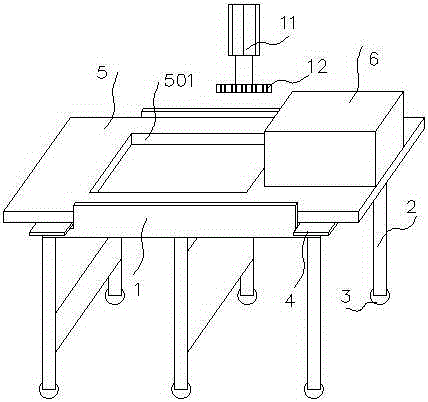
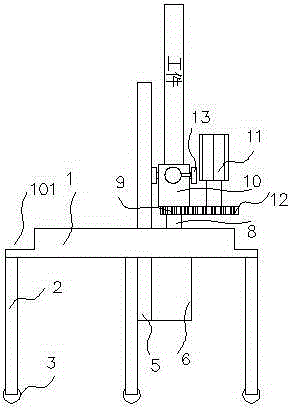
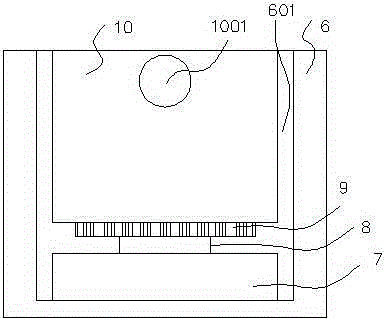
[0012] In order to make the object, technical solution and advantages of the present invention clearer, the present invention will be further described in detail below in conjunction with the accompanying drawings and embodiments. It should be understood that the specific embodiments described here are only used to explain the present invention, not to limit the present invention.
[0013] In describing the present invention, it should be understood that the terms "longitudinal", "transverse", "upper", "lower", "front", "rear", "left", "right", "vertical", The orientations or positional relationships indicated by "horizontal", "top", "bottom", "inner", "outer", etc. are based on the orientations or positional relationships shown in the drawings, and are only for the convenience of describing the present invention, rather than indicating or It should not be construed as limiting the invention by implying that a referenced device or element must have a particular orientation, be...
PUM
 Login to View More
 Abstract
Description
Claims
Application Information
 Login to View More