

ALS mutant type gene and application thereof in herbicide resistance
A mutant and genetic technology, applied in the field of plant protein and plant herbicide resistance, can solve the problems of undetermined herbicide action mechanism and difficult to predict the herbicide resistance of ALS protein in advance
- Summary
- Abstract
- Description
- Claims
- Application Information
AI Technical Summary
Problems solved by technology
Method used
Image

Examples
Embodiment 1
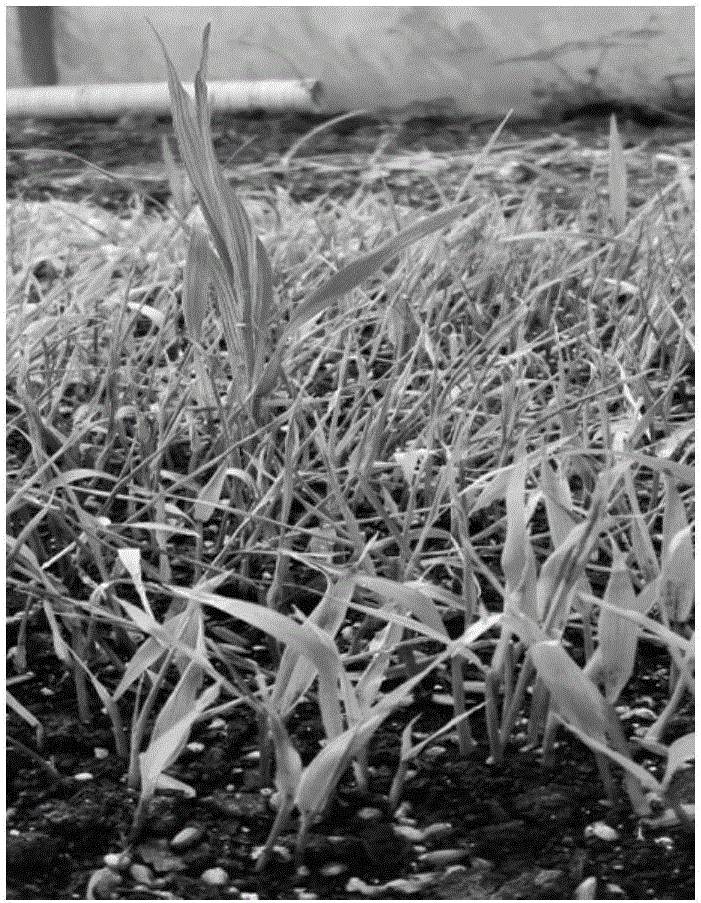
[0041] Example 1: The process of obtaining rice mutants resistant to imidazolinone herbicides (Bailongtong)
[0042] 150 kg of indica conventional rice 9311 seeds (purchased from Jiangsu Provincial Agricultural Germplasm Resources Protection and Utilization Platform) (this is M0, soaked in water for 2 hours) were divided into 6 times with 0.5-1.0% (w / w) ethyl methanesulfonate Ester (EMS) was soaked at room temperature for 6-9 hours, and the seeds were shaken every 1 hour during this period; the EMS solution was discarded, tap water was stirred and soaked 5 times, each time for 5 minutes, and then the seeds were rinsed with tap water overnight, and the field was sown the next day. And carry out routine fertilizer and water management (this is M1). After the plants are mature, the seeds are mixed, dried, and stored for the winter. Sow in the field the following year. When the rice (this is M2) seedlings grow to the 3-4 leaf stage, spray 3mL Bailongtong / L water ("Bailongtong" i...
Embodiment 2
[0043] Example 2: Analysis of mutation sites in rice mutants resistant to imidazolinone herbicides
[0044] From the herbicide-resistant mutant rice plants obtained in Example 1 above, the leaves of mutant plant 1 and mutant plant 2 were selected, and genomic DNA was extracted respectively, and sent to Shanghai Hanyu Biotechnology Co., Ltd. for genome sequencing. Comparing the sequencing results with the 9311 reference genome sequence (http: / / rise2.genomics.org.cn / page / rice / download.jsp), it was found that the above-mentioned herbicide-resistant rice mutants had multiple sites on the ALS gene. Mutations, wherein the herbicide-resistant mutant plant 1 undergoes mutations at the 75th and 339th positions of the ALS gene, changing from G to C and A into C, respectively, resulting in the 25th and 113th positions of the corresponding encoded amino acid sequence From glutamine to histidine, glutamine to histidine, the nucleotide sequence of the ALS gene of the herbicide-resistant mut...
Embodiment 3
[0045] Example 3 Cloning of ALS gene of rice mutant resistant to imidazolinone herbicides
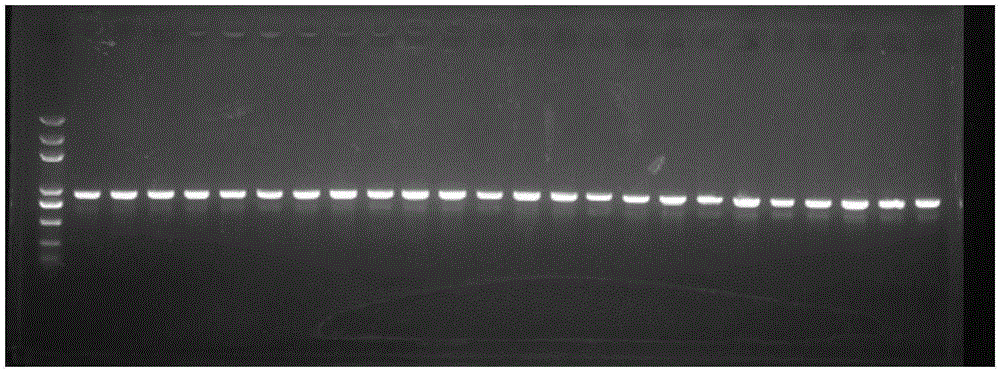
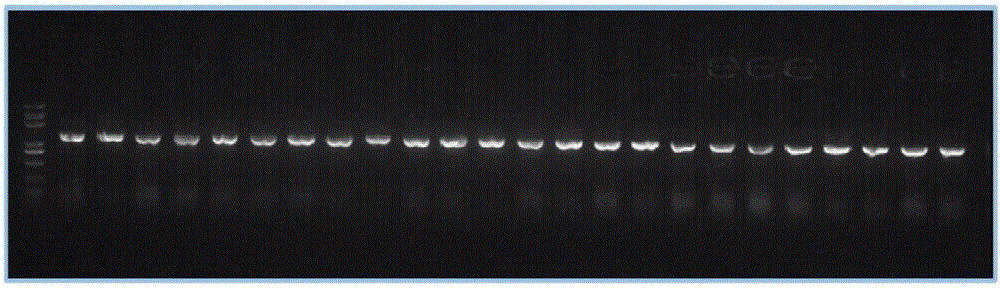
[0046] Genomic DNA was extracted from the leaves of the above herbicide-resistant rice mutants 9311M1 and 9311M2, respectively. According to the chromosomal sequence of the 9311 rice wild-type ALS gene (BAC clone Genbank accession number AAAA02006431.1), the specific primers for amplifying the 3' end sequence of the ALS gene are: forward primer 3F5'-GGTCTTGCGTCTGGTTGGCGAGT-3', reverse primer 3R5 '-CTCTTTATGGGTCATTCAGGTCAA-3', the specific primers designed to amplify the 5' end sequence of ALS gene are: forward primer 5F5'-ATCCGAGCCACACATCGCCTCAC-3', reverse primer 5R5'-AGCAACAGGTCAGCCTTATCCAC-3'. The sequences amplified by the two pairs of specific primers have an overlapping portion of 230 bp, and can be spliced into a complete ALS gene sequence.
[0047] Adopt TakaraPrimerSTARMaxDNAPolymerase polymerase (purchased from Takara Company) to amplify ALS gene 5' end sequence, 3' end seq...
PUM
 Login to View More
 Abstract
Description
Claims
Application Information
 Login to View More