
Method for ecological breeding of crawfish in rice field
An ecological farming and lobster technology, which is applied in the fields of botanical equipment and methods, fertilizers made from biological waste, fish farming, etc. The problems of poor taste and nutrition of lobsters are conducive to sustainable development, easy planting and management, and improved nutritional value.
- Summary
- Abstract
- Description
- Claims
- Application Information
AI Technical Summary
Problems solved by technology
Method used
Image

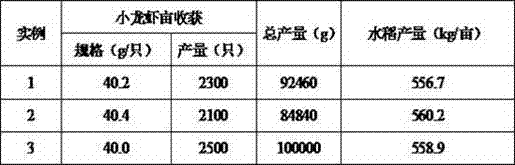
Examples
example 1
[0024] After the rice is harvested in October, select 5 mu of paddy field soil with sufficient water source, convenient irrigation and drainage, fertile soil, and strong water retention, and dig a trench at the inner layer of the field ridge at 2.0m, dig a well-shaped field trench, and the width of the field trench is 1.0m , the depth is 0.7m, and the interval between each ditch is 5m. The excavated soil can reinforce the ridge, and set up anti-escape nets and oxygenation equipment around the paddy field to increase oxygen in the water body. Land; apply quicklime to the rice planting land and the field ditch for disinfection, the amount of application per mu is 40kg, and after 3 days of spreading, pour water into the field ditch to a water level of 55cm, and after the water injection, sprinkle farmyard manure into the water and soil, and apply fertilizer per mu The quantity is 700kg, and Elodea is planted in the field ditch 3 days after spreading, and the planting amount per ac...
example 2
[0026] After the rice is harvested in November, select 7 mu of paddy field soil with sufficient water source, convenient drainage and irrigation, fertile soil, and strong water retention, and dig a trench at the inner layer of the ridge at 2.2m, dig a well-shaped field trench, and the width of the field trench is 1.2m , the depth is 0.8m, and the interval between each ditch is 7m. The excavated soil can reinforce the ridge, and set up anti-escape nets and oxygenation equipment around the rice field to increase oxygen in the water body. After the horizontal and vertical ditch are formed, crayfish can be cultivated Land; apply quicklime to the rice planting land and the field ditch for disinfection, and the amount of application per mu is 45kg. After 5 days of spreading, water is poured into the field ditch to a water level of 60cm. The amount is 800kg, and Elodea is planted in the field ditch 5 days after spreading, and the planting amount per mu of field ditch is 50kg; after 5 ...
example 3
[0028] After the rice is harvested in November, select 6 mu of paddy field soil with sufficient water source, convenient irrigation and drainage, fertile soil, and strong water retention, and dig a trench at the inner layer of the field ridge at 2.1m, dig a well-shaped field trench, and the width of the field trench is 1.1m , the depth is 0.7m, and the interval between each ditch is 6m. The excavated soil can reinforce the ridge, and set up anti-escape nets and oxygenation equipment around the paddy field to increase oxygen in the water body. After the horizontal and vertical ditch are formed, crayfish farming Land; apply quicklime to the rice planting land and the field ditch for disinfection, the amount of application per mu is 43kg, after 4 days of spreading, water is poured into the field ditch to a water level of 58cm, and after the water injection, farmyard manure is applied to the water and soil, and the fertilizer is applied per mu The amount is 750kg, and 4 days after ...
PUM
| Property | Measurement | Unit |
|---|---|---|
| width | aaaaa | aaaaa |
| depth | aaaaa | aaaaa |
| width | aaaaa | aaaaa |
Abstract
Description
Claims
Application Information
 Login to View More