
SNP molecular marker closely linked to tomato male sterility gene and its obtaining method and application
A male sterility gene and molecular marker technology, applied in the field of biological genetic breeding, can solve the problems of difficult operation, difficult to obtain, and high cost of molecular marker technology, and achieve the effect of accelerating the breeding process, strong stability and good repeatability
- Summary
- Abstract
- Description
- Claims
- Application Information
AI Technical Summary
Problems solved by technology
Method used
Image

Examples
Embodiment 1
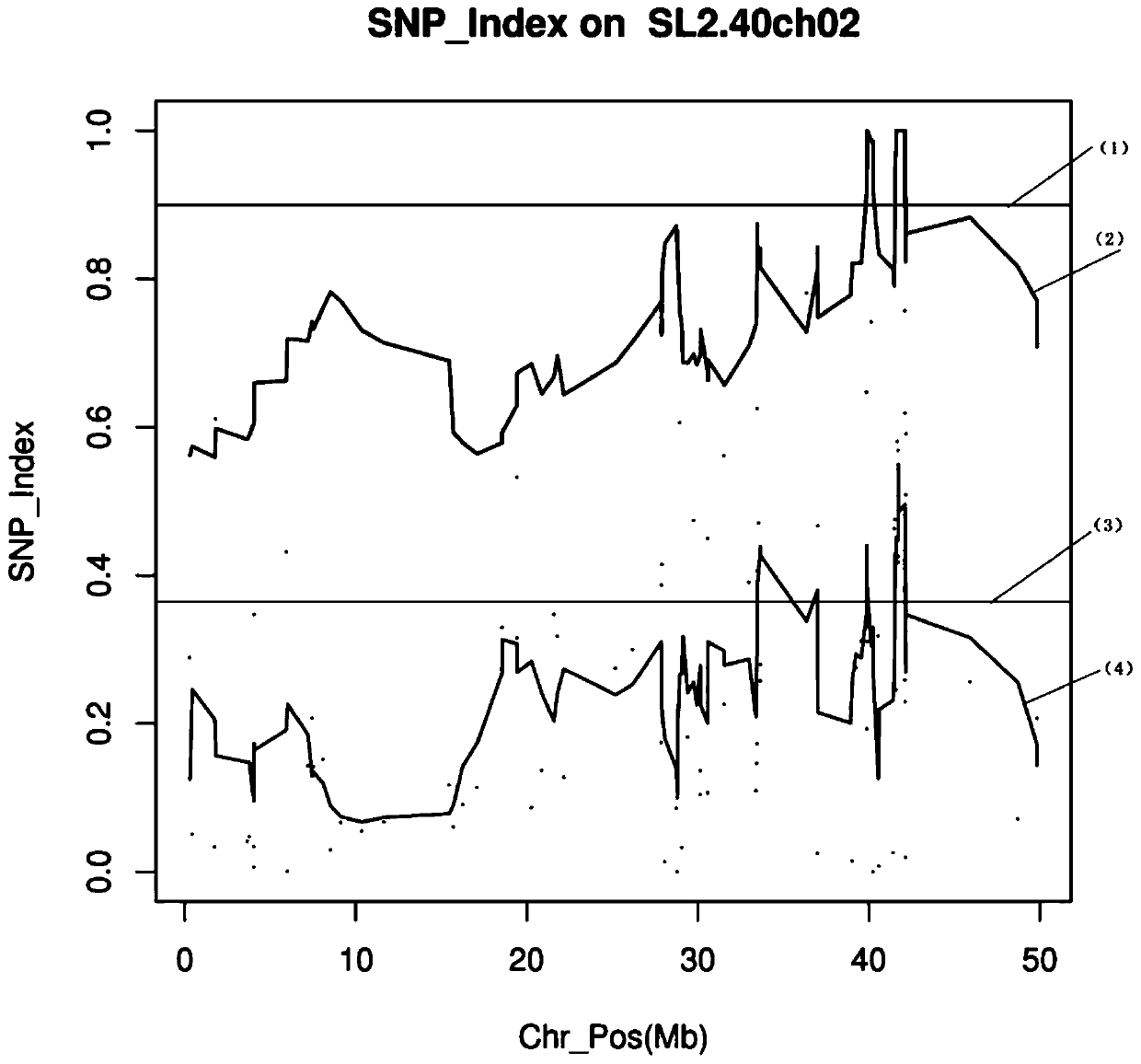
[0022] Embodiment 1, the method for the SNP locus acquisition and marker development that are closely linked with the tomato male sterility gene, comprises the following steps:
[0023] (1) Using the tomato male sterile line BY-17 as the female parent (the original number was 2-031, introduced from the Tomato Genetics Center, which is an open institution, ordinary researchers can apply for the introduction of materials), and the male sterile line Line KY-113 was used as the male parent (the original number was LA0012, which was also introduced from the Tomato Genetics Center), and the F 2 genetic population;
[0024] (2) Extract 30 strains of F 2 generation male sterile single plant and 30 F 2 The genomic DNA of the male fertile single plant of the first generation was used to construct the male sterile gene pool and the male fertile gene pool, and the genomic DNA of the parents was extracted at the same time to establish the parent gene pool;
[0025] (3) Use restriction s...
Embodiment 2
[0029] Example 2, Detection and Identification of SNP Sites and Markers Closely Linked to Tomato Male Sterility Gene
[0030] The tomato male sterile line BY-17 was used as the female parent, and the male sterile line KY-113 was used as the male parent for crossing, and then the F 1 F 2 Substitute, with F 2 Using the specific primers of the molecular marker SNP223 as the object, the genomic DNA of each individual plant is amplified, and then the amplified product is sequenced to detect the genotype of the SNP223 locus, so that it can be judged at the seedling stage whether the individual plant is male infertility. Breeding plants.
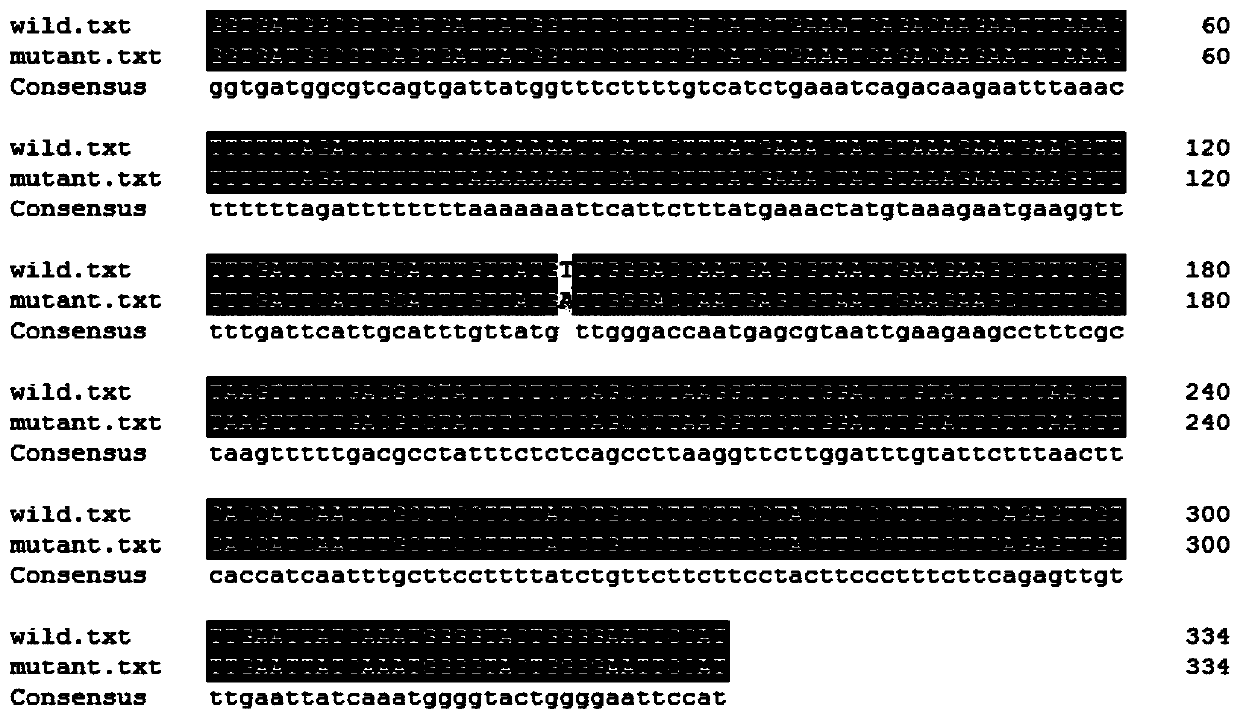
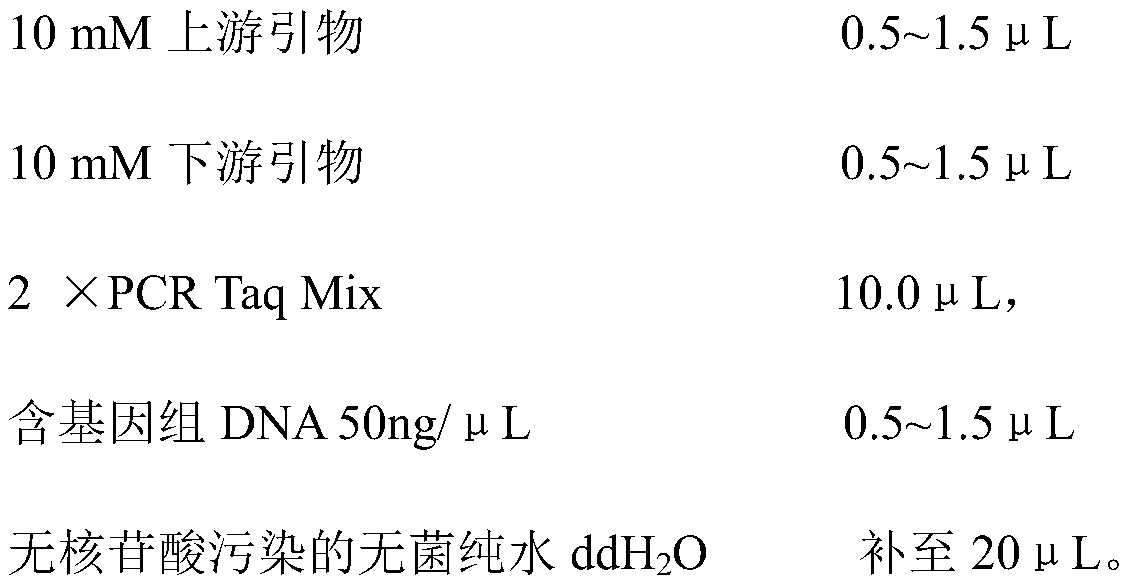
[0031] The method for identifying tomato male sterility comprises the steps of using specific primers: upstream primer: 5'-GGTGATGGCGTCAGTGATTA-3'; downstream primer 5'-AATGGAATTCCCCAGTACCC-3' for amplification. The amplified product was sequenced to detect the genotype of the SNP223 site.
Embodiment 3
[0032] Embodiment 3, develop SNP molecular marker according to polymorphic SNP site, and calculate the linkage distance of SNP marker and male sterility gene, its method is:
[0033] (1) Using simplified genome sequencing to perform polymorphism analysis of SNP sites on specific DNA fragments in male sterile parents, male fertile parents, male sterile gene pools, and male fertile gene pools;
[0034] (2) Obtain the SNP site SNP223 significantly associated with the male sterility gene through association analysis, and the genotype of the SNP223 site is A / A homozygous, T / T homozygous or A / T heterozygous;
[0035] (3) Using the DNA fragment sequence where the SNP223 site is located, design specific primers to obtain the SNP223 molecular marker;
[0036] (3) Linkage analysis of SNP223 molecular markers: F obtained from sterile parents and fertile parents 2 Individual plants were identified in the field at the flowering stage, and the investigation of F 2 For the fertility of a s...
PUM
 Login to View More
 Abstract
Description
Claims
Application Information
 Login to View More