Unlock instant, AI-driven research and patent intelligence for your innovation.
Method for testing audio identification sensitivity
What is Al technical title?
Al technical title is built by PatSnap Al team. It summarizes the technical point description of the patent document.
A test method and sensitivity technology, applied in the field of auditory recognition sensitivity testing, can solve the problems of decreased sound intensity recognition sensitivity, auditory fatigue, errors, etc., and achieve accurate and reliable results.
Active Publication Date: 2018-10-26
FOSHAN BOZHI MEDICAL TECH CO LTD
View PDF14 Cites 3 Cited by
Summary
Abstract
Description
Claims
Application Information
AI Technical Summary
This helps you quickly interpret patents by identifying the three key elements:
Problems solved by technology
Method used
Benefits of technology
Problems solved by technology
[0004] The human ear is also sensitive to the time course of sound stimulation, and can recognize the sound with the shortest duration of 100ms. At about 300ms, the hair cells that feel the sound of this frequency can be saturated, and then as the stimulation time course increases, the human ear will gradually respond to the sound. Sound production adaptation, possibly reduced sensitivity to sound intensity recognition
[0005] Taking pure tone audiometry as an example, this method is currently the most commonly used method for testing the hearing state of the human ear. The parameters selected during the test are almost uniform. However, in clinical phenomena, it is found that different people have great differences in the auditory recognition sensitivity to sound. For example, people with completely normal hearing have very good auditory recognition sensitivity. Accurate responses can be made with long-term sound stimulation. If the stimulation time is too long, it will easily cause auditory fatigue. People with severe hearing impairment may have poor auditory recognition sensitivity, and the choice of time course and intensity is different from ordinary people. It can be seen that, Performing audiological examinations such as pure tone audiometry without measuring and evaluating the individual's auditory recognition sensitivity may cause large errors
Method used
the structure of the environmentally friendly knitted fabric provided by the present invention; figure 2 Flow chart of the yarn wrapping machine for environmentally friendly knitted fabrics and storage devices; image 3 Is the parameter map of the yarn covering machine
View more
Image
Smart Image Click on the blue labels to locate them in the text.
Viewing Examples
Smart Image
Click on the blue label to locate the original text in one second.
Reading with bidirectional positioning of images and text.
Smart Image
Examples
Experimental program
Comparison scheme
Effect test
Embodiment 1
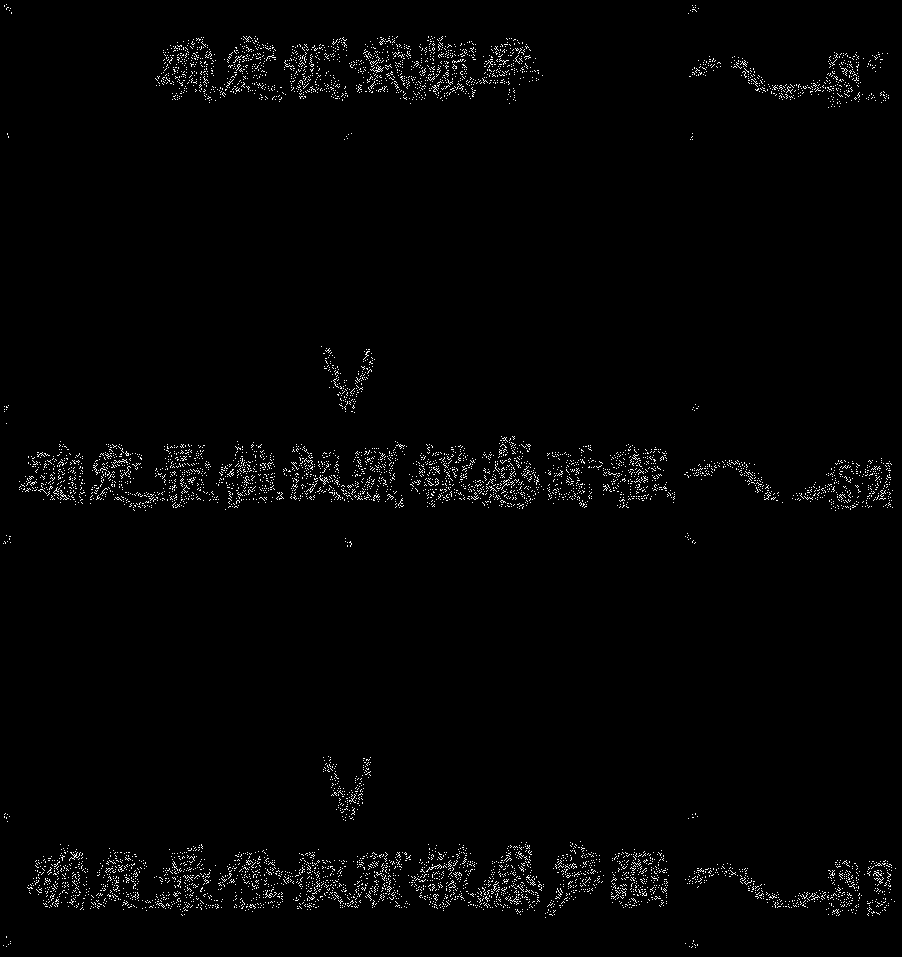
[0022] figure 1 A test method for auditory recognition sensitivity according to an embodiment of the present invention is schematically shown.
[0023] refer to figure 1 , the testing method of auditory recognition sensitivity comprises the steps:
[0024] S1. Determine the test frequency: select the test frequency according to the needs of actual operation, and the test frequency can be selected within the range of human hearing frequencies;
[0025] The range of human ear's perception of sound is 20-20000Hz, and the test range of pure tone audiometry is 125-8000Hz, which covers almost all daily sound frequencies. 125-8000Hz is often divided into low frequency, intermediate frequency and high frequency. There are differences in the recognition sensitivity of the three ranges of sounds, the middle frequency is the most sensitive, the high frequency is the second, and the low frequency is the least sensitive.
[0026] During the test, any frequency can be selected for operat...
Embodiment 2
[0034] Based on the method of Example 1, the specific test process of the subject is exemplified as follows:
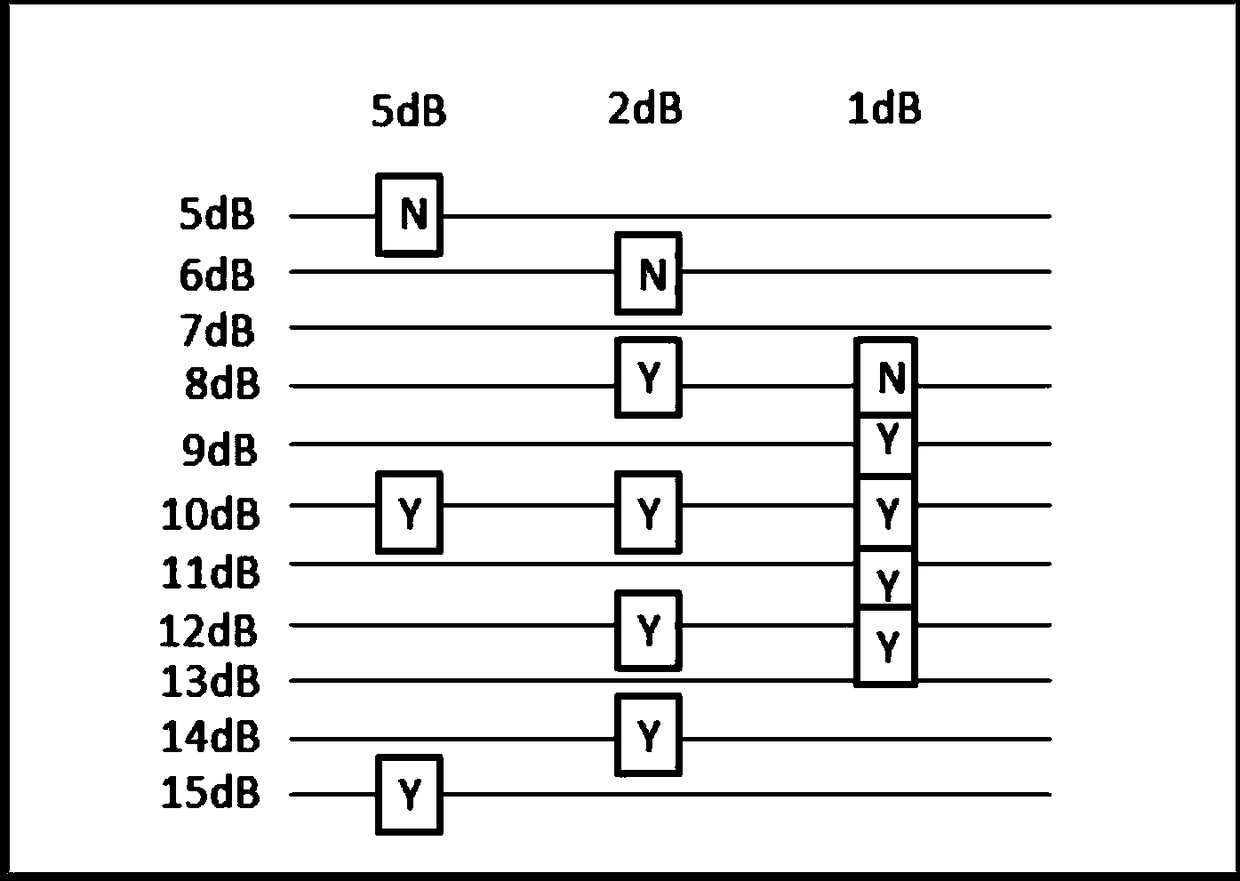
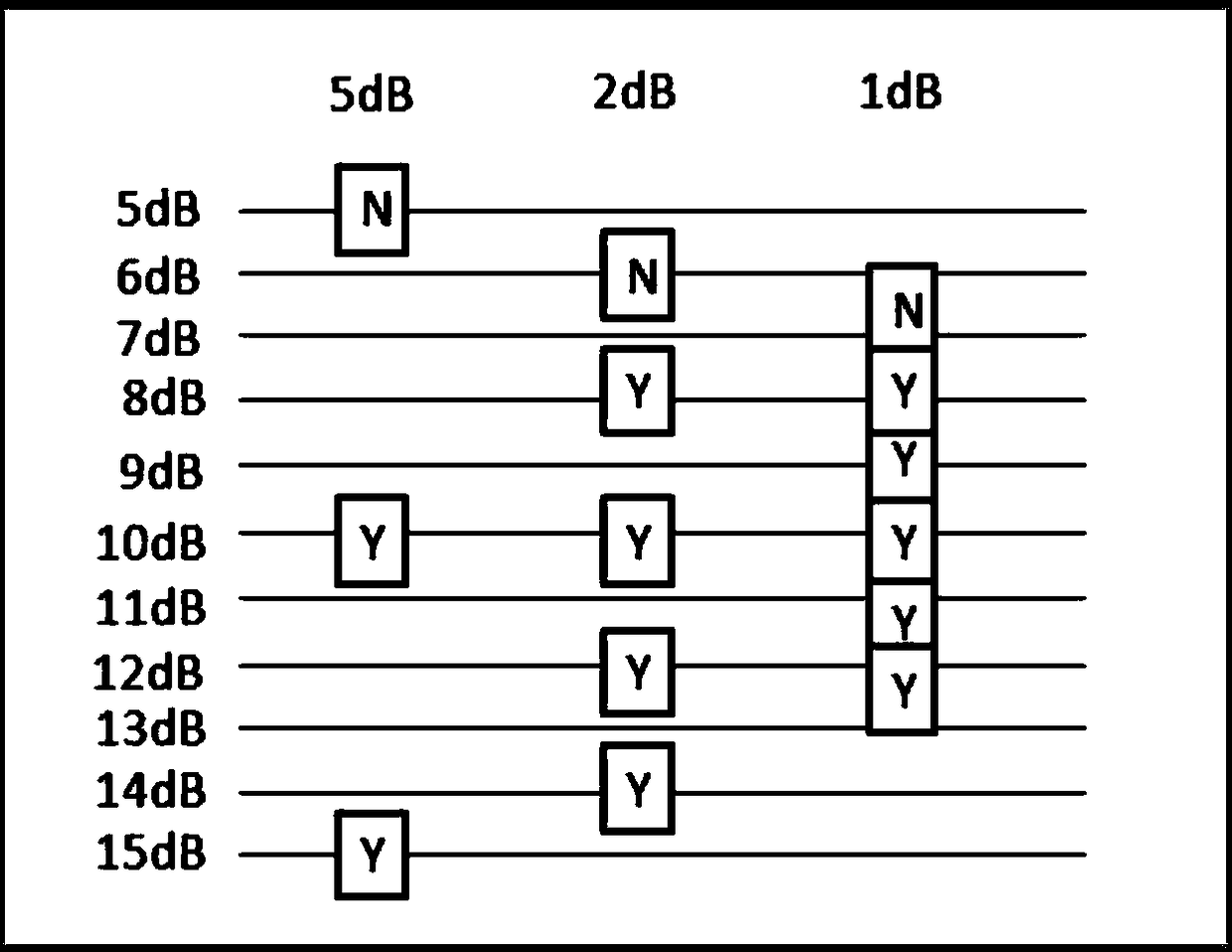
[0035] Take 1000Hz as an example, perform conventional pure tone audiometry on 1000Hz, and measure the hearing threshold under normal conditions. For example, if the subject’s 1000Hz conventional audiometry threshold is 10dBHL, then conduct a stimulation time course test at 10dBHL. The method is as follows:
[0036] Inform the subjects that when they hear the sound of the earphones, press the answer button as quickly as possible. The testing equipment is equipped with a timing device. When the stimulus stops, it will start timing until the subject presses the answer button to stop. is the reaction time T.
[0037] The operator sequentially gives 300ms, 500ms, 1s or even longer 1000Hz, 10dBHL stimulation sounds, and records the reaction time of the subjects under different time courses.
[0038] The reaction time T of a normal person is 150-400ms. When a stimulation s...
the structure of the environmentally friendly knitted fabric provided by the present invention; figure 2 Flow chart of the yarn wrapping machine for environmentally friendly knitted fabrics and storage devices; image 3 Is the parameter map of the yarn covering machine
Login to View More
PUM
Login to View More
Abstract
The invention discloses a method for testing audio identification sensitivity. The method includes the steps of S1, determining testing frequency, to be more specific, selecting testing frequency according to actual operation needs; S2, determining optimal identification sensitivity duration, to be more specific, using the selected testing frequency to perform a regular pure tone test to obtain aconventional hearing threshold; using the conventional hearing threshold to perform a stimulation duration test to obtain the optimal identification sensitivity duration; S3, determining optimal identification sensitivity sound intensity, to be more specific, using the testing frequency and the optimal identification sensitivity duration as the test parameters, the conventional hearing threshold as the center and the optimal identification sensitivity sound intensity as the testing step to perform testing to obtain the optimal identification sensitivity sound intensity. The method testing theaudio identification sensitivity by changing stimulation sound intensity and duration has the advantages that other audiology examinations are performed after the identification sensitivity of a testsubject to the sound intensity and duration, the method provides more test bases for the subsequent examinations, and examination result accuracy and reliability are achieved.
Description
technical field [0001] The invention relates to the field of human ear hearing test, in particular to a test method for auditory recognition sensitivity. Background technique [0002] The hearing process of the human ear is a complex physiological process, which is directly related to the mechanical structure of the human ear and the characteristics of the auditory nervous system. The ability of the human ear to judge small changes in parameters such as sound pressure, time course, frequency and orientation is called hearing. Identify sensitivity. [0003] The human ear can withstand the strongest sound in nature, sometimes as high as 2×10³-2×10⁴Pa, and can also feel extremely small sounds, such as 2×10⁻⁵Pa, which is only one-fiftieth of an atmospheric pressure. When this extremely small sound pressure is at 1kc, the human eardrum only produces a displacement of 10-9cm, which is less than one-tenth of the diameter of hydrogen molecules. When the sound pressure changes, the...
Claims
the structure of the environmentally friendly knitted fabric provided by the present invention; figure 2 Flow chart of the yarn wrapping machine for environmentally friendly knitted fabrics and storage devices; image 3 Is the parameter map of the yarn covering machine
Login to View More
Application Information
Patent Timeline
Application Date:The date an application was filed.
Publication Date:The date a patent or application was officially published.
First Publication Date:The earliest publication date of a patent with the same application number.
Issue Date:Publication date of the patent grant document.
PCT Entry Date:The Entry date of PCT National Phase.
Estimated Expiry Date:The statutory expiry date of a patent right according to the Patent Law, and it is the longest term of protection that the patent right can achieve without the termination of the patent right due to other reasons(Term extension factor has been taken into account ).
Invalid Date:Actual expiry date is based on effective date or publication date of legal transaction data of invalid patent.

 Login to View More
  Login to View More