Action Recognition Method Based on Segmented Body Model Applied in Human-Machine Collaboration

A human body model and motion recognition technology, applied in the field of human-computer interaction, can solve problems such as differences, large amount of information, and high complexity of human motions

CN109086706BActive Publication Date: 2021-06-15NORTHWESTERN POLYTECHNICAL UNIV
5 Cites 1 Cited by

Patent Information

Authority / Receiving Office
CN · China
Patent Type
Patents(China)
Current Assignee / Owner
Publication Date
2021-06-15

Smart Images

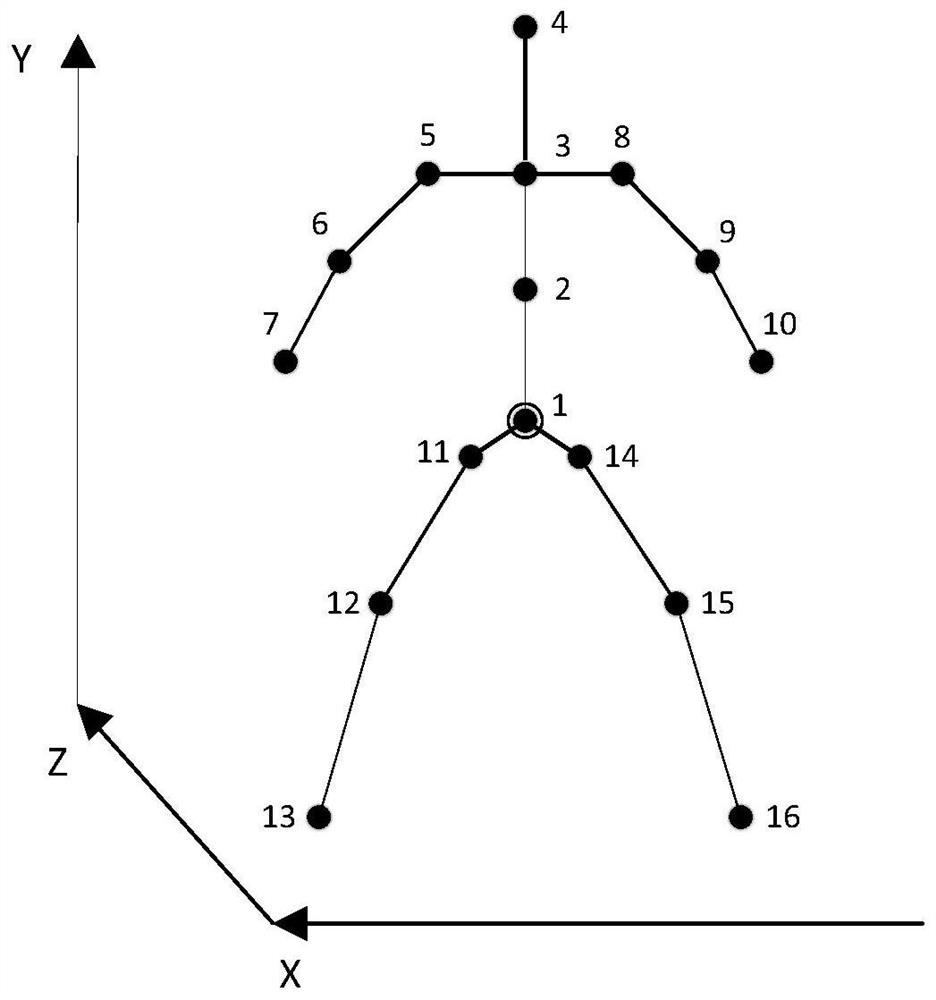
  • Figure 1
    Figure 1
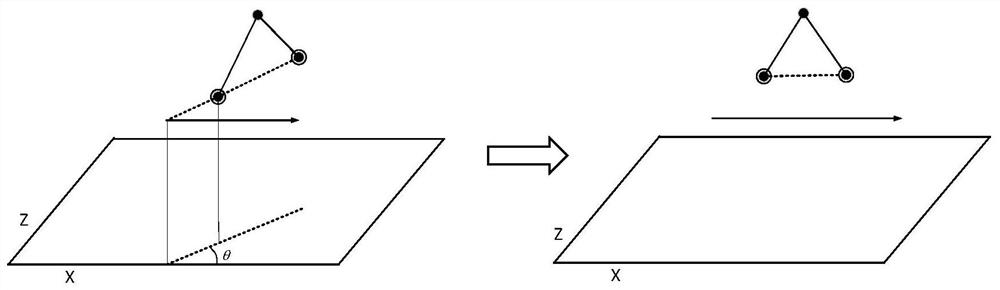
  • Figure 2
    Figure 2
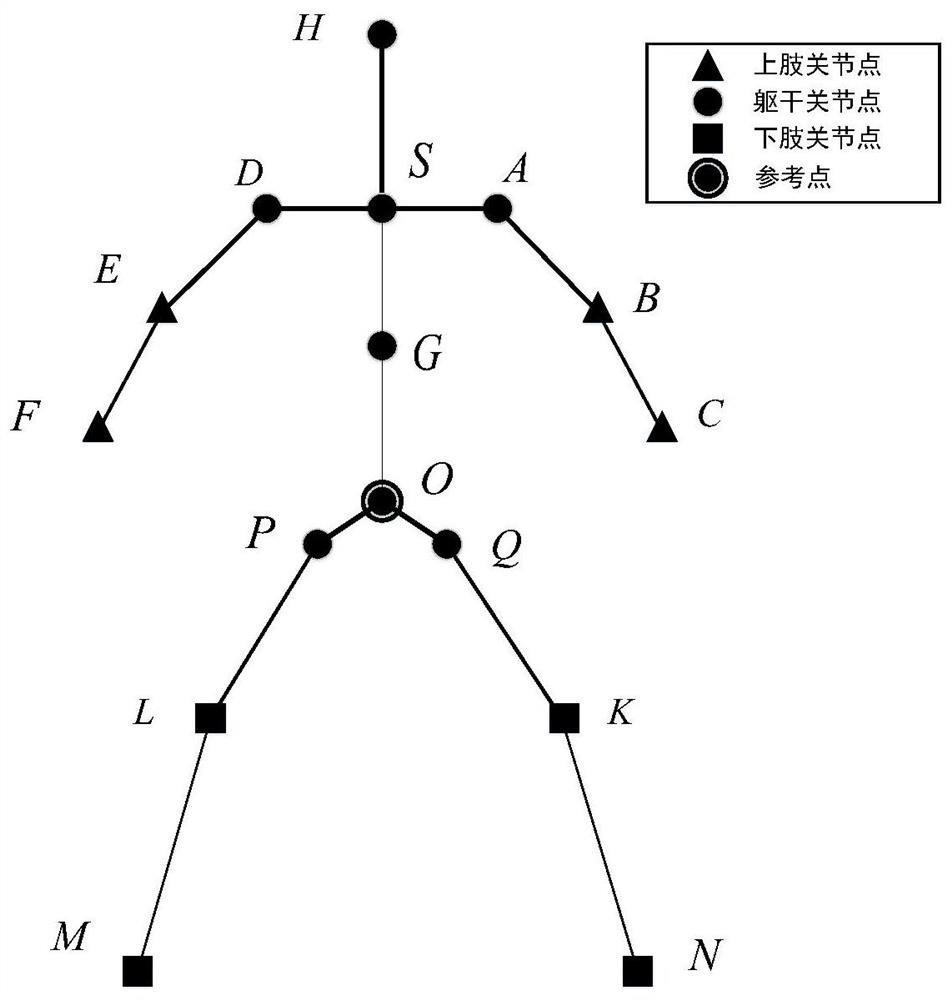
  • Figure 3
    Figure 3
Patent Text Reader

Abstract

The invention relates to an action recognition method based on a segmented human body model applied in human-computer cooperation. The Microsoft Kinect V2 sensor is used to collect human skeleton information to obtain joint node coordinates; after preprocessing, the skeleton node sequence is mapped from four dimensions to three dimensions, Stored in the form of a point cloud sequence; divide the human body model into three parts: upper limbs, lower limbs and torso, extract feature vectors and Boolean value feature matrices of relative positions of joint points respectively, use Boolean value feature matrices to extract key frames respectively, use feature vectors and The dynamic time warping algorithm (DTW algorithm) performs template matching separately; finally, the recognition results of the three parts are combined to obtain the classification of the overall movement of the human body. The present invention can not only achieve the purpose of recognizing the overall movement of the human body, but also obtain the movement description of the upper limbs, torso and lower limbs of the human body, and can identify human movements and behaviors in more detail and accurately, so as to help robots under human-machine cooperation to perform subsequent tasks planning.
Need to check novelty before this filing date? Find Prior Art

Description

technical field

[0001] The invention belongs to the field of human-computer interaction, and relates to an action recognition method based on a segmented human body model applied in human-computer cooperation. Background technique

[0002] With the development of robot technology, the application scenarios of robots are becoming wider and wider, and there are more and more intersections and integrations with other fields. At the same time, there are many scenarios that require collaborative operations between humans and robots. The collaborative operation of robots and humans can not only liberate human labor, but also help humans avoid high-risk operational tasks at certain times. Human-machine cooperation is one of the future development directions of intelligent robots in the future.

[0003] Human-machine collaboration emphasizes the leading role of humans. It should enable robots to understand human intentions as accurately as possible under the premise of ensuring saf...

Examples

specific Embodiment approach

[0089] Step 1: Map the action sequence to be recognized and the joint point data of the action template to 3D, store it as a point cloud, and perform preprocessing, including translation, scaling, and rotation;

[0090] KinectV2 sensor tracking bone data is about 30frame / second, so the frame can be used as the time unit of the bone node.

[0091] The joint data extracted by the Kinect V2 sensor contains 30 frames of data per second, and each frame contains the coordinate information of 25 joint points. In order to store, transmit and read the joint information in the action sequence conveniently and quickly, the innovative The use of point clouds (PCD file format) to store action sequences.

[0092] A point cloud is a collection of a large number of points. It is a data storage structure that has emerged in recent years in applications and three-dimensional reconstruction. It has many file formats. The present invention uses the PCD format three-dimensional ordered points defi...