
All-solid-state battery reaction chamber for in-situ XRD and Raman test and test method
A technology of all-solid-state batteries and solid-state batteries, which is applied in battery assembly machines, secondary battery manufacturing, non-aqueous electrolyte storage batteries, etc., can solve problems such as simplification of device functions, incompatibility of devices, and single testing methods, and achieve uniform current density , No miscellaneous peak interference, good equipment versatility
- Summary
- Abstract
- Description
- Claims
- Application Information
AI Technical Summary
Problems solved by technology
Method used
Image

Examples
Embodiment 1
[0061] In situ XRD detection of solid-state battery assembly
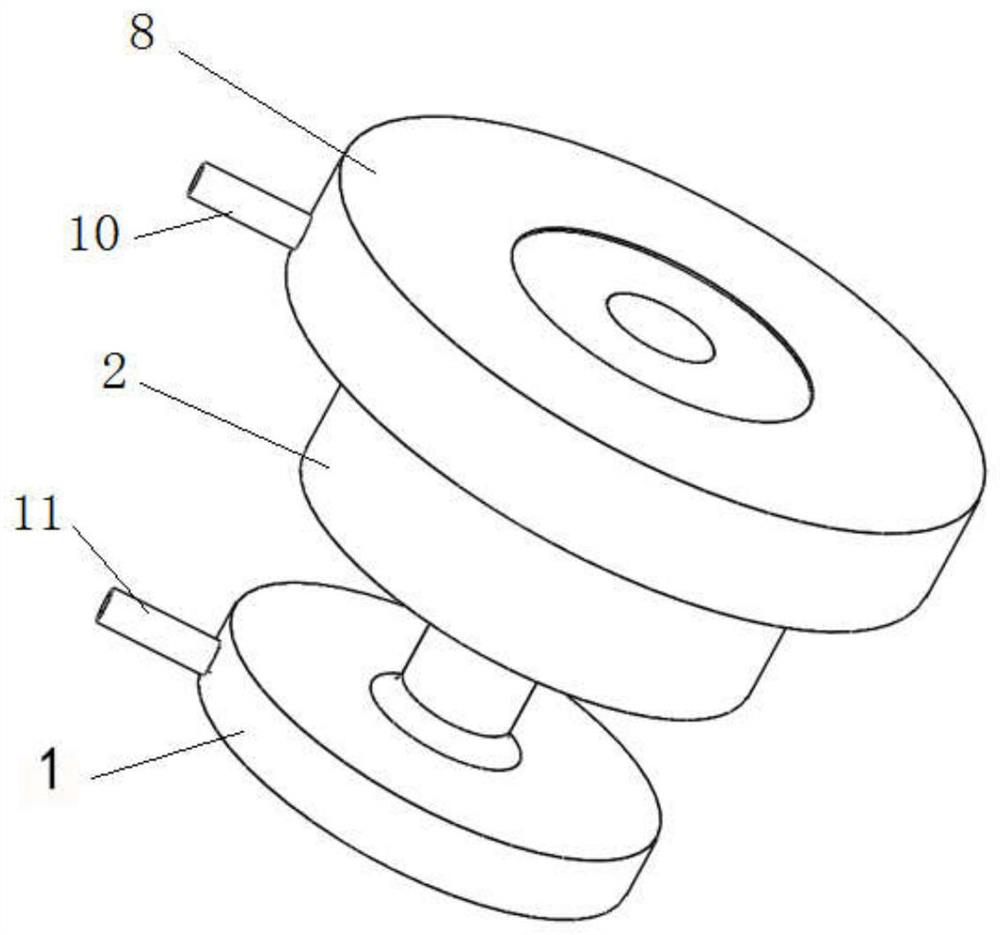
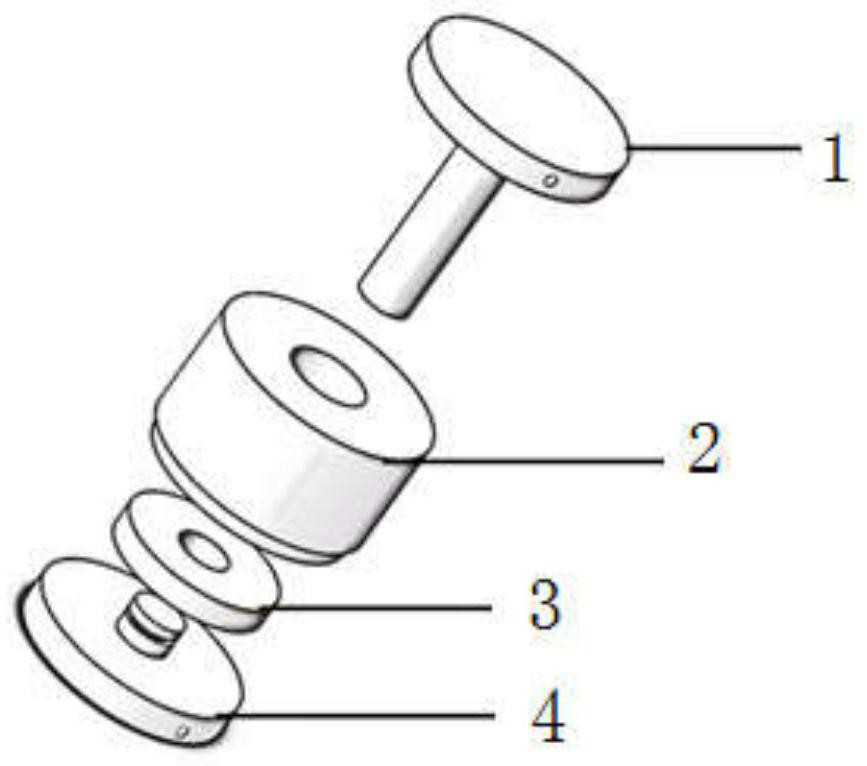
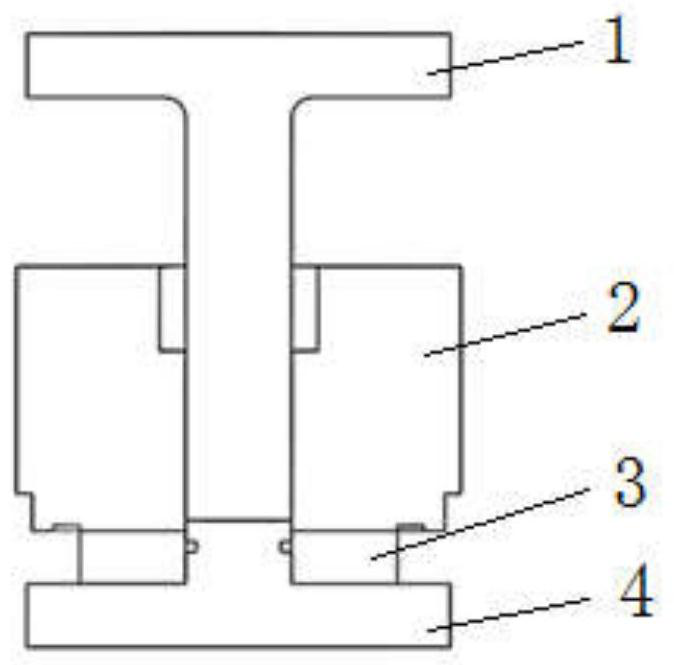
[0062] like Figure 2-3 As shown, put the upper mold core 1 into the die cavity 2 of the solid-state battery mold case 2, and then add 80mg Li to the die cavity 6 P.S. 5 C1, put the pressure ring 3 on the counter electrode seat 4, and then put the counter electrode seat 4 into the die cavity of the solid-state battery mold case 2. The solid battery mold equipped with the upper mold core 1 and the counter electrode holder 4 is placed in the inner cavity of the hydraulic press, and the solid electrolyte is pressed into thin sheets under a pressure of 2 MPa.
[0063] like Figure 3-4 As shown, carefully remove the counter electrode holder 4, and put 10mg composite positive electrode material (LiCoO 2 with Li 6 P.S. 5 Cl mass ratio 7:3) was added into the die cavity of the solid-state battery mold shell 2, evenly filled on the surface of the electrolyte, and the electrode pressure ring 5 was put on the counter el...
Embodiment 2
[0068] In situ XRD detection of solid-state battery assembly
[0069] Put the upper mold core 1 into the die cavity of the solid-state battery mold case 2, and then add 80mgLi 10 GeP 2 S 12 , put the pressure ring 3 on the counter electrode seat 4, and then put the counter electrode seat 4 into the die cavity of the solid state battery mold case 2. The solid battery mold equipped with the upper mold core 1 and the counter electrode holder 4 is placed in the inner cavity of the hydraulic press, and the solid electrolyte is pressed into thin sheets under a pressure of 2 MPa.
[0070] Carefully take off the opposite electrode seat 4, put 10mg composite positive electrode material (LiCoO 2 with Li 10 GeP 2 S 12 mass ratio 7:3) into the die cavity of the solid-state battery mold case 2, evenly spread on the surface of the electrolyte, put the electrode pressure ring 5 on the counter electrode seat 4, and then under the pressure of 8Mpa, the positive electrode material and the...
Embodiment 3
[0074] In situ Raman detection of solid-state battery assembly
[0075] Put the upper mold core 1 into the die cavity of the solid-state battery mold case 2, and then add 80mgLi 6 P.S. 5 C1, put the pressure ring 3 on the counter electrode seat 4, and then put the counter electrode seat 4 into the die cavity of the solid-state battery mold case 2. The solid battery mold equipped with the upper mold core 1 and the counter electrode holder 4 is placed in the inner cavity of the hydraulic press, and the solid electrolyte is pressed into thin sheets under a pressure of 2 MPa. Carefully take off the opposite electrode seat 4, put 10mg composite positive electrode material (LiCoO 2 with Li 6 P.S. 5 Cl mass ratio 7:3) was added to the cavity 2 of the die of the shell, evenly filled on the surface of the electrolyte, and the electrode pressure ring 5 was put on the counter electrode seat 4, and then the positive electrode material and the solid electrolyte were tightly pressed und...
PUM
| Property | Measurement | Unit |
|---|---|---|
| thickness | aaaaa | aaaaa |
| thickness | aaaaa | aaaaa |
Abstract
Description
Claims
Application Information
 Login to View More