Stable rooting method for poplar cuttage

A technology of cuttings and poplars, applied in the field of tree species propagation, can solve the problems of low survival rate of cuttings, increased costs, waste of cuttings, etc., and achieve the effects of shortening the cycle, saving costs, and reducing the concentration of use

CN113575151AActive Publication Date: 2021-11-02NORTHEAST FORESTRY UNIVERSITY
4 Cites 1 Cited by

Patent Information

Authority / Receiving Office
CN · China
Current Assignee / Owner
Publication Date
2021-11-02

Smart Images

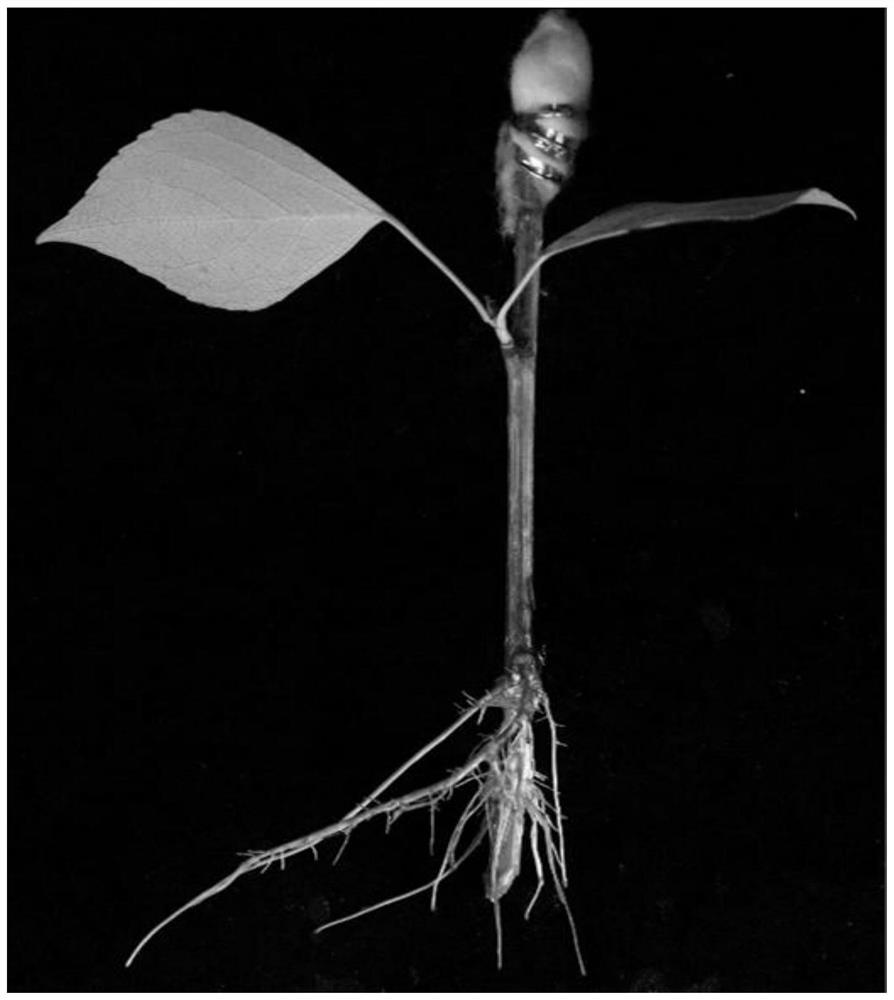
  • Figure 1
    Figure 1
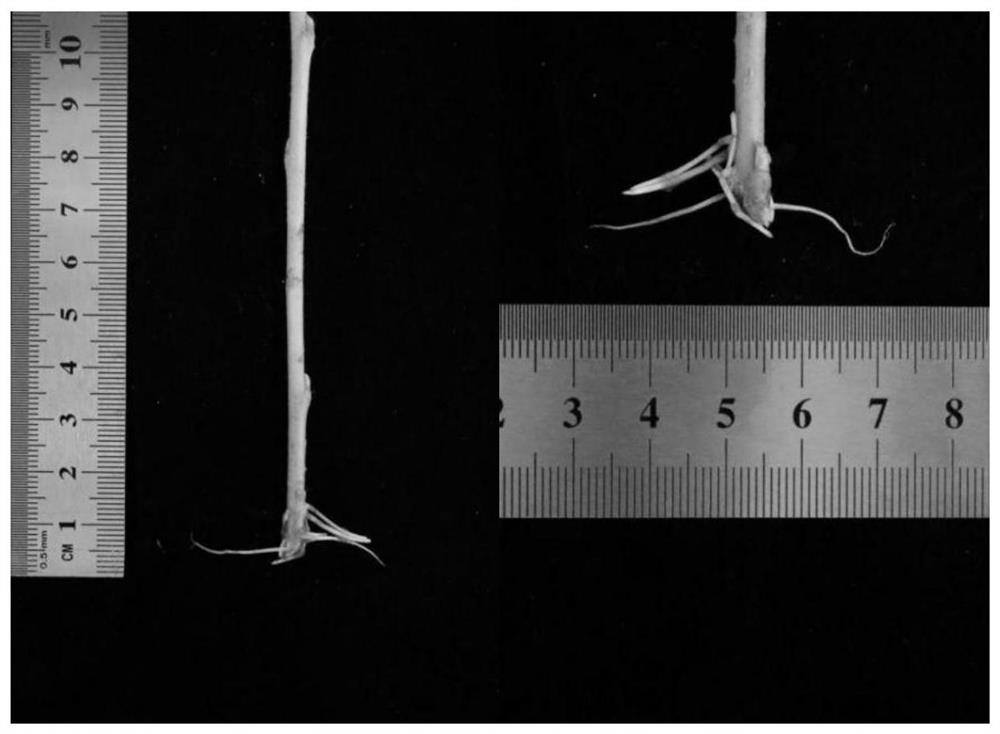
  • Figure 2
    Figure 2
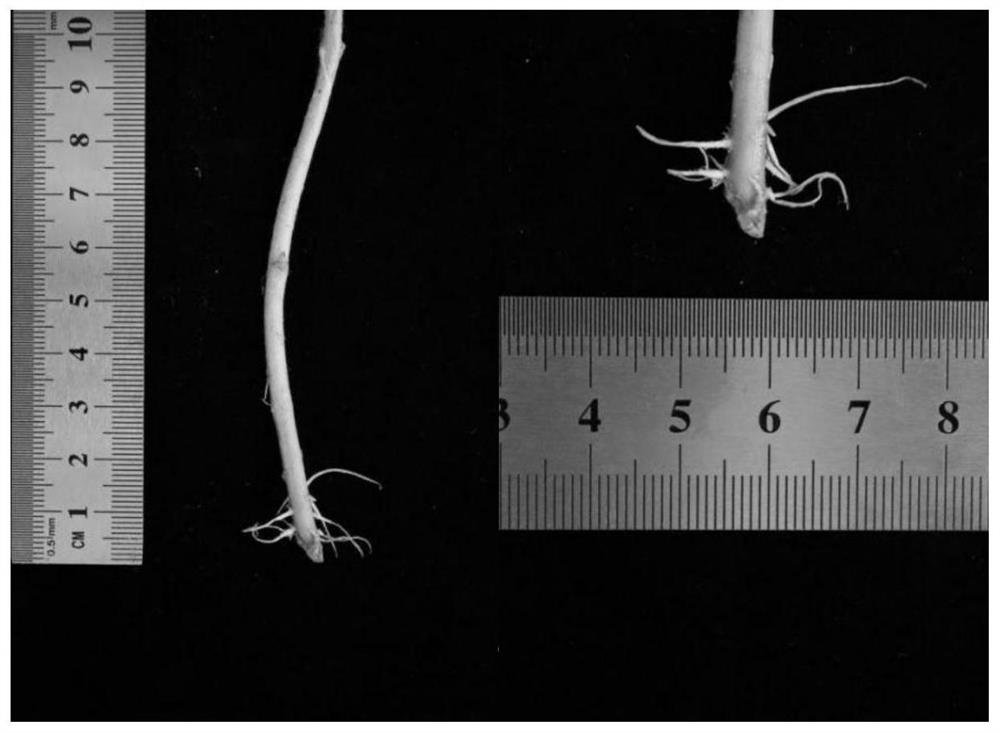
  • Figure 3
    Figure 3
Patent Text Reader

Abstract

The invention discloses a stable rooting method for poplar cuttage, and belongs to the technical field of tree seed propagation. The stable rooting method for the polar cuttage comprises the following steps of wrapping the top end of an explant with leaves with a water absorbing material, girdling a base part, soaking in water for culture, dropwise adding auxin on the water absorbing material during culture to obtain an explant with adventitious roots, and then performing cuttage. According to the stable rooting method for cuttage, the use concentration of exogenous auxin is effectively reduced, the bacterium breeding phenomenon caused by a traditional culture method is avoided, the purposes of enabling poplar cuttage branches to stably root and improving the transplanting survival rate are achieved, and a new working method is provided for asexual propagation of the poplar and rapid rooting of the cuttage branches.
Need to check novelty before this filing date? Find Prior Art

Description

technical field

[0001] The invention relates to the technical field of tree species propagation, in particular to a method for stable rooting of poplar cuttings. Background technique

[0002] Poplar has strong adaptability to the environment and is widely distributed. It can grow well no matter it is fertile land or barren mountainous area. Poplar has high economic use value and environmental protection value. Its trunk is straight, its material is fine and dense, and it grows fast. It is one of the important tree species in pulpwood raw material forest, and it is also one of the afforestation tree species in excellent water conservation forest and main shelter belt.

[0003] At present, poplar is mainly propagated by cutting seedlings, but the survival rate of conventional cuttings is low and there is a problem that it is easy to die after cutting. Ensure that enough adventitious roots grow before cutting, and it is easy to cause waste of cuttings and increase the cost. A...

Examples

Embodiment 1

[0036] A kind of poplar cutting stable rooting method:

[0037] (1) Preparation of explants: cut strong branches from the adult black poplar with good growth, cut the branches with a length of about 12 cm, and have 4 bud points and 2 leaves as explants.

[0038] (2) The epidermis at about 1 cm above the base of the explant is stripped off by circumcision, the stripping width is about 0.5 cm, and the stripping thickness is the sum of the thickness of the bark and phloem of the explant (in order not to damage the xylem Standard) to obtain explants with circumcision at the base, and then wrap absorbent cotton on the top of the explants and fix them with rubber bands.

[0039] (3) Put the explants obtained in step (2) into a plastic tissue culture bottle and add clear water, the amount of water should be higher than the girdling of the cuttings, and then put the explants at a temperature of 26±1°C , the light time is 16h, and the rooting culture is carried out in a greenhouse wit...

Embodiment 2

[0042] Same as Example 1, the difference is that the concentration of indolebutyric acid in step (3) is 0.1 mg / mL.

Embodiment 3

[0044] Same as Example 1, the difference is that the concentration of indolebutyric acid in step (3) is 0.5mg / mL.