
Activated near-infrared small-molecule fluorescent probe as well as preparation method and application thereof
A fluorescent probe and near-infrared technology, applied in the field of biological probes, can solve the problems of reducing the accuracy of imaging results, difficult to monitor the occurrence and progress of acute kidney injury, and easy to be cleared, so as to achieve high imaging detection and analysis, avoid clearing, The effect of high signal-to-background ratio
- Summary
- Abstract
- Description
- Claims
- Application Information
AI Technical Summary
Problems solved by technology
Method used
Image

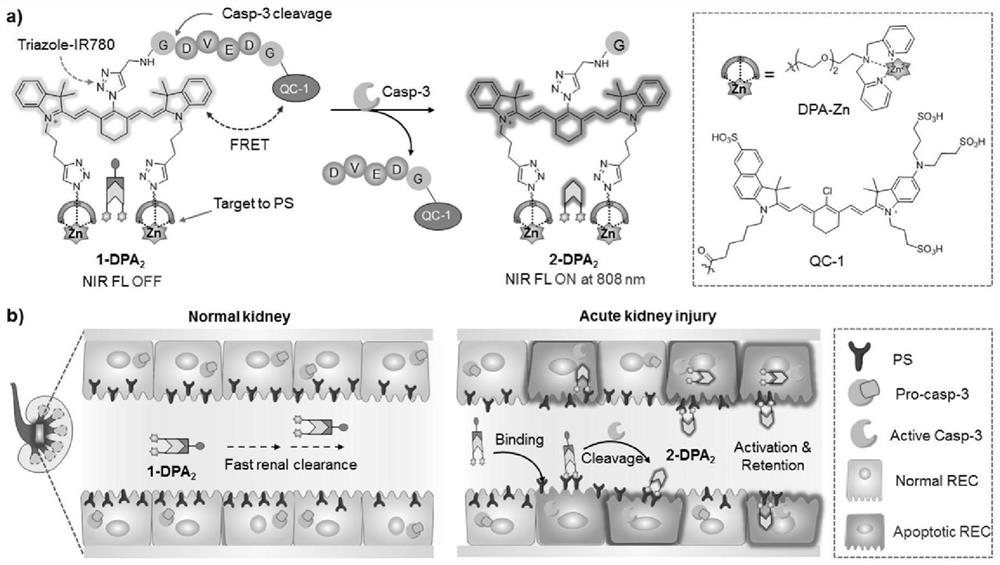
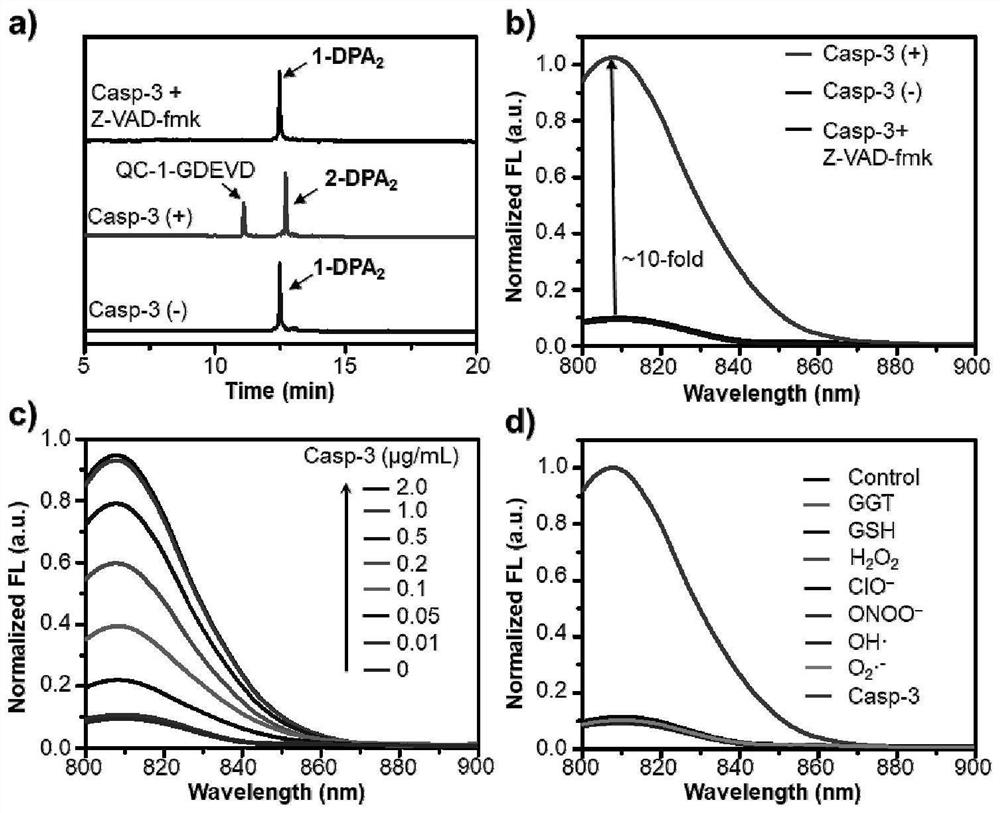
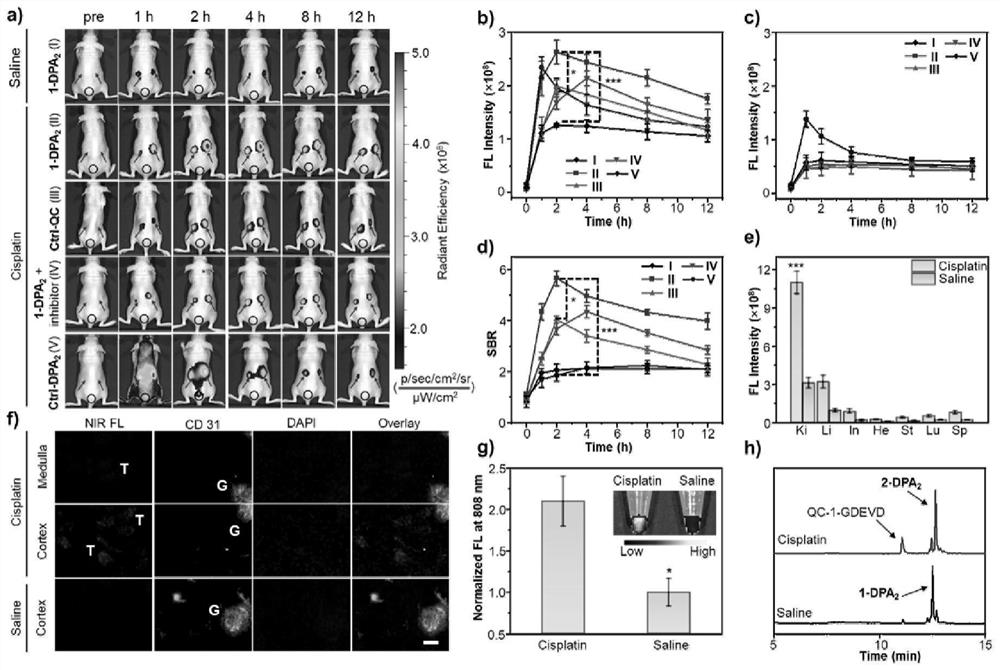
Examples
Embodiment 1
[0050] Probe 1-DPA 2 design, synthesis and characterization of
[0051] The synthetic route of 2-[2-(2-Azidoethoxy)ethoxy]-N,N-bis(2-pyridinylmethyl)ethanamine intermediate compound 3 (CAS: 1613538-61-6) is as follows:
[0052]
[0053] Reaction conditions: (a)NaN 3 ,H 2 O, 90℃, 24h, 96%; (b) TsCl, triethylamine, DCM, r.t., 4h, 83%; (c) 2,2-lutidine, triethylamine, CH 3 CN, 80°C, 24h, 77%.
[0054] Synthesis of compound 1: 2-chloroethoxy-2-ethoxydiethanol (991mg, 5.9mmol), NaN 3 (462mg, 7.1mmol) was dissolved in secondary water (5mL) and stirred at 90°C for 24 hours. After the reaction was completed, 20 mL of ethyl acetate was added to the reaction mixture for extraction, a total of 3 extractions, and the organic layer was washed with anhydrous Na 2 SO 4 dry. The precipitate was removed by filtration, and the solvent was removed by rotary evaporation to obtain compound 1 as a transparent colorless liquid. Yield: 955mg (96%) 1 H NMR (400MHz, Chloroform-d) δ3.74 (dd...
PUM
 Login to View More
 Abstract
Description
Claims
Application Information
 Login to View More