The clay material is not stable over time and will eventually wash away.
Waterproofing membranes using this application method are susceptible to imperfections from variation in the field installation of the membrane under uncontrolled or less-than-ideal conditions; these imperfections typically appear in the form of wrinkles and voids that are termed “fish-mouths” by those of ordinary skill in the art.
These imperfections have the potential to degrade the waterproofing integrity of the installation, which will reduce functional reliability and therefore negatively impact structural warranties.
Furthermore, rubberized-asphalt waterproofing membranes are sensitive to the ultraviolet (UV) spectrum of light and will chemically degrade with exposure to the sun's rays, necessitating a maximum allowed time of 30 days before geocomposite drain panels must be installed.
Still further, despite the rugged polypropylene non-woven filter fabric material, the earthen backfill must be applied with care to prevent damage to the filter material from rocks or other discrete material that can puncture or even rip the filter fabric, thereby introducing a latent defect into the installed drainage panel.
Commercial horizontal drainage panels for under slab applications use void-maintaining woven laminates and sometimes woven fabrics bonded to the crush-resistant geocomposite panels; however, these are susceptible to de-bonding which would allow infiltration of poured non-hardened concrete or earth into the drainage channels.
That disclosure, however, does not improve the protection of said filter material.
In that patent, Davis teaches the limitations of filter fabric with respect to keeping the drainage channels free from clogging and other impediments; however, again, the filter material of this configuration would still be susceptible to damage from the application of earthen back-fill.
That system has structural and functional limitations, including the stability of the waterproofing material, the mass and inflexibility of the panels, the inability to ship and store the system in rolls, and the need to secure the system to the wall that is being protected using mechanical means such as nails or tacks.
Those limitations conform to the current commercial waterproofing standard configuration.
After a waterproofing system has been applied, there is no real way to verify the quality of the installation, and furthermore, functional failures can only be detected after leakage has already occurred, usually through evidence of moisture or water within the protected structure itself.
Still further, location of the actual leakage point is often difficult because water that has infiltrated a building may travel a good distance along a wall, behind the defeated waterproofing membrane, before actually entering the wall (aka, structure).
Even further, the problem can be compounded by water damage to the foundation of the structure and to materials or items within the below-ground levels of a building.
While these methods are useful for above-ground horizontal waterproofing installations such as roofing, they do not address solving the below-ground leak detection problem.
Moreover, while electrically-based methods for the detection of leaks have been developed to monitor for waste or chemical leakage from industrial containment facilities (see, e.g., U.S. Pat. Nos. 4,404,516; 4,725,785; 5,288,168; and 6,331,778), these techniques are not suited for below-grade structural waterproofing systems.
; however, both the discrete sensing mechanisms and the hand-held instrumentation, cannot be used with existing commercial below-grade structural waterproofing systems.
Similarly, a below-grade commercial waterproofing system installation is an application where the costs of failure are often high.
Unlike above-grade waterproofing applications such as roofing and decks, a latent defect within a below-grade system may not be readily detected until considerable progression of the leakage has already occurred, and the below-grade nature of the installation makes locating and correcting the problem an expensive proposition.
If a building's contents such as computer infrastructure, vital, records or laboratory facilities (to name but a few) are damaged or destroyed by the water infiltration, the costs increase even more.
If people become ill from the formation of toxic mold, and a structure becomes unusable to the occupants, the liability and costs can become catastrophic.
The associated risks are shown to be unacceptably high.
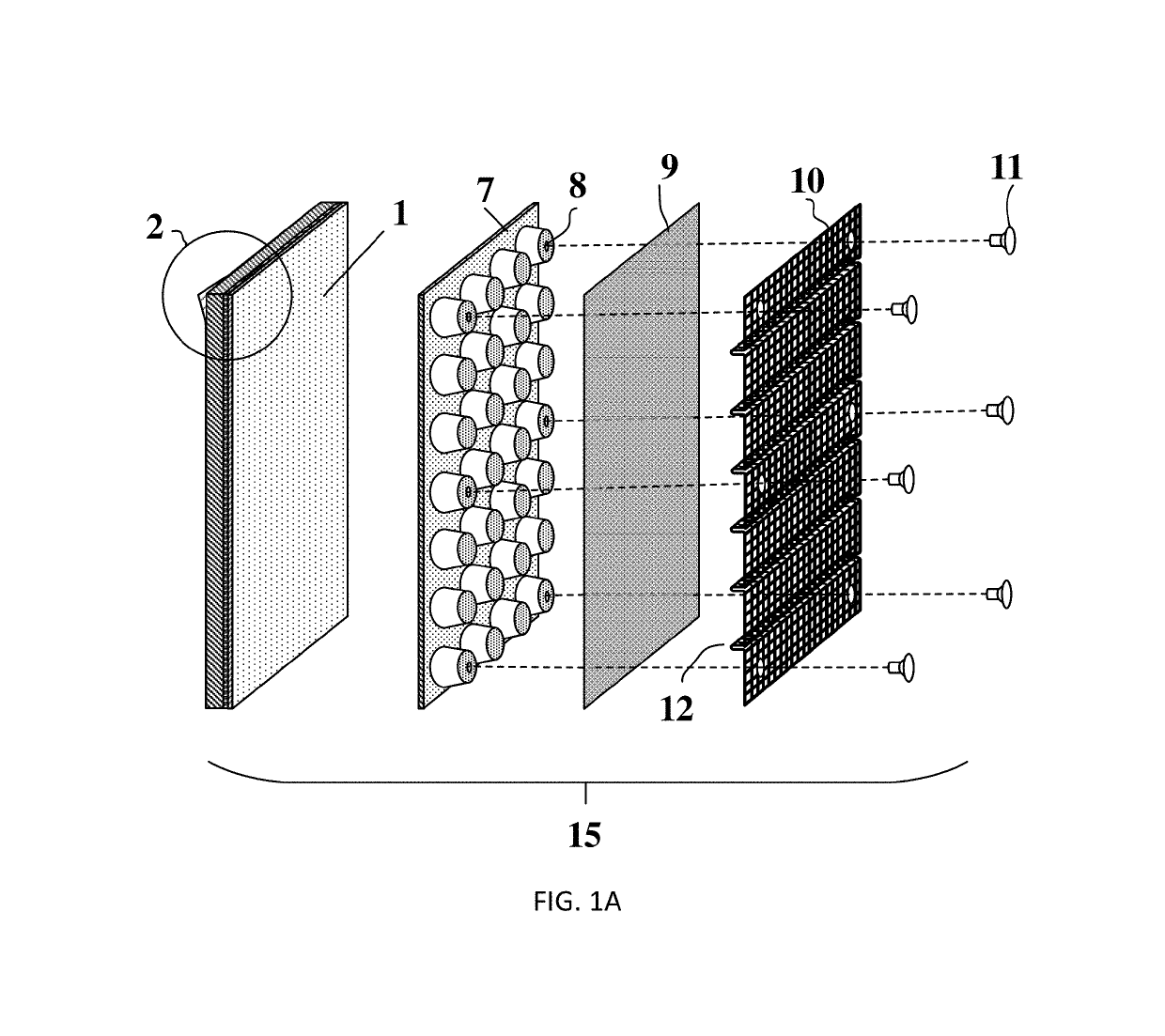
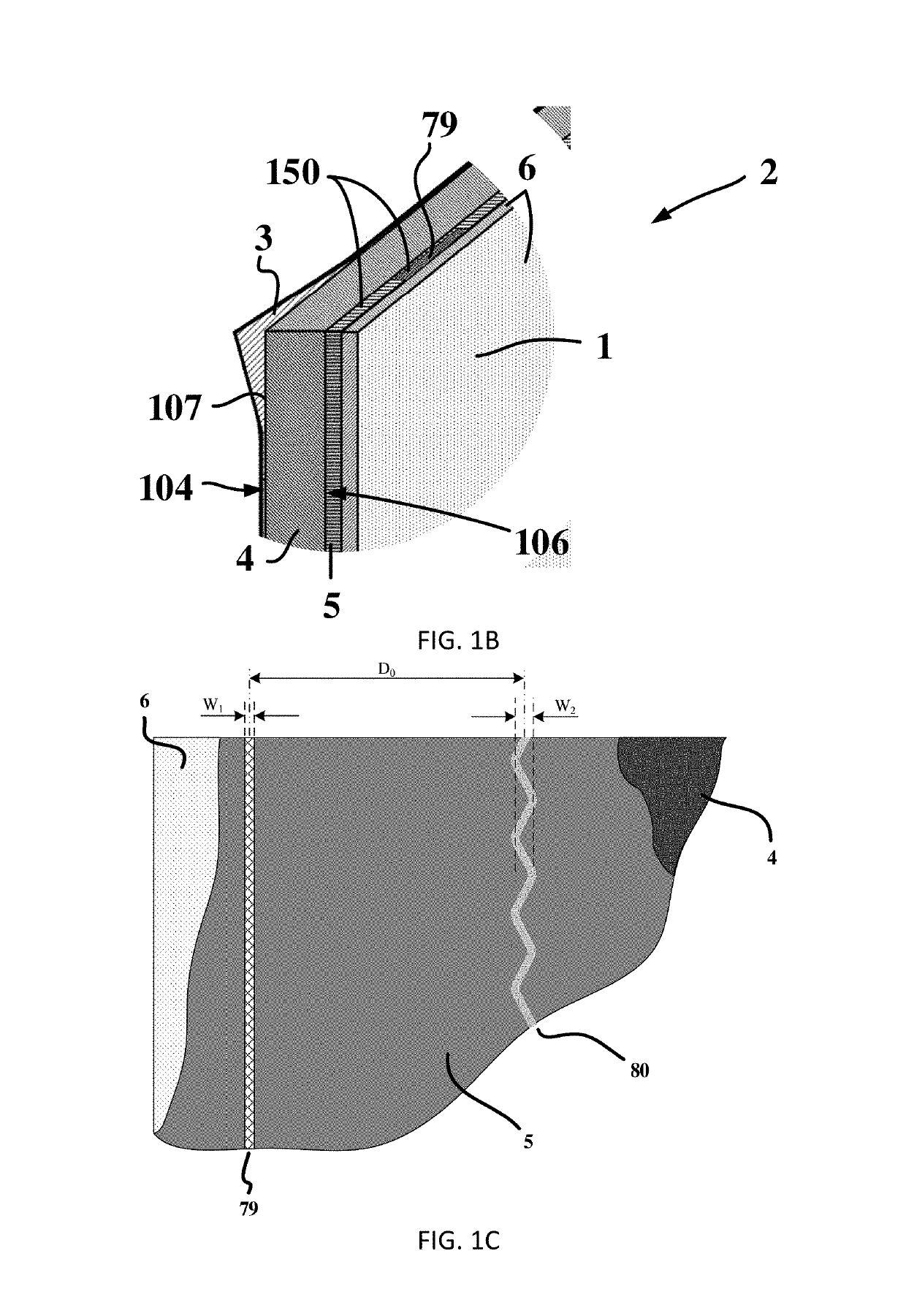
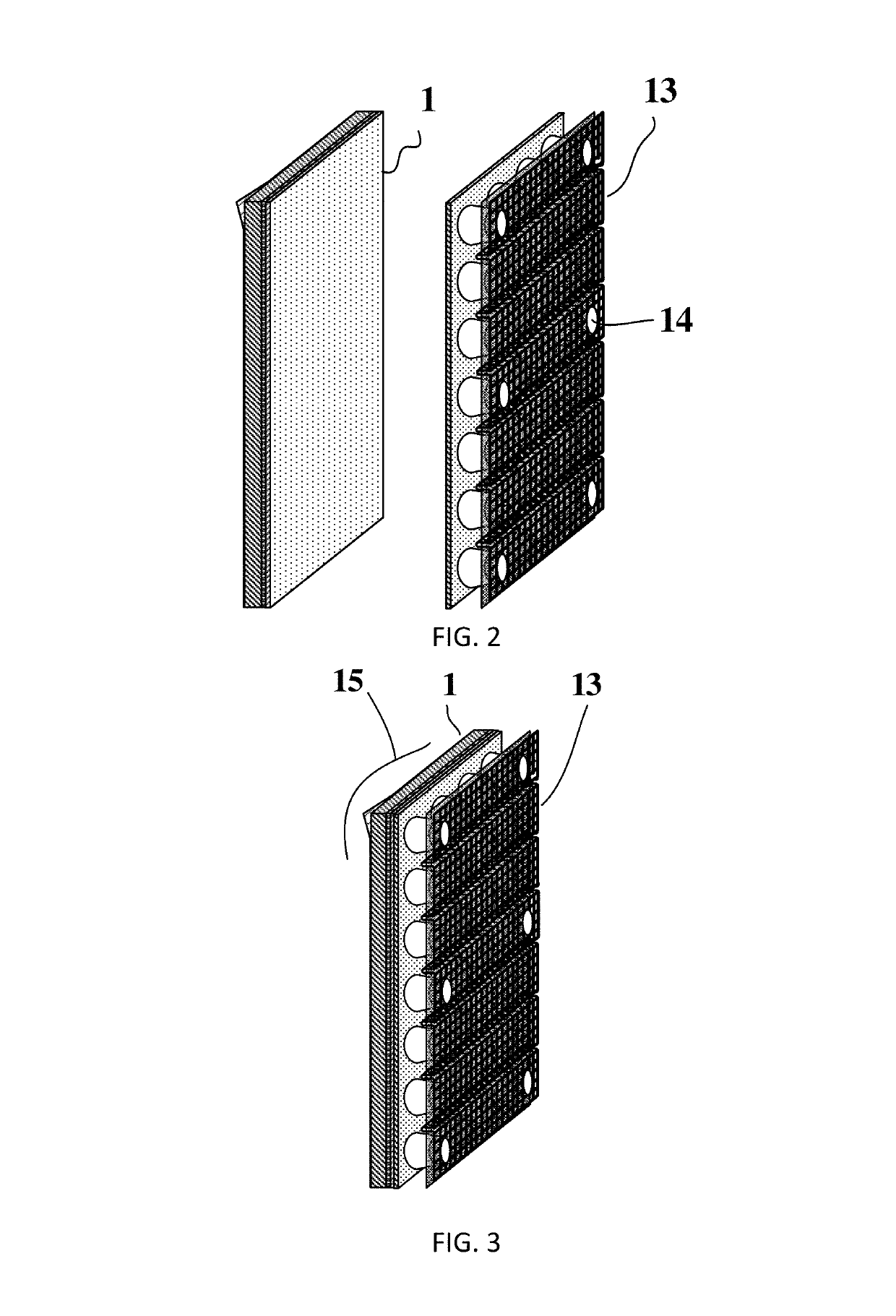
Thus, because of a factory-controlled manufacturing process with inherently low variation in quality, only the improved waterproofing-panel assembly is installed on a wall as a pre-fabricated unit.


 Login to View More