

Actuation and control of limbs through motor nerve stimulation
a technology which is applied in the field of motor nerve stimulation and limb actuation, can solve the problems of inability to successfully translate the desire to perform an action, inability to build and test a patient's device, and high cost, and achieve the effect of minimizing the time for a given maneuver, improving the movement and control of the limb, and minimizing the energy expended during the maneuver
- Summary
- Abstract
- Description
- Claims
- Application Information
AI Technical Summary
Benefits of technology
Problems solved by technology
Method used
Image

Examples
Embodiment Construction
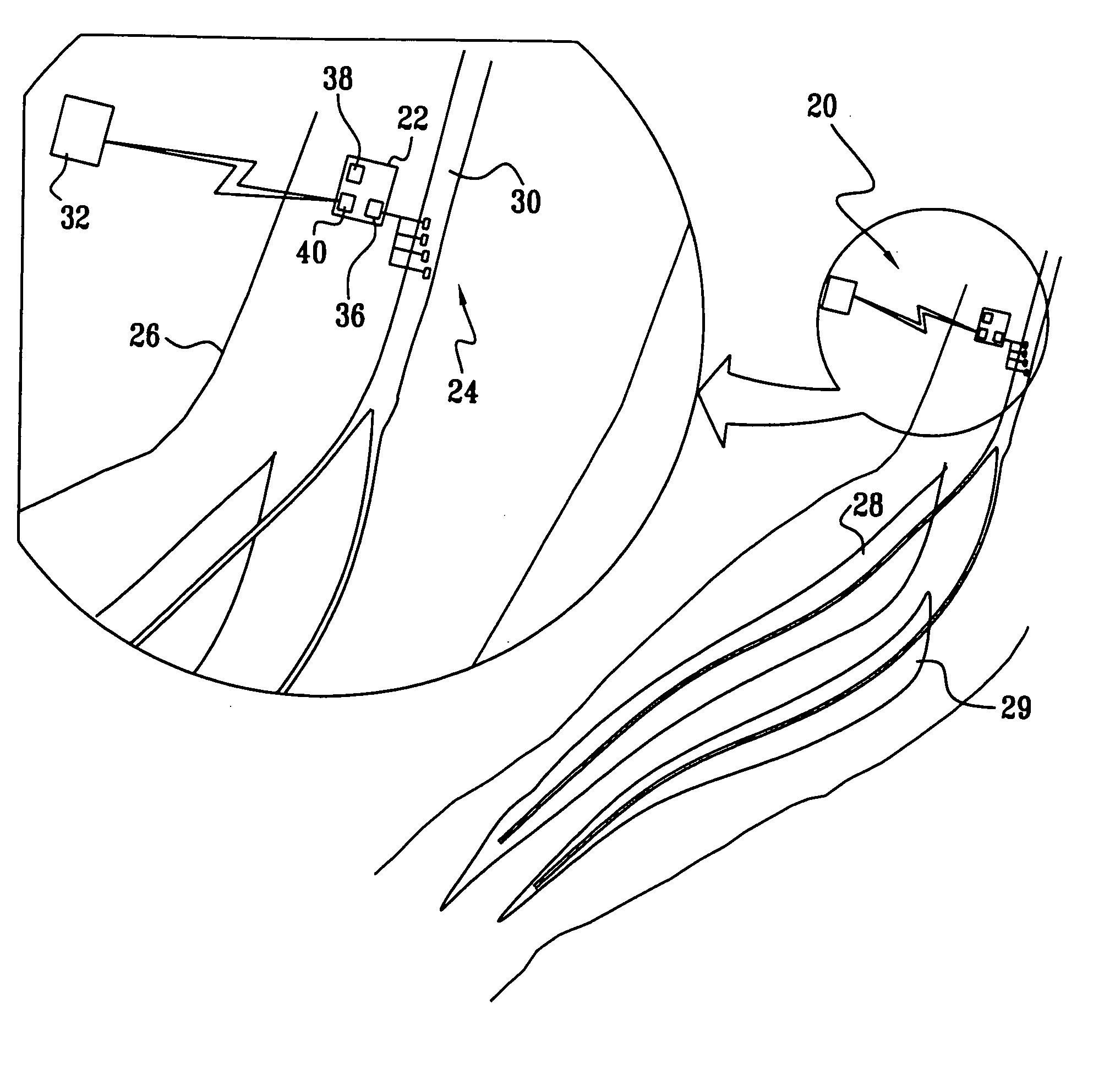
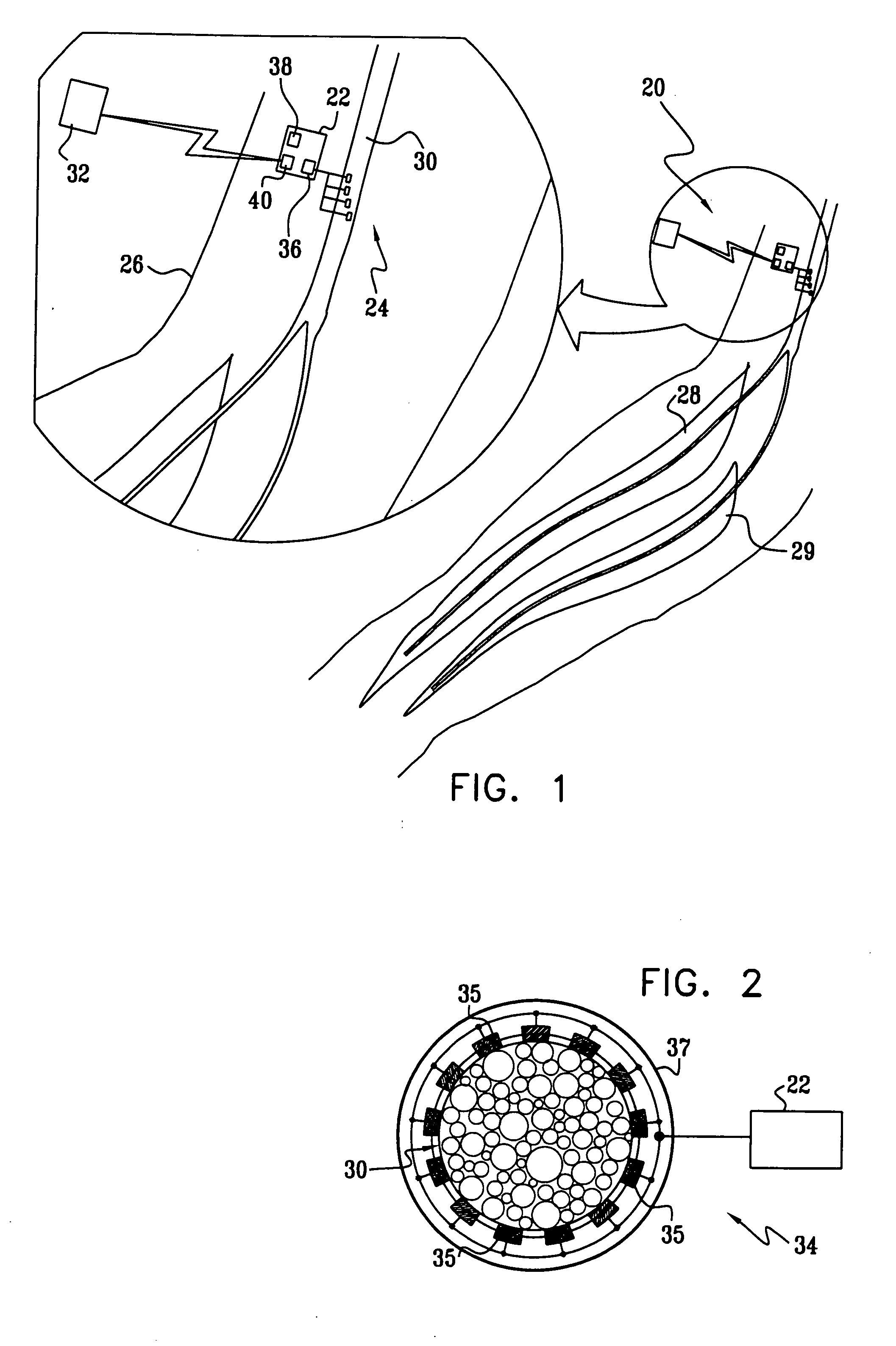
[0122]FIG. 1 is a schematic illustration of a limb actuation device 20, in accordance with a preferred embodiment of the present invention. Device 20 preferably comprises an implanted control unit 22 which is coupled to an electrode array 24 comprising a plurality of microelectrodes. Array 24 is placed in a vicinity of a motor nerve 30 that innervates a skeletal muscle 28 of a limb 26. Device 20 preferably actuates limb 26 by stimulation of selective subsets of axons in motor nerve 30. For example, array 24 may be driven to excite axons in nerve 30 that stimulate muscle 28 to contract, while generally avoiding exciting axons in nerve 30 that would cause another muscle 29 to contract. Because axons are often aligned in tracts within a nerve, for some applications, the selective stimulation of axons is achieved by driving current through a selected tract by electrodes in array 24 which are near that tract. It is noted that motor nerves are typically characterized by some degree of red...
PUM
 Login to View More
 Abstract
Description
Claims
Application Information
 Login to View More