Method, system and apparatus for controlled impedance at transitional plated-through hole via sites using barrel inductance minimization

a technology of inductance minimization and control impedance, applied in the field of information handling systems, can solve the problems of low control impedance, low control impedance, and many other problems, and achieve the effect of reducing radiated magnetic emission and improving control impedan

US20050231927A1Inactive Publication Date: 2005-10-20DELL PROD LP
8 Cites 19 Cited by

Patent Information

Authority / Receiving Office
US · United States
Patent Type
Applications(United States)
Current Assignee / Owner
Publication Date
2005-10-20
Estimated Expiration
Not applicable · inactive patent

Smart Images

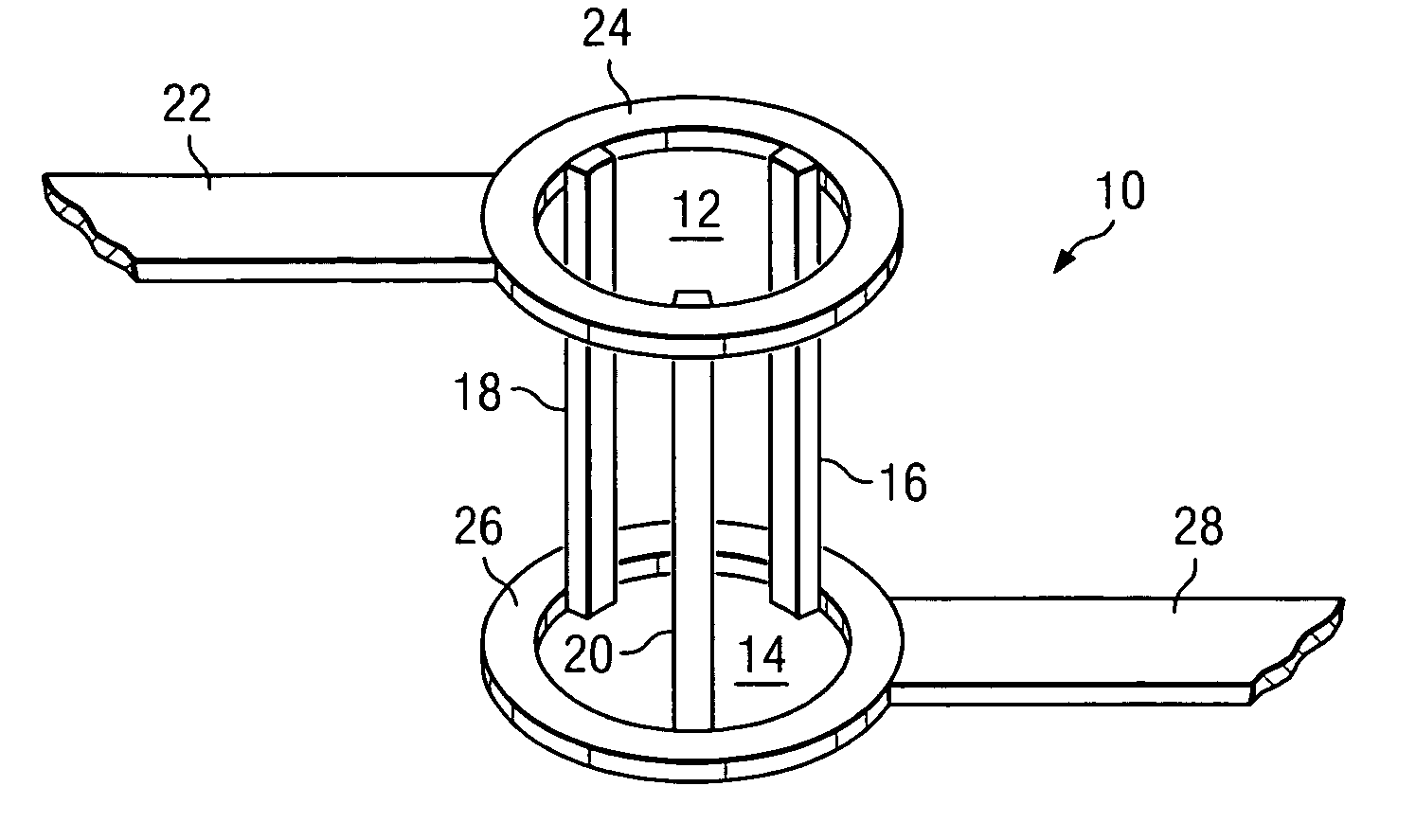
  • Figure 1
    Figure 1
  • Figure 2
    Figure 2
  • Figure 3
    Figure 3
Patent Text Reader

Abstract

A system, apparatus and method for controlled impedance at transitional via sites using barrel inductance minimization are provided. In one embodiment, one or more sidewalls of a via barrel are preferably processed such that conductive material disposed thereon is selectively removed thereby forming an inner-via trace connecting one or more conductive traces and / or pads on a first substrate layer to one or more conductive traces and / or pads on a second substrate layer. Removal of conductive material from a sidewall of the via barrel is done in a manner such that an inner-via trace traveling from a first surface to a second surface of one or more substrate layers possesses at least one electrical characteristic substantially approximating a corresponding electrical characteristic of those structures to which the inner-via trace is connected.
Need to check novelty before this filing date? Find Prior Art

Description

TECHNICAL FIELD

[0001] The present invention relates generally to information handling systems and, more particularly, to the structure and fabrication of component substrates. BACKGROUND OF THE DISCLOSURE

[0002] As the value and use of information continues to increase, individuals and businesses seek additional ways to process and store information. One option available to users is information handling systems. An information handling system generally processes, compiles, stores, and / or communicates information or data for business, personal, or other purposes thereby allowing users to take advantage of the value of the information. Because technology and information handling needs and requirements vary between different users or applications, information handling systems may also vary regarding what information is handled, how the information is handled, how much information is processed, stored, or communicated, and how quickly and efficiently the information may be processed, s...

Examples

Embodiment Construction

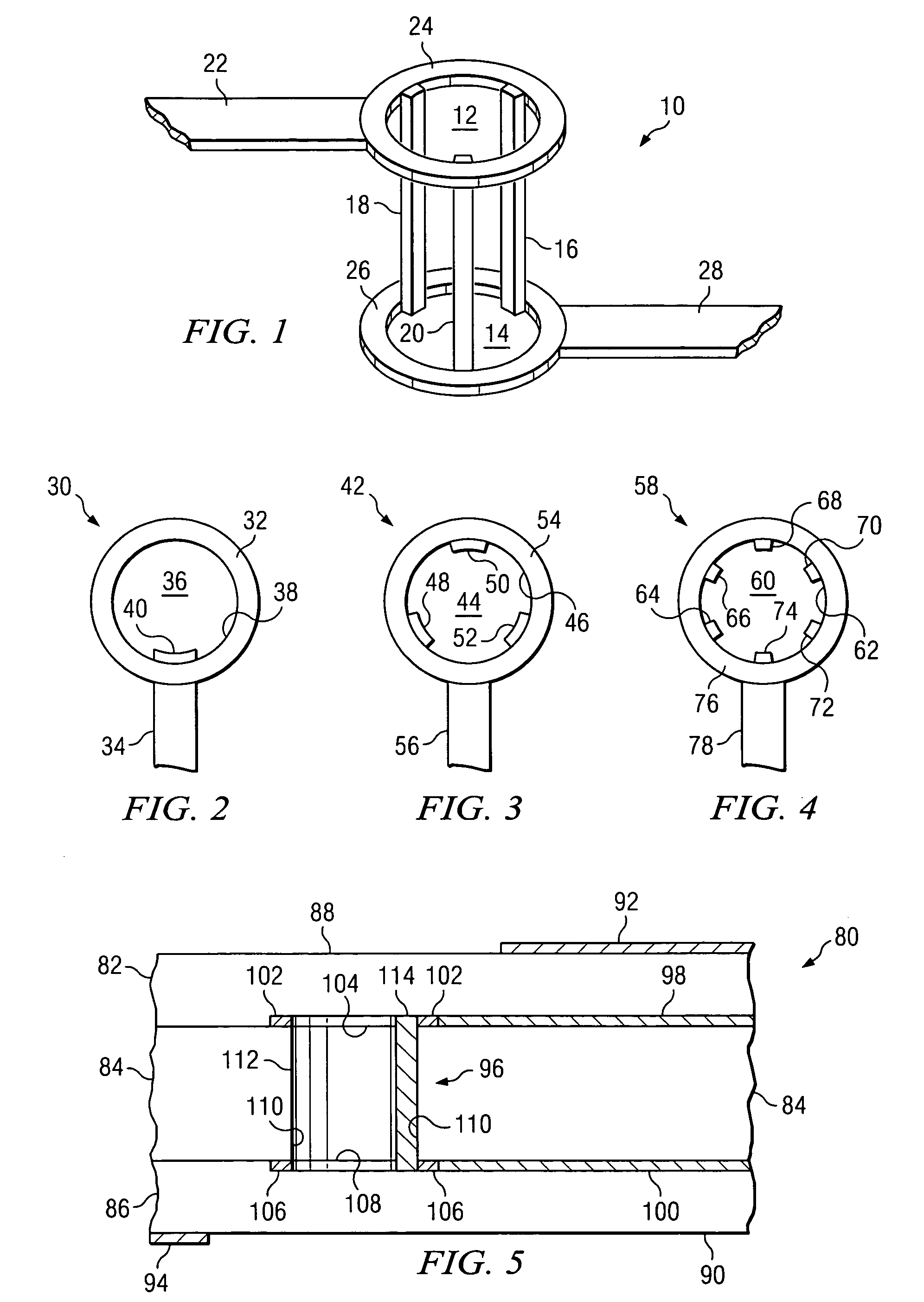
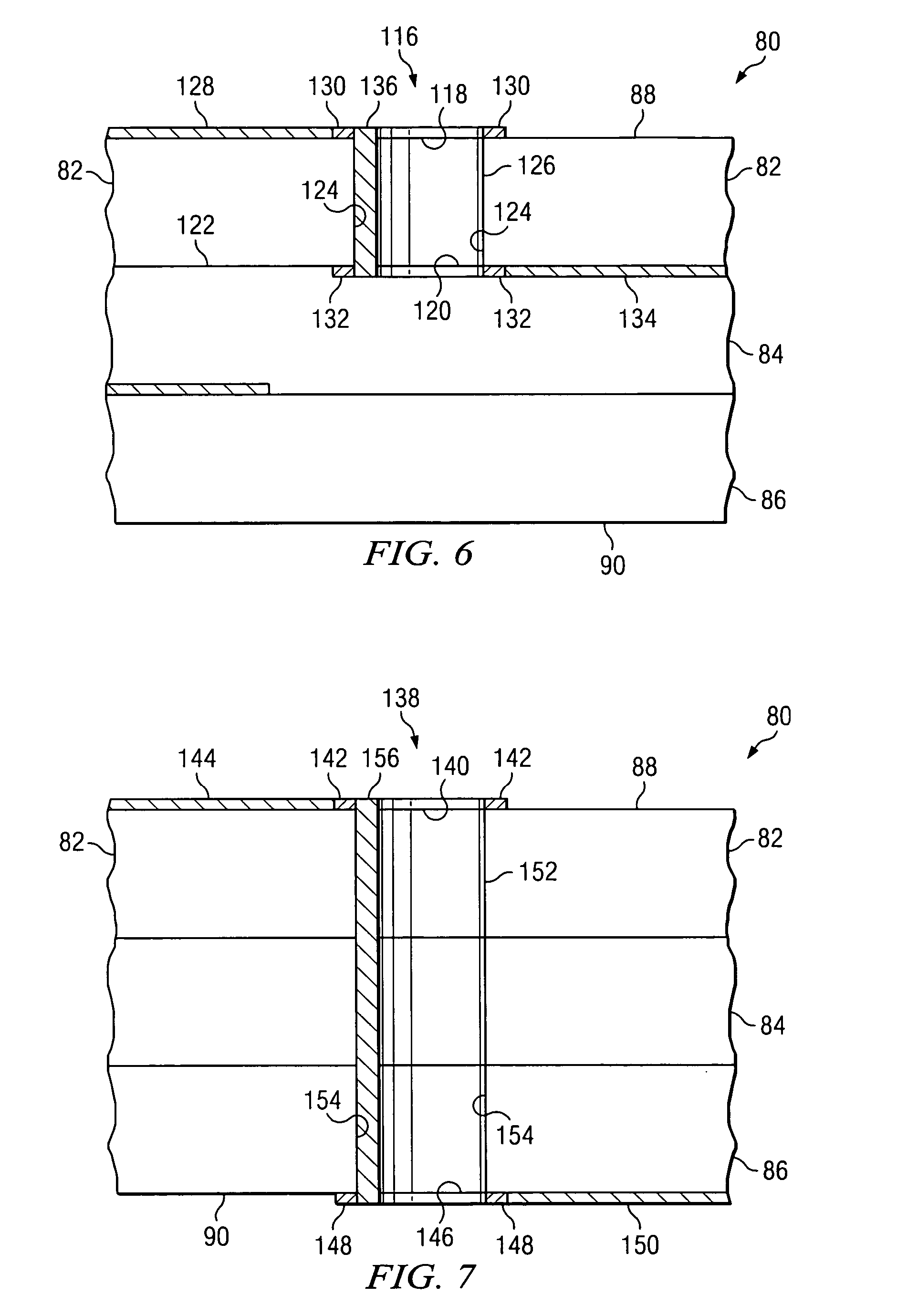
[0021] Preferred embodiments and their advantages are best understood by reference to FIGS. 1 through 7, wherein like numbers are used to indicate like and corresponding parts.

[0022] For purposes of this disclosure, an information handling system may include any instrumentality or aggregate of instrumentalities operable to compute, classify, process, transmit, receive, retrieve, originate, switch, store, display, manifest, detect, record, reproduce, handle, or utilize any form of information, intelligence, or data for business, scientific, control, or other purposes. For example, an information handling system may be a personal computer, a network storage device, or any other suitable device and may vary in size, shape, performance, functionality, and price. The information handling system may include random access memory (RAM), one or more processing resources such as a central processing unit (CPU) or hardware or software control logic, ROM, and / or other types of nonvolatile memo...