However, these incandescent
bulb systems have a number of disadvantages.
Two of the principal disadvantages are a lack of reliability and durability.
An incandescent
bulb system frequently fails during its initial warranty period.
The bulb filament is also very fragile, making transport and installation problematic.
This is true even after installation as the high temperatures needed during operation continue to make the filament susceptible to damage from swimmers impacts with the device.
This means that the
system is difficult to maintain and even when properly maintained it can be easily damaged during normal operation.
These disadvantages are coupled with the fact that incandescent bulbs are inefficient and convert most of their energy to heat with as little as 10% of their energy producing light.
This inefficiency is further compounded by the fact that in heretofore known designs the light must be transmitted across a gap in the bulb and / or housing and then through a lens prior to reaching the transmission
horizon with the water of the spa or pool resulting in further losses.
Thus, the typical incandescent
system is unreliable, fragile, and inefficient at transmitting
luminosity into the spa or pool.
Though these systems provide for waterproof LEDs, the lighting board and controllers are not encased in a singular housing encasing all the components necessary for pool or spa lights.
However, this system is ill suited for use in pools.
Though the LEDs are waterproofed by an encapsulation layer, the transmission through the oil to the lens provides only a limited increase in the transmission of
luminosity of the LEDs.
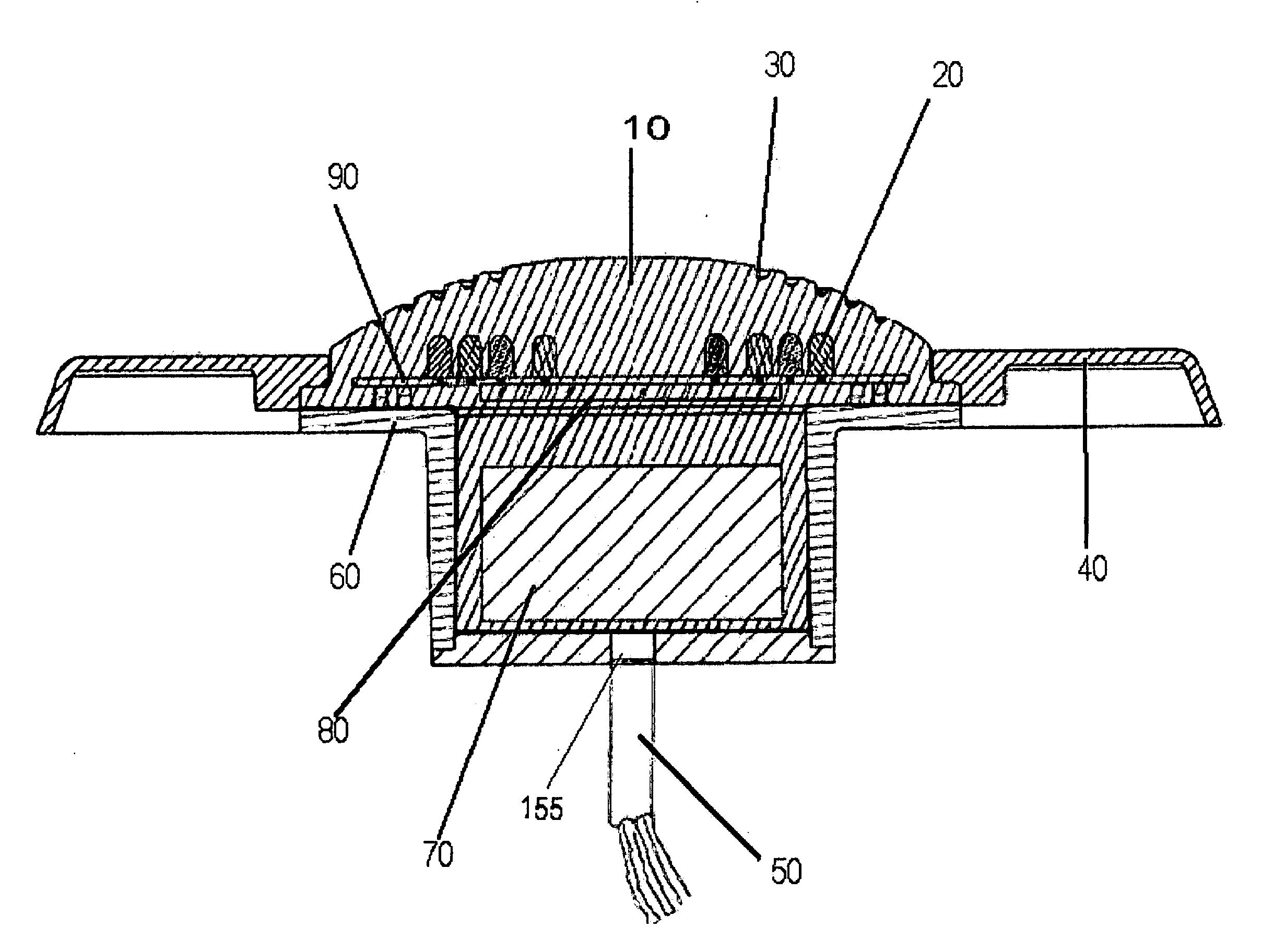
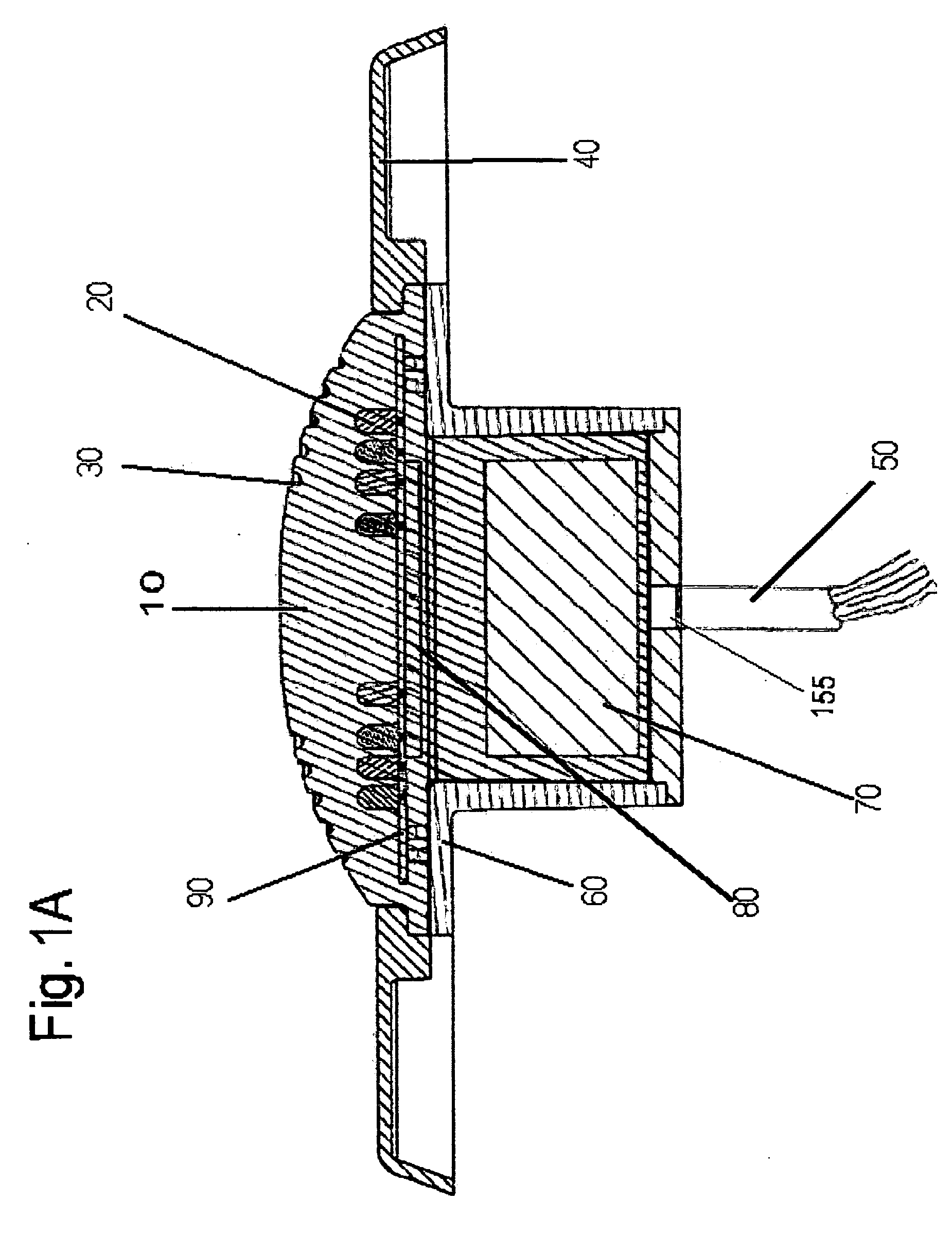
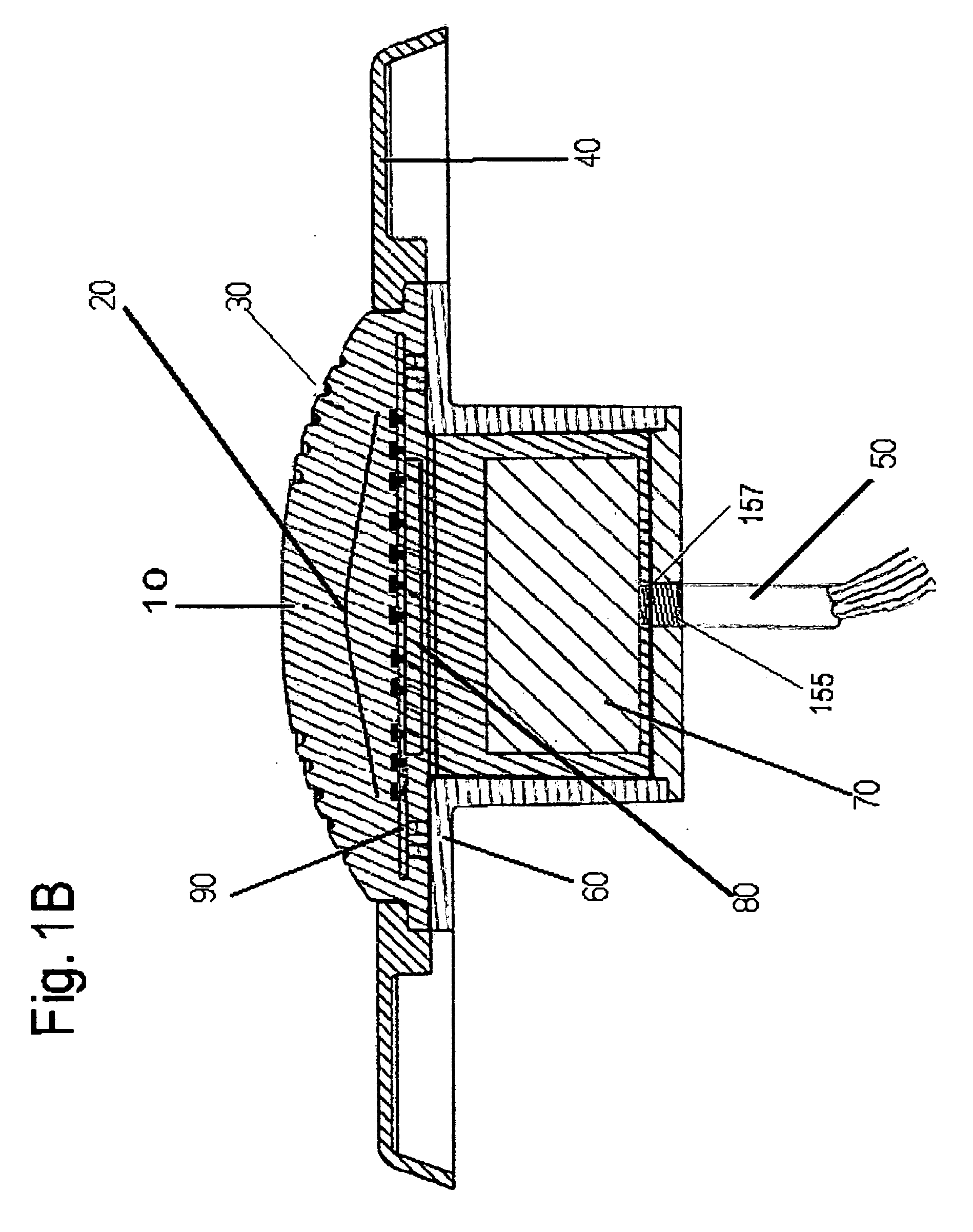
The system fails to show an LED pool or spa lamp with a lens body with the LEDs encapsulated within the lens body.
This process does not provide for the type of housing utilized in the creation of a spa or pool light, as the shape and diffuser elements cannot be attained.
However, the
air space diminishes the full transmission of the
luminosity of the LED board and does not provide for additional cooling.
It also increases the production costs of the LED pool light disclosed, requiring additional manufacturing to provide the compartment.
However, the system still maintains a watertight air gap that decreases the transmission of light into the pool or spa and does not provide for sufficient heating of the LED elements.
This reduces the efficiency of the transmission of light from the LEDs to the pool or spa.
It does not allow for the more efficient cooling that is achieved by omitting the watertight compartment nor does it provide the improved cooling and reduced cost associated with omitting these gaps.
None of the aforementioned devices provides the ability to maximize the intensity and transmission of the light from the LED into the spa or pool and provide cooling of the LEDs, allowing them to be run at a higher intensity, through direct contact of the LEDs with a lens body within the fixture to the water.
Additionally, no feature has been able to achieve the desired superior
luminescence, efficiency, and coloring while maintaining durability, increasing
dependability, increasing ease of maintenance, and decreasing manufacturing costs.



 Login to View More
  Login to View More