Memory based authentication system

US20080189553A1Inactive Publication Date: 2008-08-07COGNETO DEV

Image

Smart Image Click on the blue labels to locate them in the text.
Viewing Examples
Smart Image
  • Memory based authentication system
  • Memory based authentication system
  • Memory based authentication system

Examples

Experimental program
Comparison scheme
Effect test

Embodiment Construction

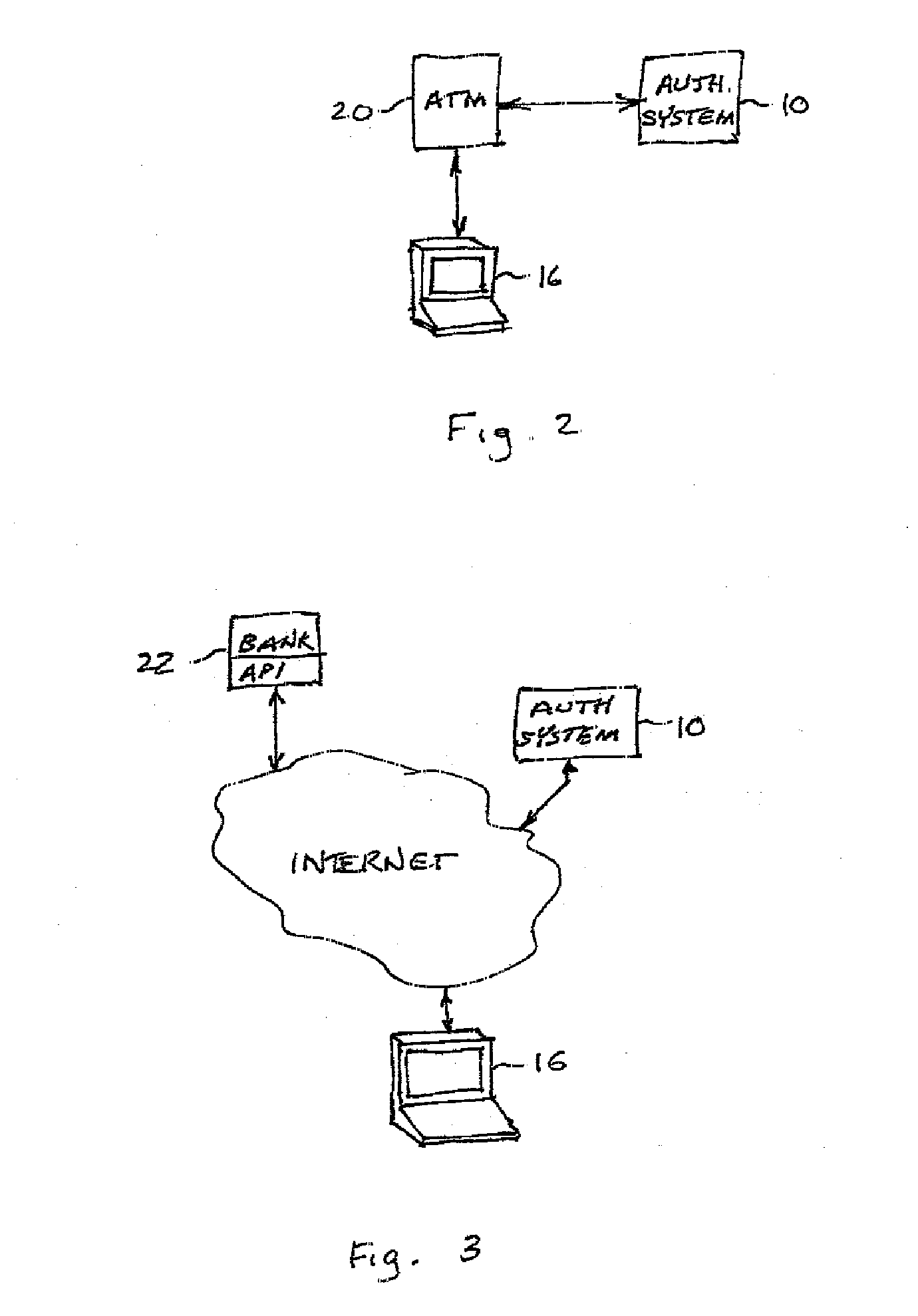
[0027]To ensure that a person with whom a company expects to be doing business is present during a login, the present system verifies that person's presence by asking simple questions about that person's unique life experiences, using memories and memory processes as the access key. The present system is also applicable to ATM's enabling devices (e.g., PDA's), account access, etc. It uses recognition and knowledge recall (as opposed to event recall) in order to assure ease of use. Typical users require only a few minutes to begin using the system and, after a few sessions, less than a minute to be authenticated. Session duration depends on the level of security desired by the establishment that uses the system. Three distinct categories of questions are available to clients to choose, in accordance with their security needs.

Nostalgia

[0028]The first category of questions is characterized by nostalgia. A feeling of nostalgia creates its own unique memory that enables a user to repeate...

the structure of the environmentally friendly knitted fabric provided by the present invention; figure 2 Flow chart of the yarn wrapping machine for environmentally friendly knitted fabrics and storage devices; image 3 Is the parameter map of the yarn covering machine
Login to View More

PUM

No PUM Login to View More

Abstract

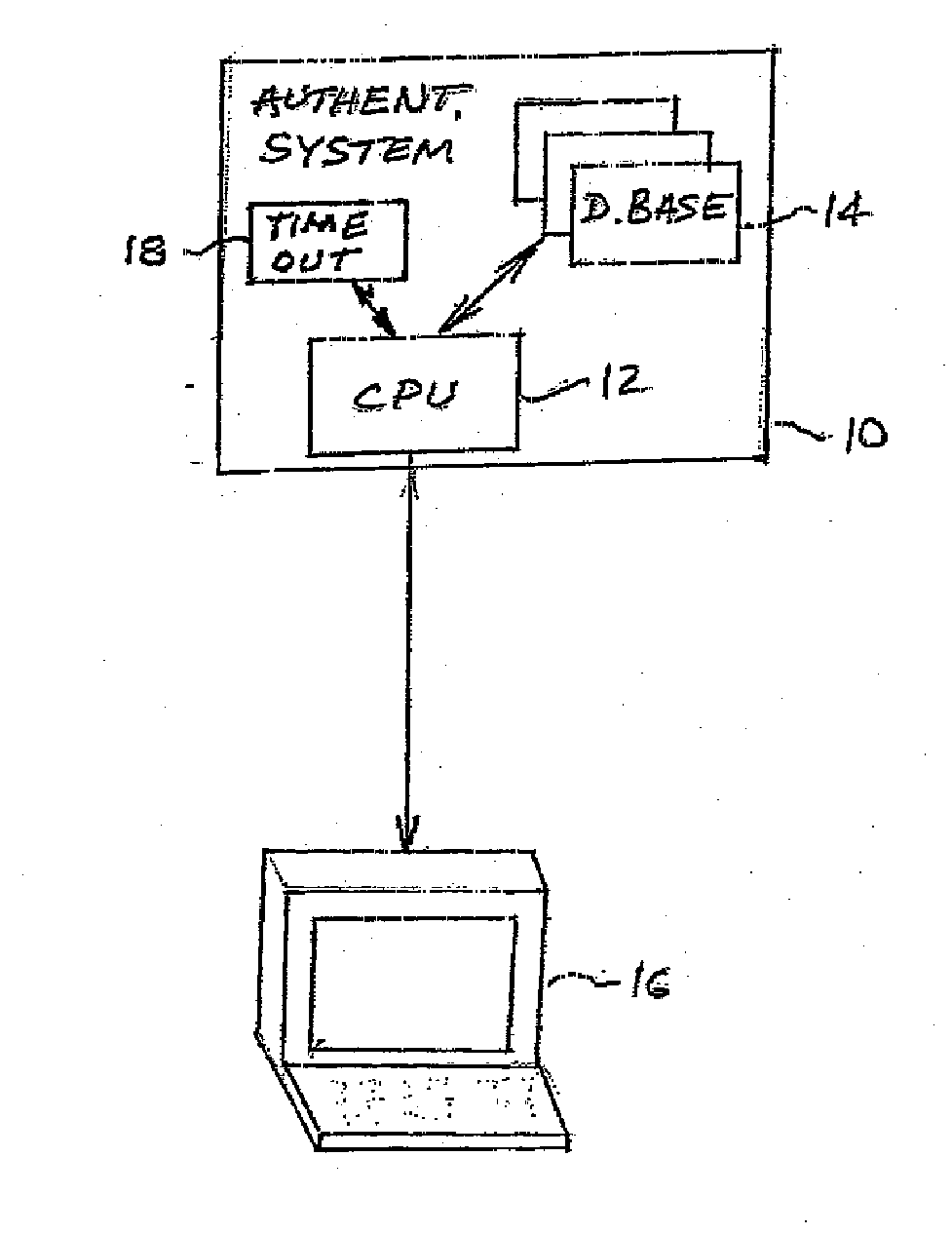
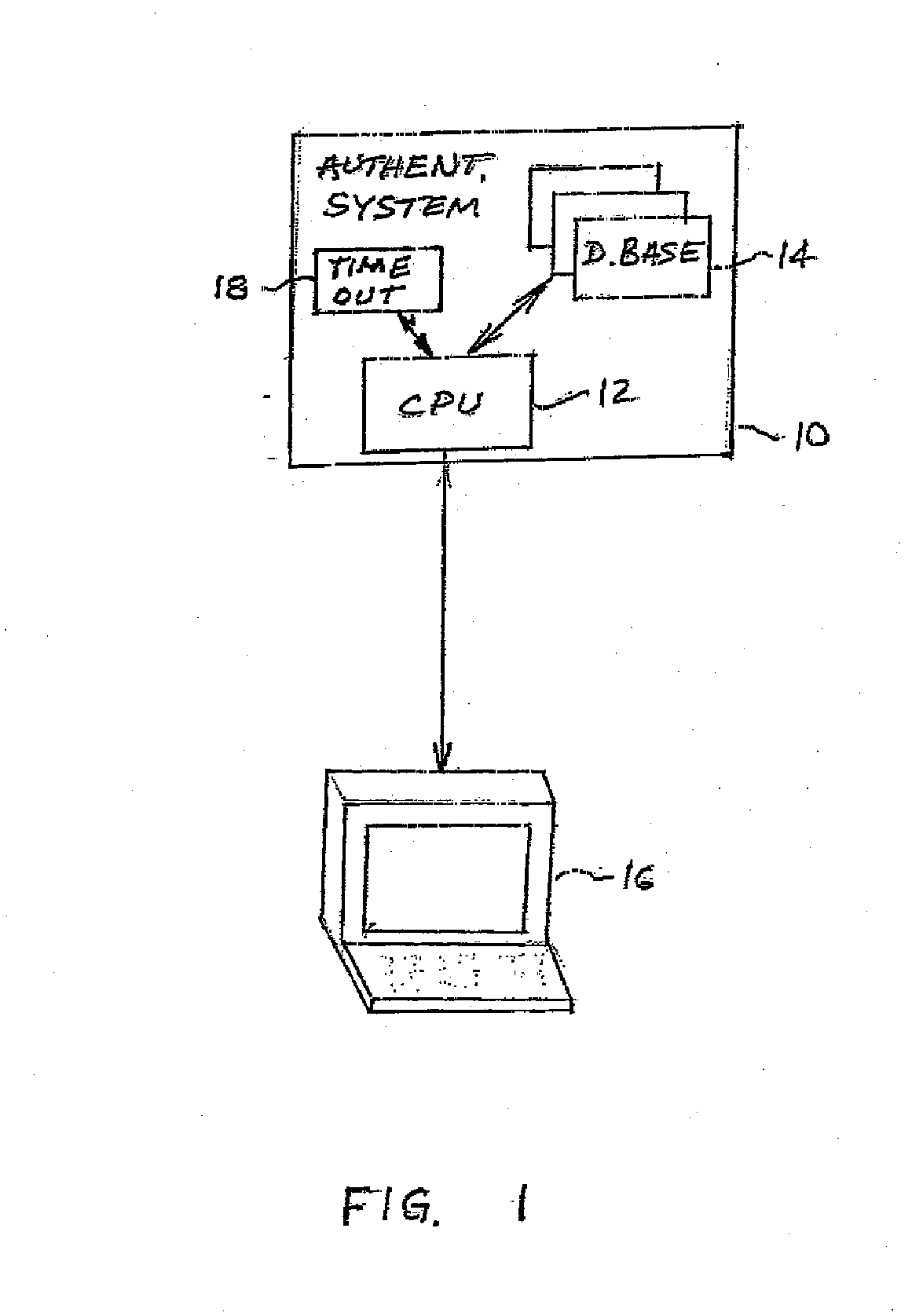
An authentication system for authenticating an identity of a user which has a database having a plurality of training questions about the user's past and a corresponding testing question for each of the training questions stored thereon. The authentication system also has a central processing unit (CPU) coupled to the database and is operative in both a training session and a testing session to select a sub-set of the training questions and to pose them to the user, store user responses to the subset of training questions in the user's profile and, in said testing session and to select a subset of the testing questions. The subset of testing questions is posed to the user and the responses of said user to said subset of test questions checked against the user's profile. Each of the testing questions is based on a corresponding training question without a context.

Description

RELATED APPLICATIONS[0001]This application is a Continuation in Part of U.S. patent application Ser. No. 11 / 161,116, filed on Jul. 22, 2005.[0002]This application claims priority of previously filed U.S. patent application Ser. No. 11 / 161,116, filed on Jul. 22, 2006.FIELD[0003]The present invention relates to a user authentication system based upon memories and memory processes. Unique life experiences are used to ensure others do not gain access to personal information.BACKGROUND[0004]Authenticating the user of a computer system is the process of determining that the user is who he / she claims to be. The most common authentication technique is the user name and password. The former provides identity credentials while the latter provides authentication credentials. When faced with choosing a password of 5-10 characters in length, composed of letters and numbers, most people choose short, simple passwords that can be easily remembered. Modern computers can ascertain such passwords ver...

Claims

the structure of the environmentally friendly knitted fabric provided by the present invention; figure 2 Flow chart of the yarn wrapping machine for environmentally friendly knitted fabrics and storage devices; image 3 Is the parameter map of the yarn covering machine
Login to View More

Application Information

Patent Timeline
07 Aug 2008
Publication
US20080189553A1
IPC
H04L9/00
CPC
G06F21/31; H04L63/0861; H04L63/08; G06F2221/2103
Inventors
EPPERT, DAVID; RENAUD, MARTIN L.