

Oral Device
a technology for rehabilitation devices and mouths, applied in the field of oral rehabilitation devices, can solve the problems of snoring and sleep apnea, obstructing respiration, and unable to establish a proper tongue rest position
- Summary
- Abstract
- Description
- Claims
- Application Information
AI Technical Summary
Benefits of technology
Problems solved by technology
Method used
Image

Examples
Embodiment Construction
[0016]While the invention is susceptible of various modifications and alternative constructions, certain illustrated embodiments thereof have been shown in the drawings and will be described below in detail. It should be understood, however, that there is no intention to limit the invention to the specific form disclosed, but, on the contrary, the invention is to cover all modifications, alternative constructions, and equivalents falling within the spirit and scope of the invention as defined in the claims.
[0017]In the following description and in the figure, like elements are identified with like reference numerals. The use of “or” indicates a non-exclusive alternative without limitation unless otherwise noted. The use of “including” means “including, but not limited to,” unless otherwise noted.
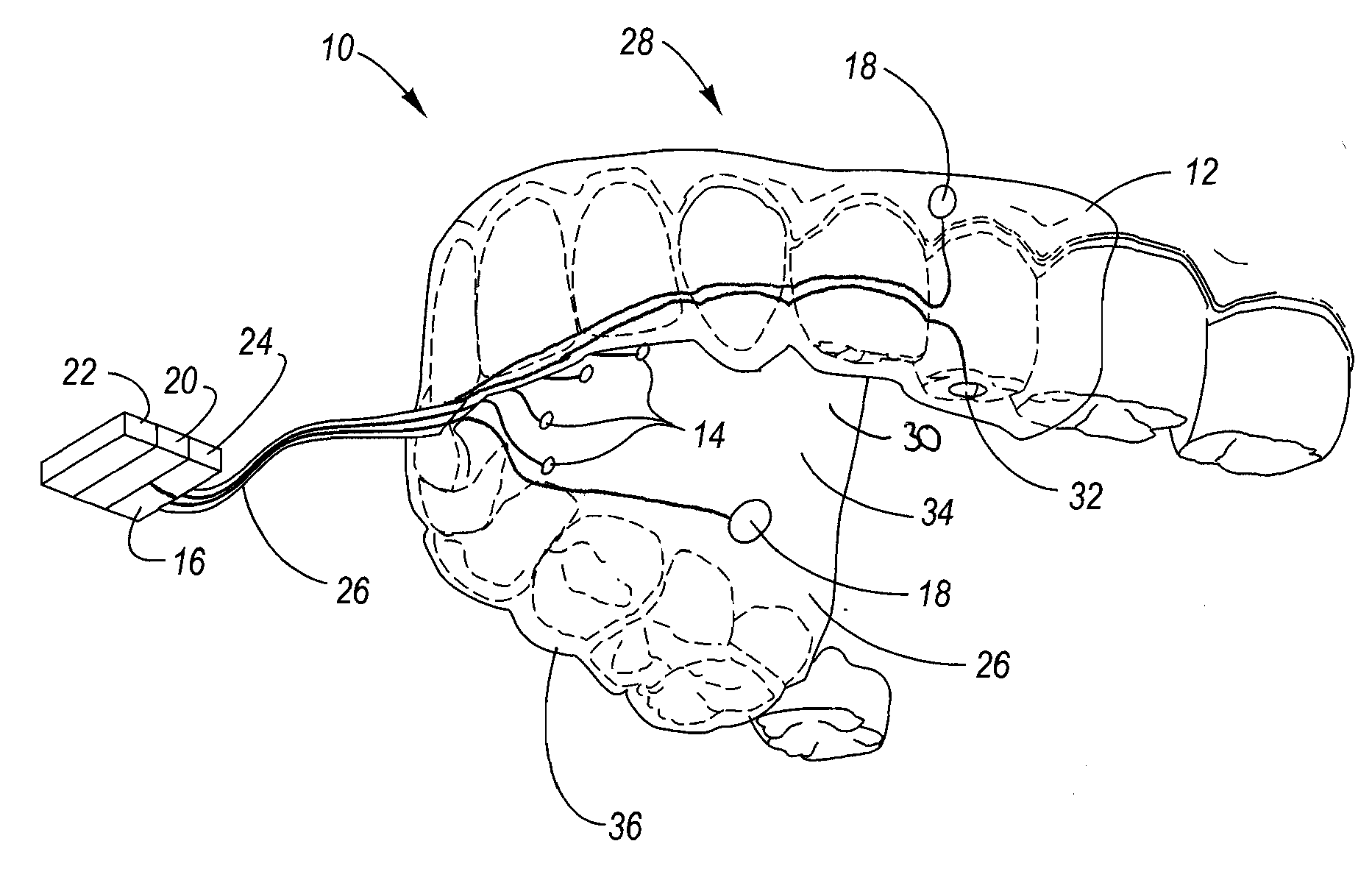
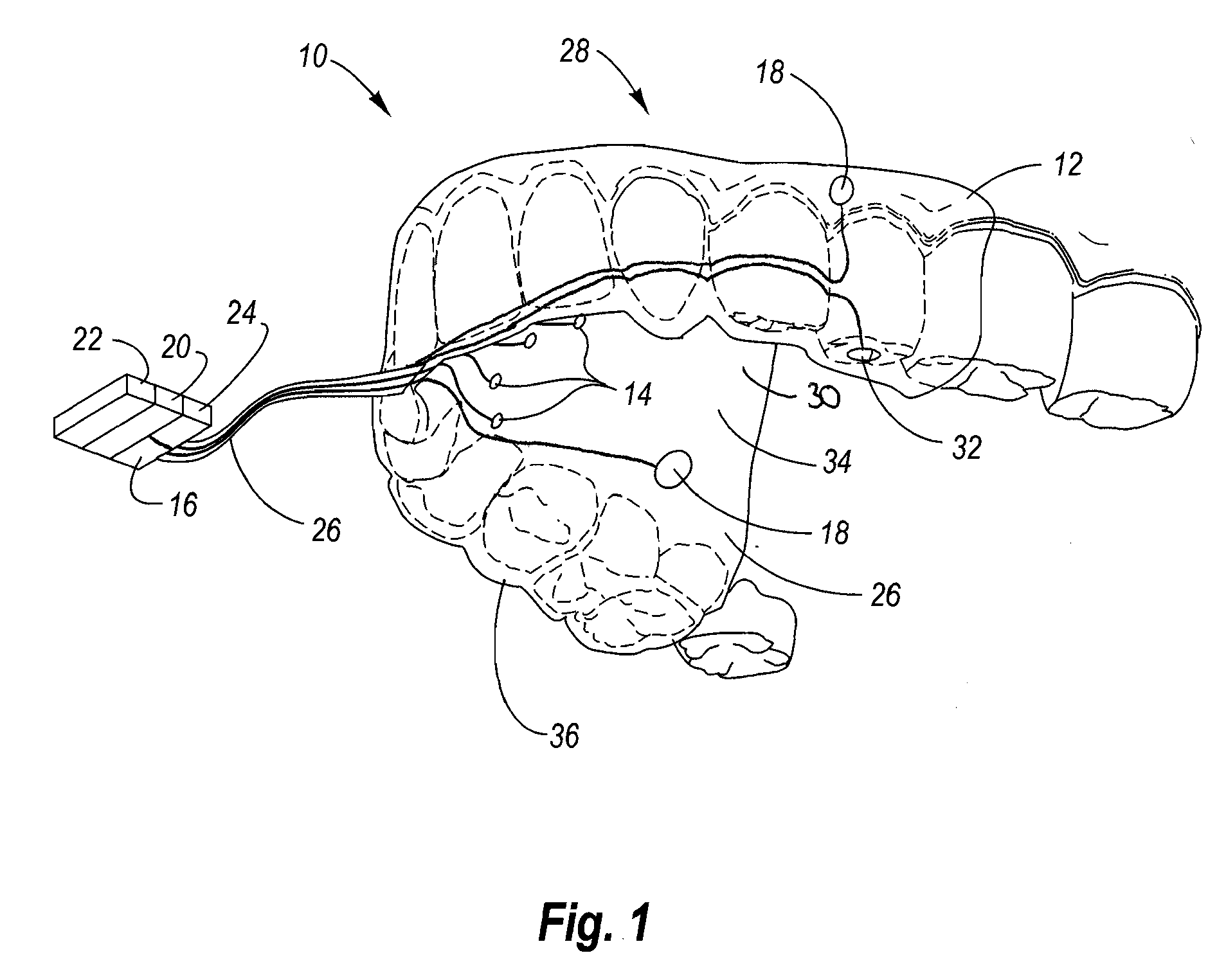
[0018]FIG. 1 shows a preferred embodiment of the oral appliance of the invention, which includes an appliance body 12. The appliance body 12 may be generally configured like a prior art orth...
PUM
 Login to View More
 Abstract
Description
Claims
Application Information
 Login to View More