
Pheromone compositions and methods of use
- Summary
- Abstract
- Description
- Claims
- Application Information
AI Technical Summary
Benefits of technology
Problems solved by technology
Method used
Image

Examples
example 1
Pheromone Compositions
[0049]Table 1 lists the formulations of five exemplary pheromone compositions (A, B, C, D, and E) prepared according to the present teachings. All amounts are presented as % w / w of the composition.
TABLE 1FORMULATION (% w / w)COMPONENTABCDELinoleic Acid59.6920206061.19Myristic Acid1.51.511n-Pentadecanoic acid4.55.51.50.5(Pentadecylic Acid)Cholesterol1151Lauric Acid0.30.30.30.31-Docosanol (Behenyl2224.992alcohol or DocosylAlcohol)Squalene (Shark3167.6968.193034Origin)Capric Acid4Azelaic Acid1.51BHT0.010.010.010.010.01Pimelic Acid1.51(Heptanedioic acid)TOTAL100100100100100
example 2
Behavior Modification in Dogs
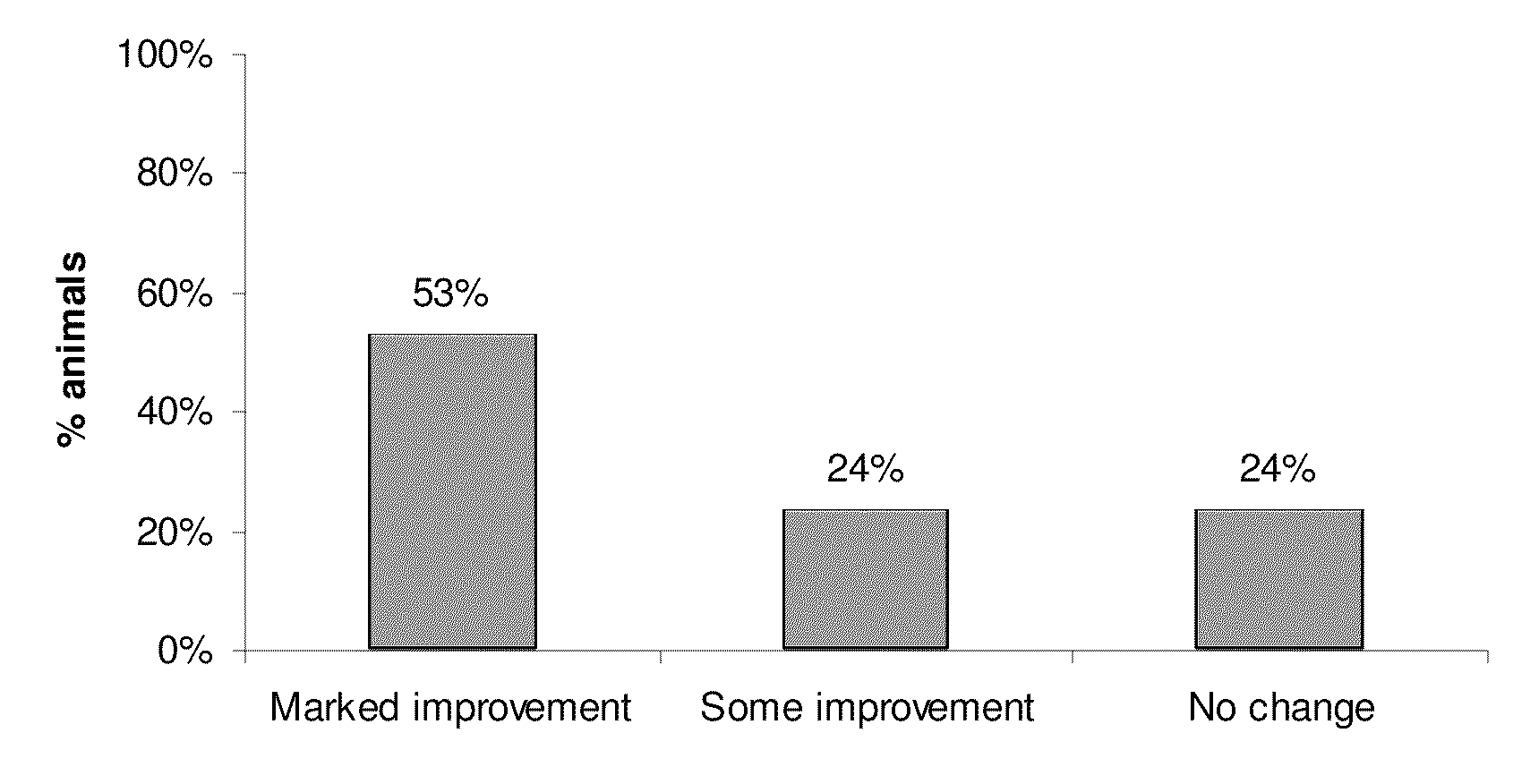
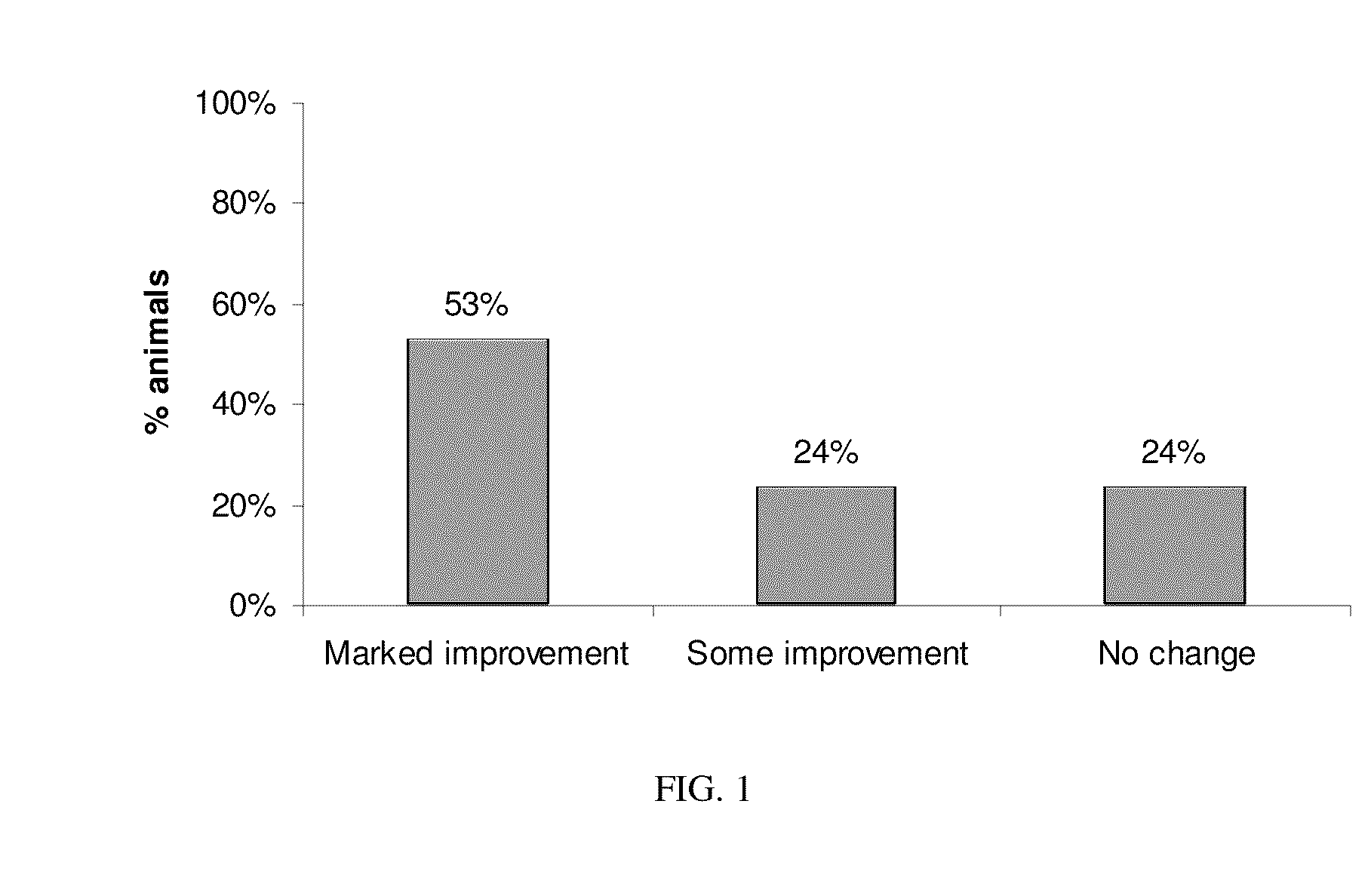
[0050]The primary objective of this study was to assess the efficacy of a pheromone collar comprising the formulation of the present invention in controlling stress related behaviors in dogs. The collar was formed from an extrusion process using PVC into which a composition according to formula C from Example 1 was incorporated at 6% by weight (of the collar). All of the dogs enrolled in the study were client-owned dogs presented to a veterinary practice for behavior-related problems. Owners were invited to participate in the study if the dog exhibited one or more of the following symptoms: nervousness or fear of noise; timidity / fear of other dogs or people; excessive chewing; excessive barking; aggressive displays toward other dogs or the owner; soiling when left alone; and / or hyperactivity.
[0051]The testing period lasted anywhere from one to three months. Animal subjects acted as their own controls. All animals were treated with a plasticized collar in...
example 3
Behavior Modification in Cats
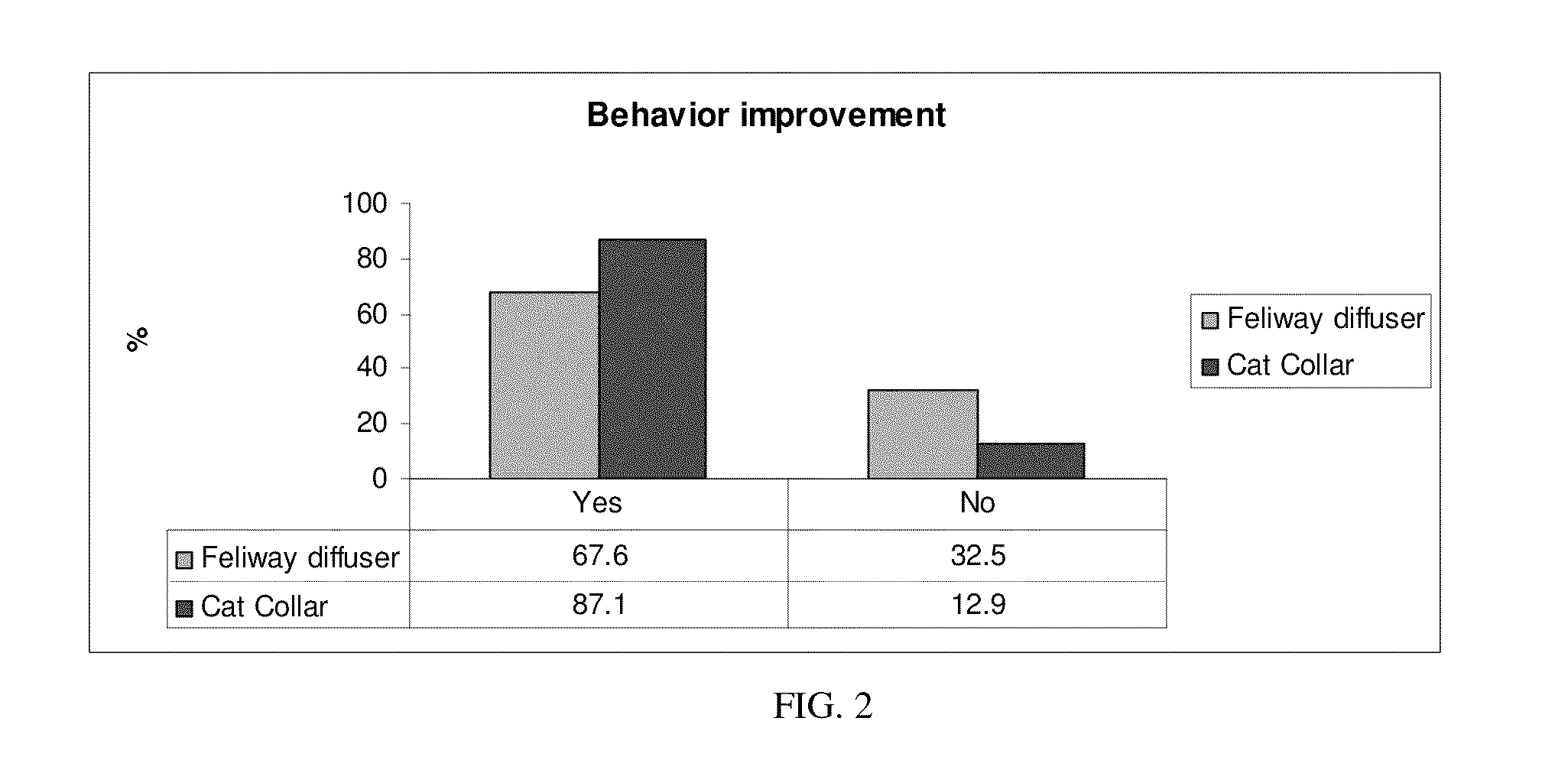
[0054]A clinical field trial was conducted in 119 cats presented for one or more of the following behavior problems: urination, scratching, aggressiveness, and / or excessive timidity. Animals that presented one or more of these conditions were enrolled in the study and divided into one of two treatment groups. Animals from the first group wore a pheromone collar for a period of two months. The collar was formed from an extrusion process using PVC into which was incorporated a composition according to formula C from Example 1 at 9% by weight (of the collar). Animals from the second group were treated using a commercial plug-in cat pheromone diffuser (Comfort Zone® diffuser sold with Feliway®) for a period of two months. The study was conducted under a blind condition so that the human owners did not know the identity of the brand name, manufacturer name and composition during the course of the study. Owners were asked to answer simply “Yes” or “No” as to w...
PUM
| Property | Measurement | Unit |
|---|---|---|
| Fraction | aaaaa | aaaaa |
| Fraction | aaaaa | aaaaa |
| Fraction | aaaaa | aaaaa |
Abstract
Description
Claims
Application Information
 Login to View More