
MEMS barcode device for monitoring medical systems at point of care
- Summary
- Abstract
- Description
- Claims
- Application Information
AI Technical Summary
Benefits of technology
Problems solved by technology
Method used
Image

Examples
Embodiment Construction
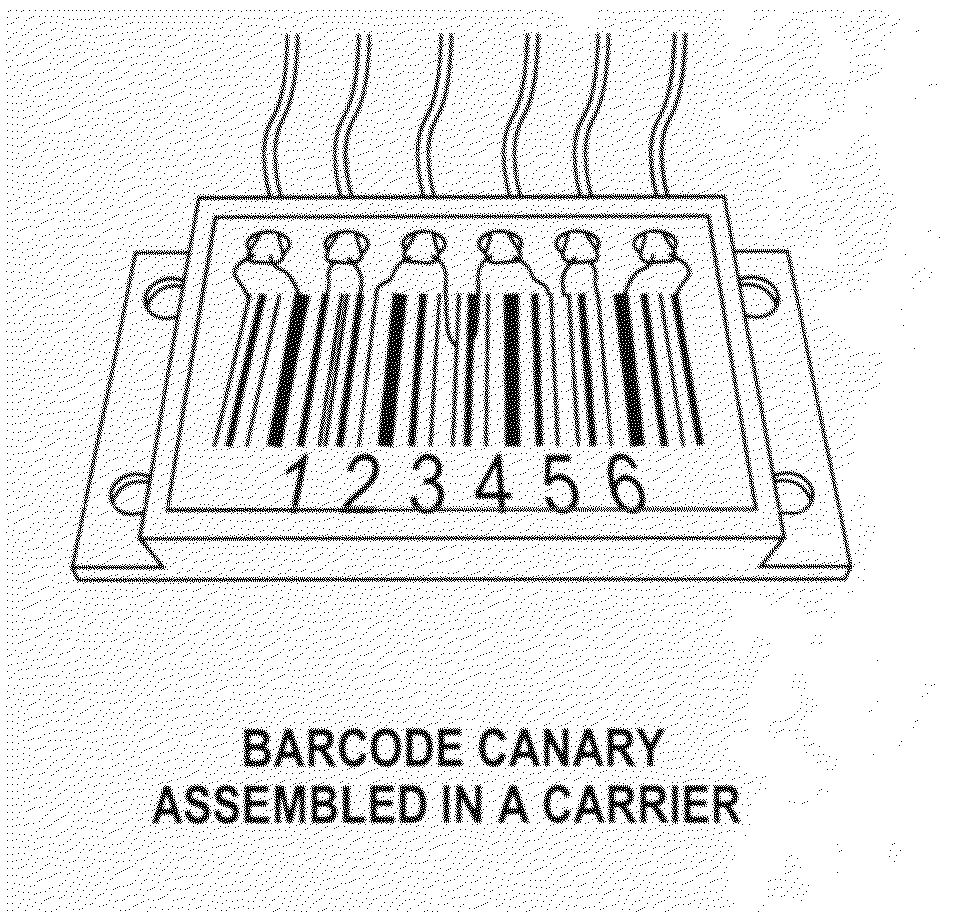
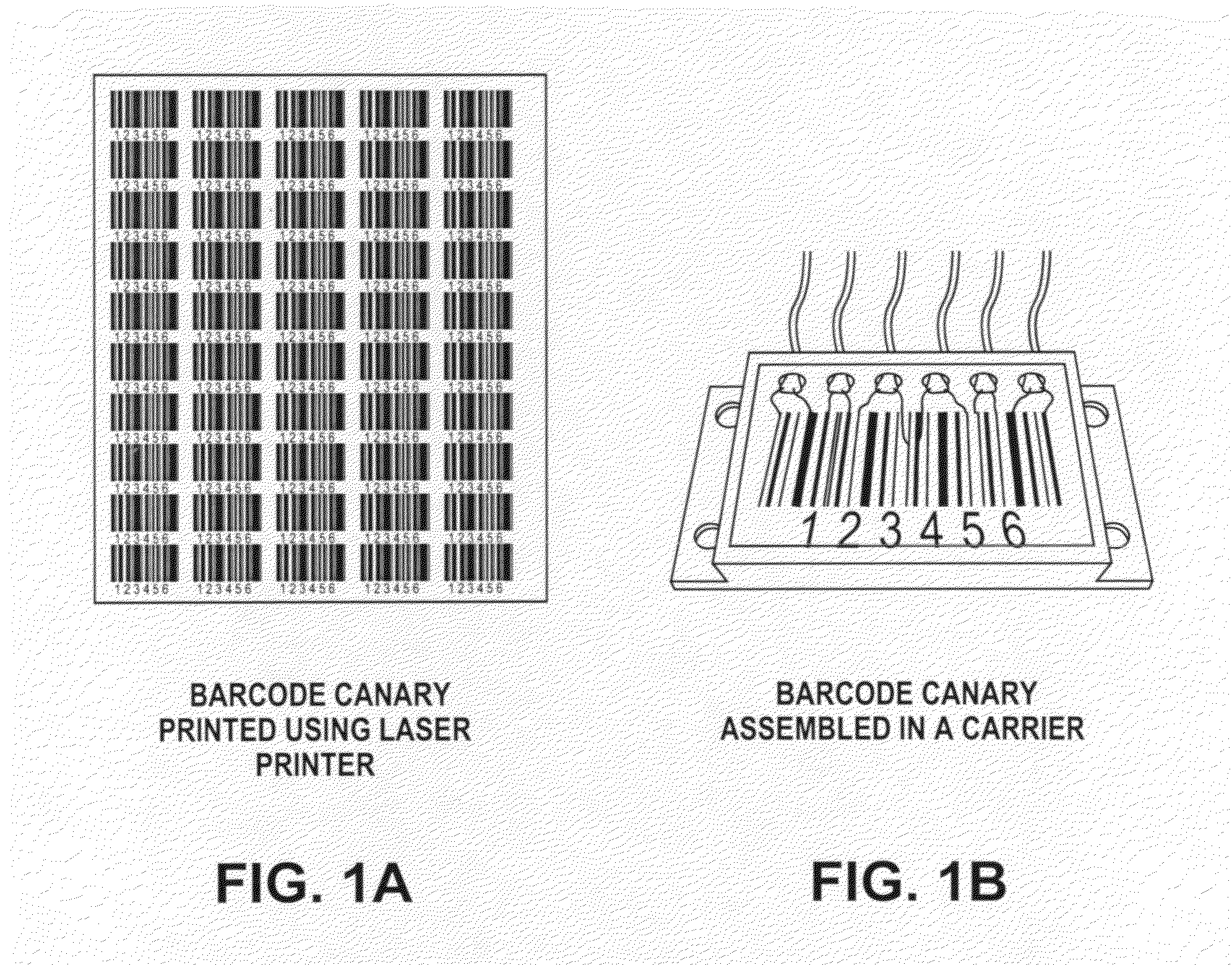
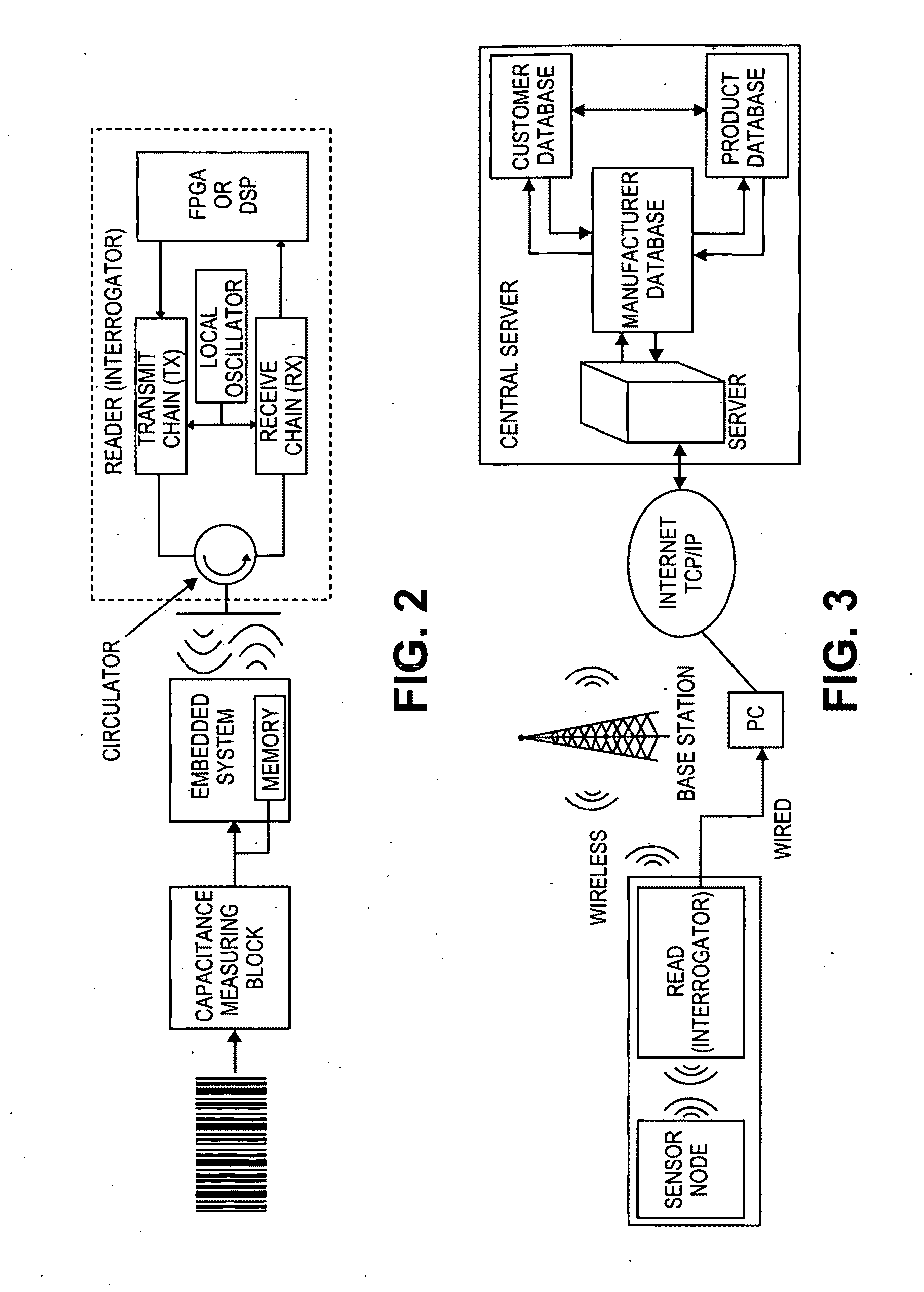
[0021]The barcode canary device of this invention contains a set of sensitive materials can that respond to various environmental factors such as temperature, humidity, pressure and pH. The changes in the environment or usage conditions of a host system will cause the material properties of these sensitive materials to change, which are represented by certain parameters such as impedance and capacitance. One or more of these sensors can be placed at different locations within a piece of medical equipment to monitor the environment immediate to a particular component within the system. An interrogator within a room can be used to monitor the condition of the component using RFID technology, on an ongoing basis and report the results of each interrogation to a central server system where the data can be analyzed to detect early warning of component / system failure. In one embodiment, a single interrogator can be placed in a room where medical equipment is being monitored, and be used t...
PUM
| Property | Measurement | Unit |
|---|---|---|
| Temperature | aaaaa | aaaaa |
| Time | aaaaa | aaaaa |
| Dielectric polarization enthalpy | aaaaa | aaaaa |
Abstract
Description
Claims
Application Information
 Login to View More