
Method for forming surface layer, method for forming erosion resistant component and steam turbine blade
- Summary
- Abstract
- Description
- Claims
- Application Information
AI Technical Summary
Benefits of technology
Problems solved by technology
Method used
Image

Examples
first embodiment
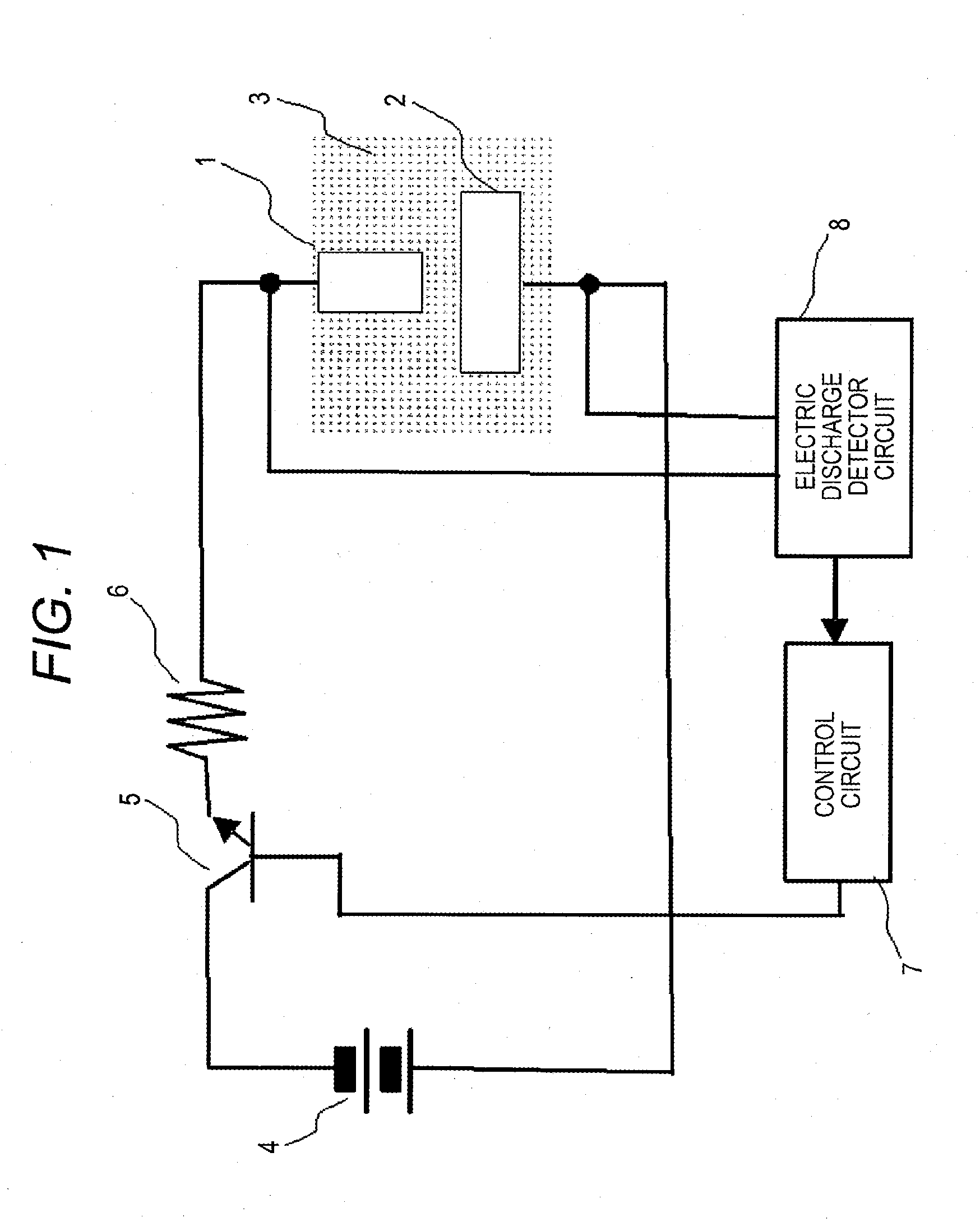
[0039]FIG. 1 illustrates an outline of an electric discharge surface treatment method in which pulsed electric discharge is generated between an Si electrode and a member, and a texture having an erosion resistant function is formed on a surface of the member.
[0040]In the figure, reference numeral 1 is a solid metal silicon (Si) electrode, 2 is a member to be treated such as a steam turbine blade, 3 is an oil that is a machining fluid, 4 is a DC power supply, 5 is a switching element for applying (or stopping) a voltage of the DC power supply 4 between the Si electrode 1 and the member 2, 6 is a current-limiting resistor for controlling a current value, 7 is a control circuit for controlling on / off operation of the switching element 5, and 8 is an electric discharge detector circuit for detecting the voltage between the Si electrode 1 and the member 2 to detect the generation of electric discharge.
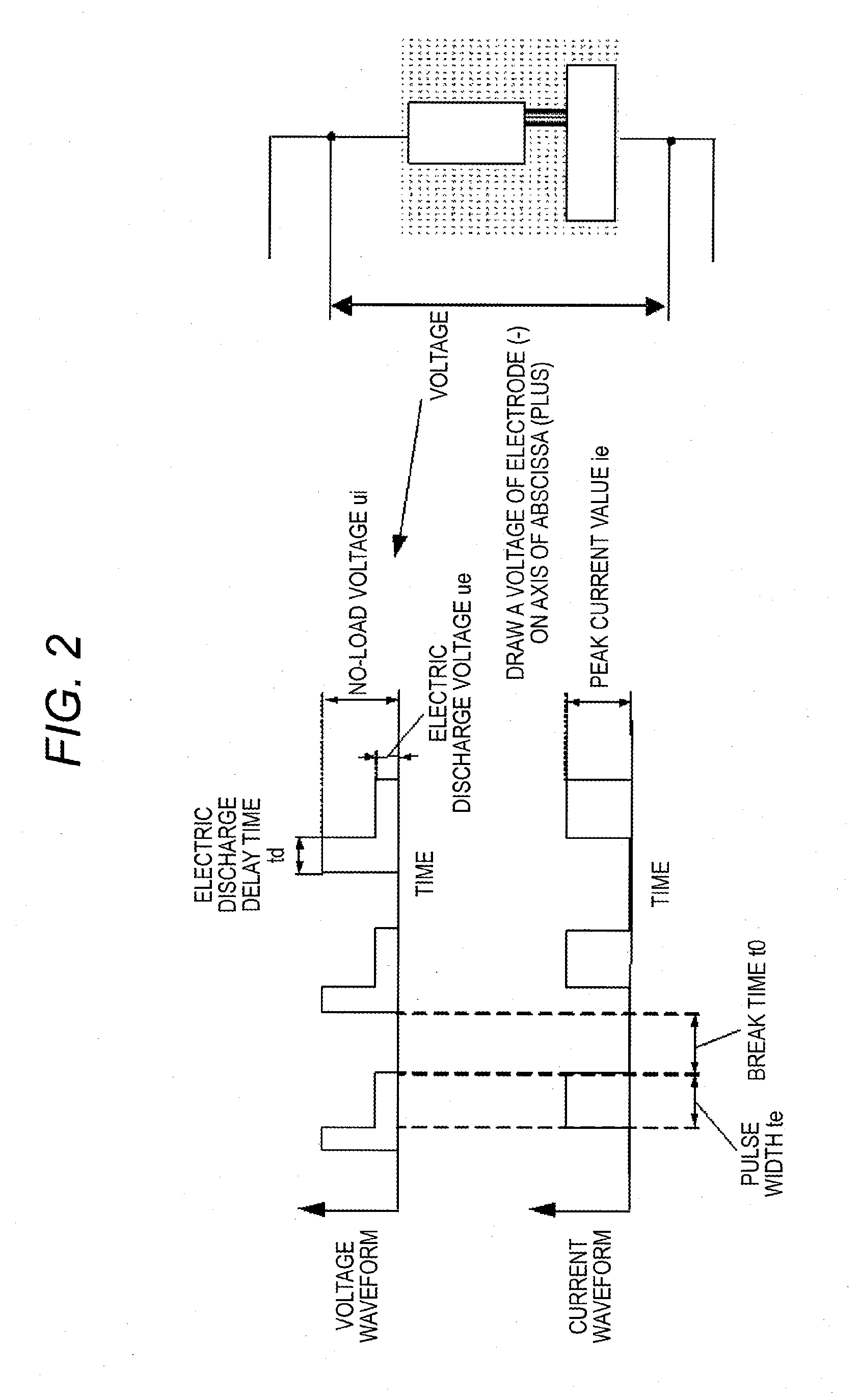
[0041]Subsequently, the operation will be described with reference to FIG. 2 illustrat...
PUM
| Property | Measurement | Unit |
|---|---|---|
| Time | aaaaa | aaaaa |
| Thickness | aaaaa | aaaaa |
| Current | aaaaa | aaaaa |
Abstract
Description
Claims
Application Information
 Login to View More