
Peptide mimetic ligands of polo-like kinase 1 polo box domain and methods of use
a technology of pololike kinase and mimetic ligands, which is applied in the direction of peptides, drug compositions, peptides, etc., can solve the problems of minimal elements required for stable pbd binding, reduce tumor growth in mouse xenograft models, and induce apoptosis cell death in most tumor cells, so as to reduce the level of pharmacological effectiveness and improve the effect of pbd binding stability
- Summary
- Abstract
- Description
- Claims
- Application Information
AI Technical Summary
Benefits of technology
Problems solved by technology
Method used
Image

Examples
example 1
Materials and Methods
Methods
[0214]General. All experiments involving moisture-sensitive compounds were conducted under dry conditions (positive argon pressure) using standard syringe, cannula, and septa apparatus. Solvents: All solvents were purchased anhydrous (Aldrich) and used directly. HPLC-grade hexanes, EtOAc, CH2Cl2, and MeOH were used in chromatography. TLC: analytical TLC was performed on Analtech precoated plates (Uniplate, silica gel GHLF, 250 microns) containing a fluorescence indicator; NMR spectra were recorded using a Varian Inova 400 MHz spectrometer. The coupling constants are reported in Hertz, and the peak shifts are reported in the δ (ppm) scale. Low resolution mass spectra (ESI) was measured with Agilent 1200 LC / MSD-SL system, and high resolution mass spectra (ESI or APCI) was measured by UCR Mass Spectrometry Facility, Department of Chemistry, University of California, 3401 Watkins Dr., Riverside Calif., 92521. Optical rotations were measured on a Jasco P-1010 ...
example 2
Identification of Minimal p-T78 Peptides that Bind to the PBD of Plk1
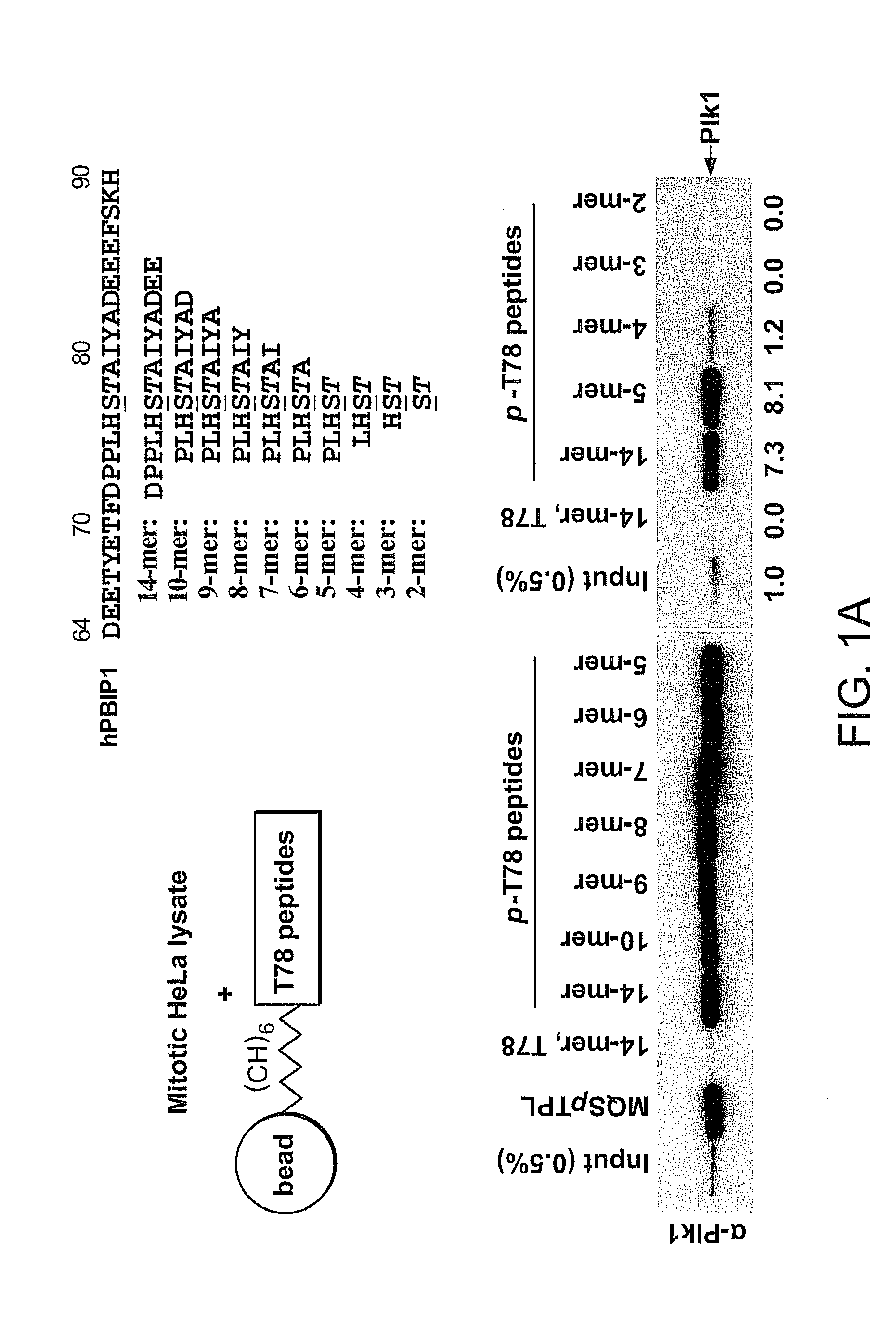
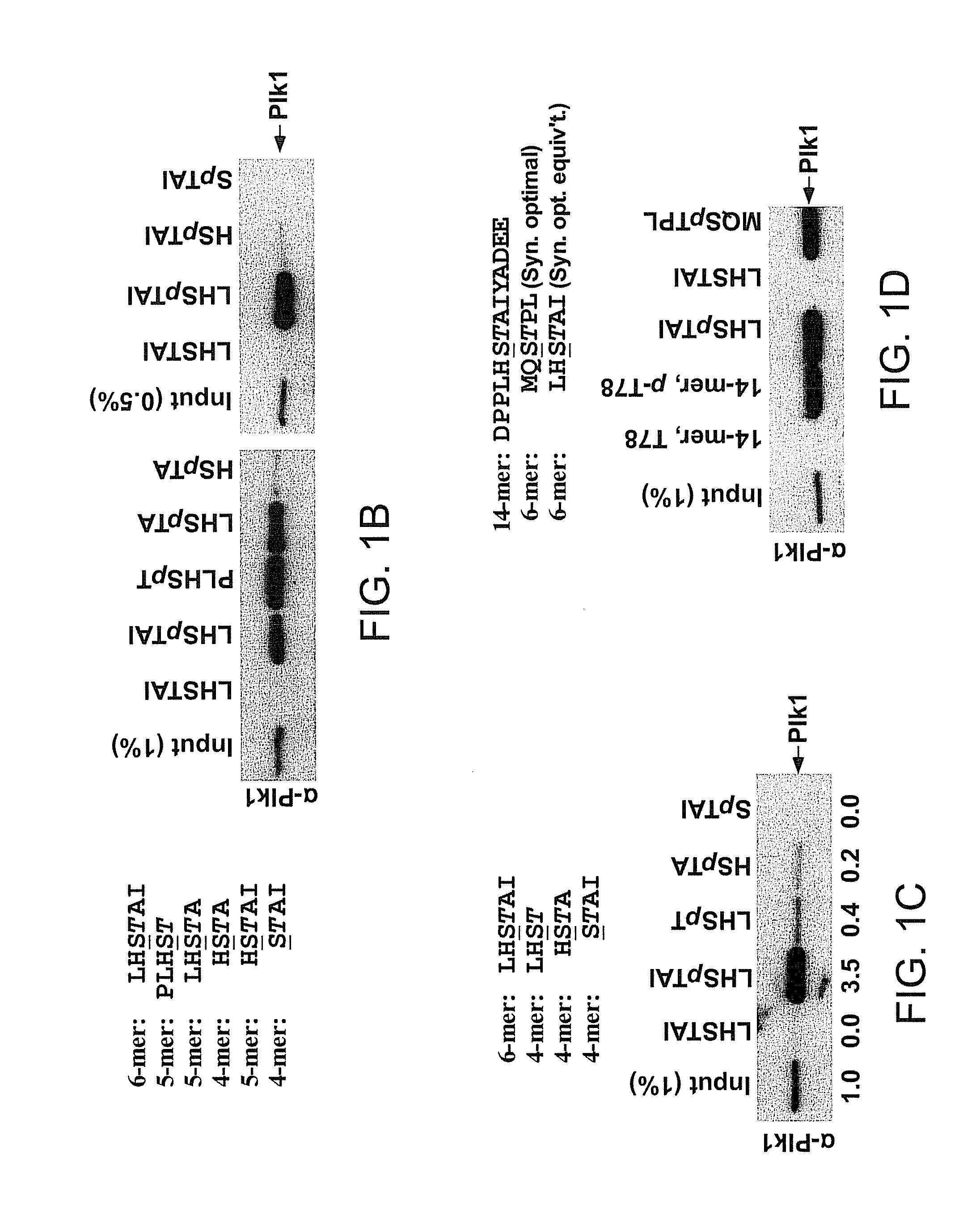
[0235]PBIP1 / MLF1IP / KLIP1 / CENP-50 / CENP-U (PBIP1 hereafter) was isolated as a PBD-interacting protein critical for Plk1 localization to the centromeres (15) and for proper chromosome segregation (15-18). Further investigation on the Plk1-PBIP1 interaction shows that the PBD of Plk1 binds to the T78 region of PBIP1 in a phospho-dependent manner (15). To better understand the binding nature of Plk1PBD to the S77-p-T78 motif, various p-T78 peptides for in vitro binding analyses were synthesized. Consistent with the previous observation (15), a bead-immobilized 10-mer or 14-mer phospho-T78 (p-T78) peptide, but not the respective non-phospho forms, precipitated Plk1 from mitotic HeLa cells as the major binding protein (FIG. 5; note that the pull-down assays were performed in the presence of phosphatase inhibitors to prevent dephosphorylation of p-T78 peptides). To determine a minimal sequence of the T78 motif that is suff...
example 3
A Specific and High Affinity Binding Between Minimal p-T78 Peptide and the Plk1 PBD
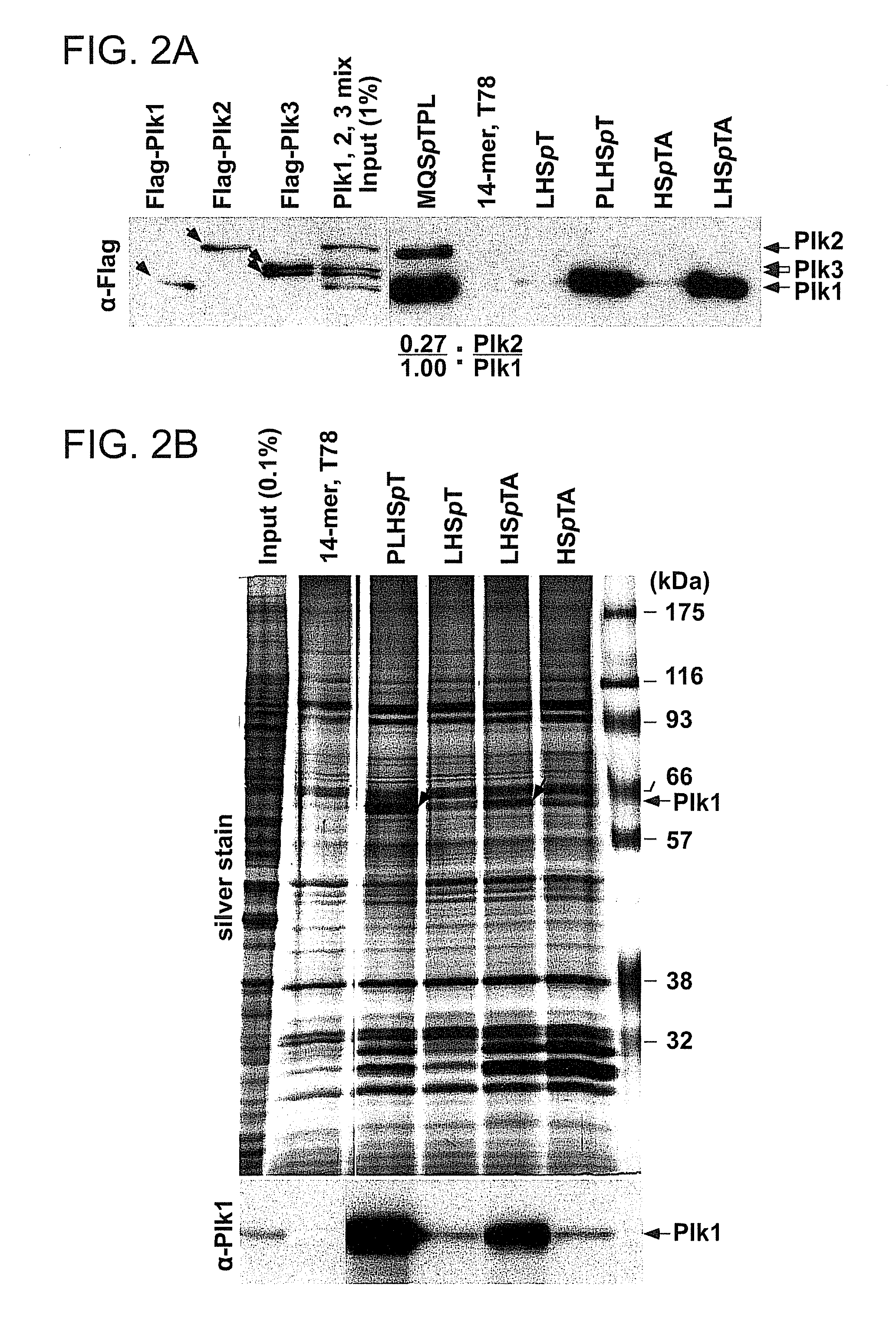
[0237]Next, the specificity of the minimized p-T78 peptides against Plk1 PBD was tested. Because of the distinct binding nature of Plk4 PBD, Plk4 was not included in these analyses. The results showed that, similar to the initial 14-mer peptide, minimized p-T78 peptides specifically precipitated Plk1 from lysates containing similar levels of Plk1, Plk2, and Plk3 (FIG. 2A and FIG. 6). In contrast, the 6-mer optimal MQSpTPL peptide precipitated Plk2 with ˜27% efficiency of Plk1 precipitation under the same conditions (FIG. 2A), suggesting that it possesses a significantly lower Plk1 specificity than PLHSpT. Consistent with this notion, MQSpTPL but not the p-T78 peptides, precipitated Plk2 from the HeLa lysates expressing Plk2 alone (FIG. 7). Remarkably, although much shorter in length than the initial 14-mer peptide, a minimal p-T78 peptide, PLHSpT, exhibited an undiminished Plk1 specificity and precipi...
PUM
| Property | Measurement | Unit |
|---|---|---|
| molecular weight | aaaaa | aaaaa |
| molecular weight | aaaaa | aaaaa |
| molecular weight | aaaaa | aaaaa |
Abstract
Description
Claims
Application Information
 Login to View More