
Three-dimensional surgical implant
a three-dimensional, surgical technology, applied in the direction of prosthesis, blood vessels, knitting, etc., can solve the problems of permanent foreign material inside the patient's body, and the mesh made solely from degradable material may not be suitable for long-term hernia repair
- Summary
- Abstract
- Description
- Claims
- Application Information
AI Technical Summary
Benefits of technology
Problems solved by technology
Method used
Image

Examples
Embodiment Construction
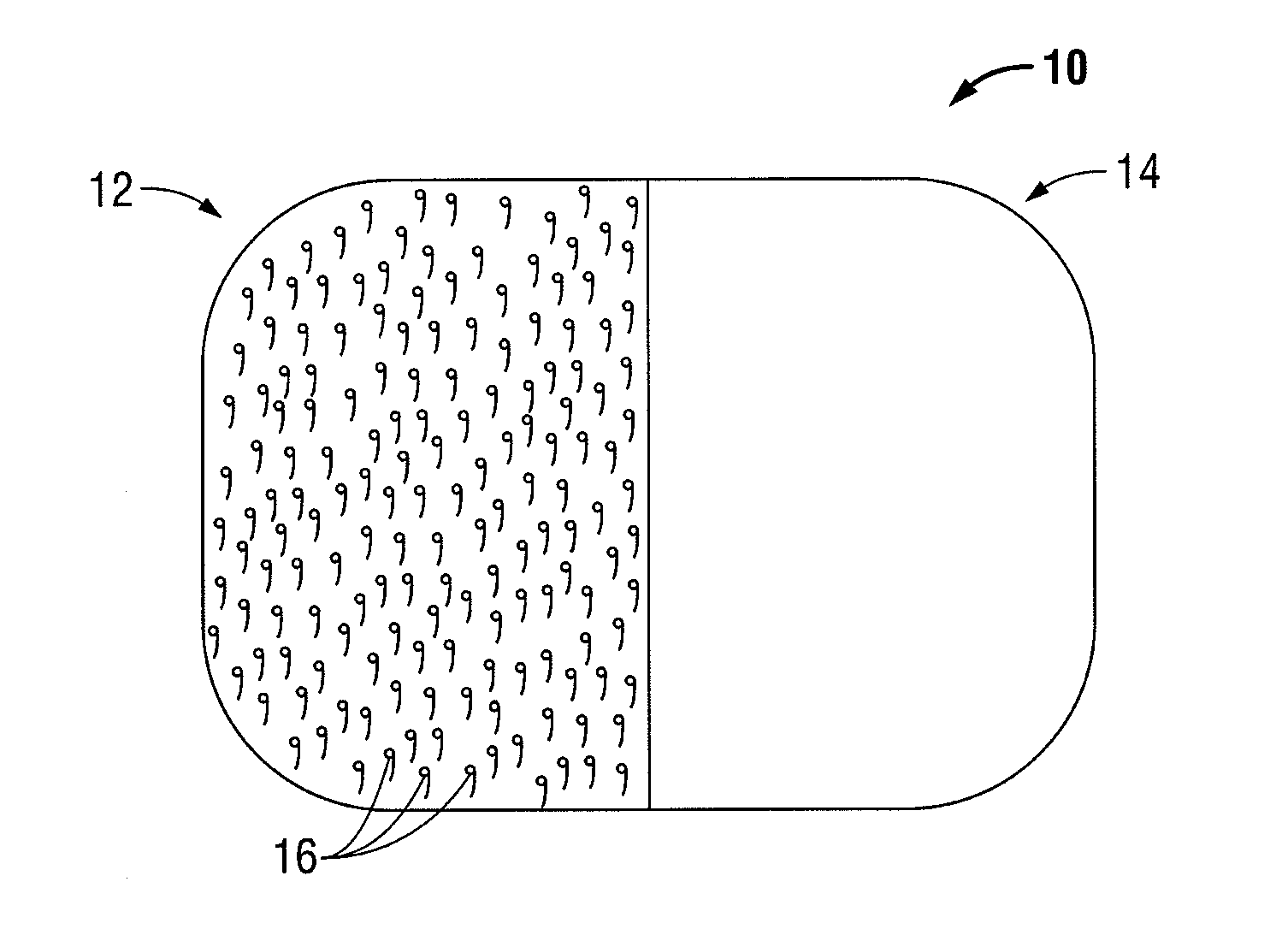
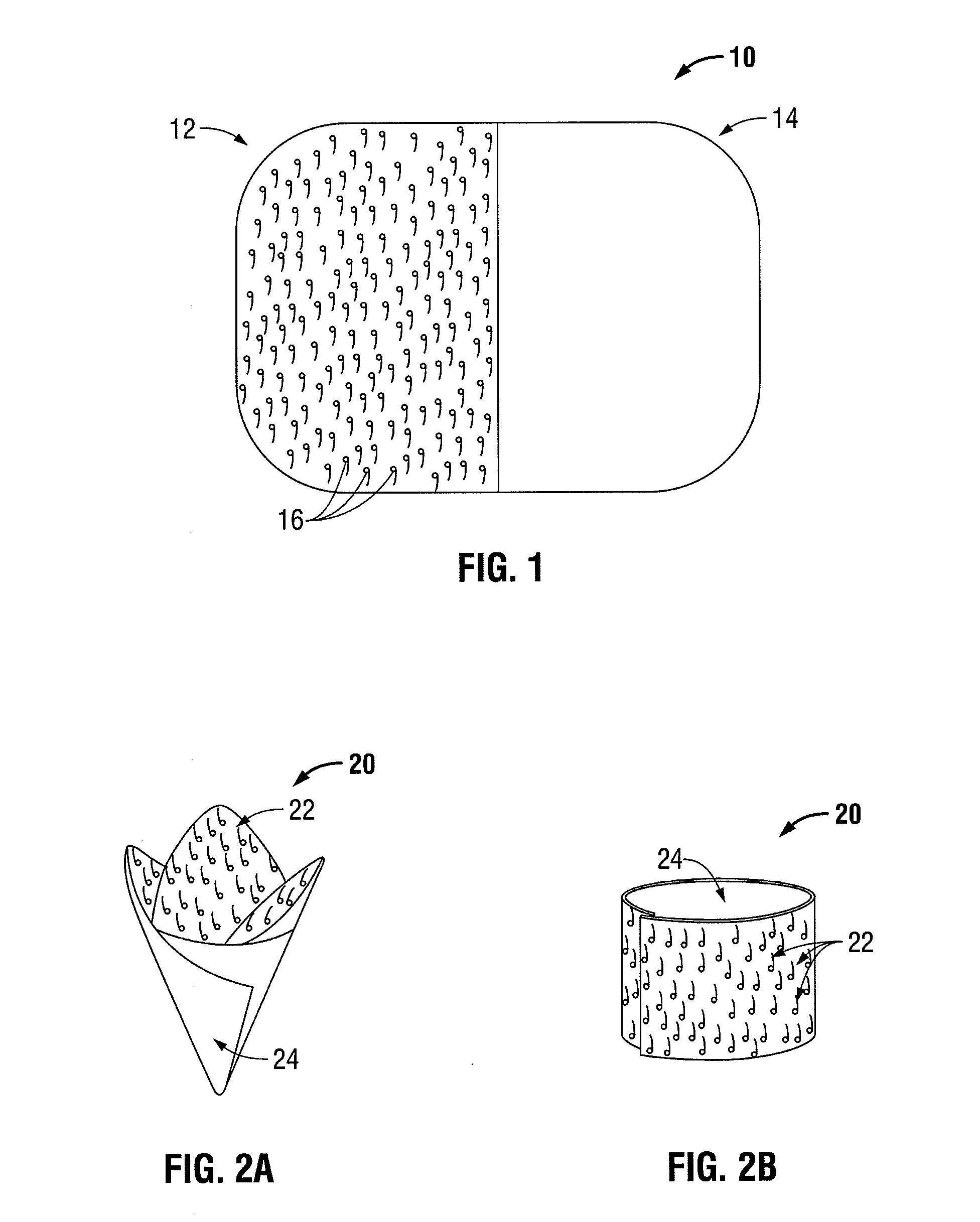
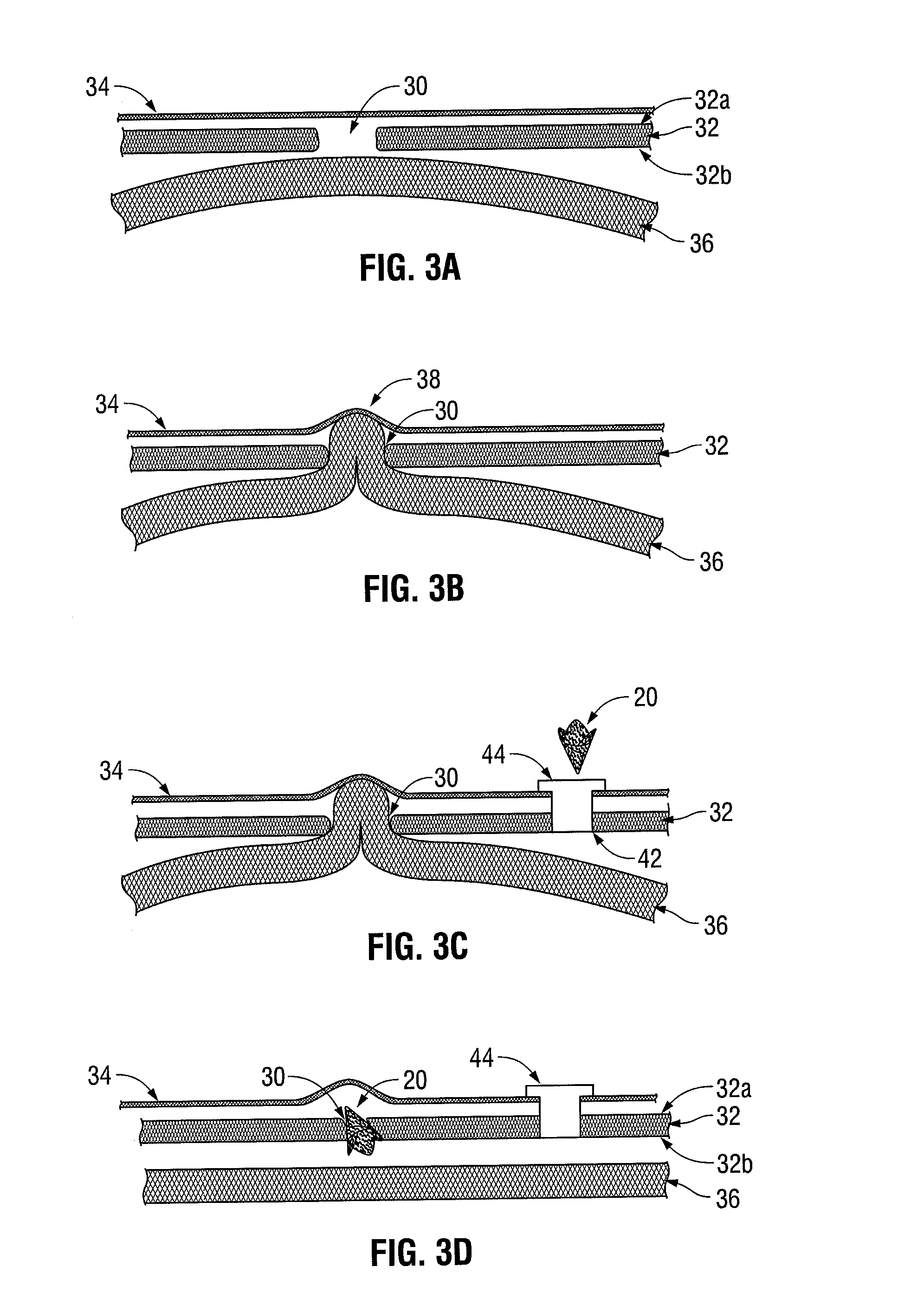
[0018]The present disclosure relates to a grip-type knit mesh folded into a three-dimensional configuration. The grip-type knit mesh may be formed from biodegradable materials, non-biodegradable materials, or a combination of these. A grip-type knit mesh formed from a combination of biodegradable and non-biodegradable materials produces a semi-absorbable mesh resulting in less implanted mass while still providing a strong rigid support to maintain the long term integrity of the repair. A three-dimensional design formed with the grip portion facing outwards provides an additional means of fixation to secure the mesh to the tissue. The grip-type knit of the mesh also allows for formation of a specific shape to fit the patient's defect and the three-dimensional structure will be maintained without the need for stitching, gluing or pre-forming the mesh to a specific structure.
[0019]The present disclosure relates to devices, systems, and methods for minimally invasive surgeries such as, ...
PUM
 Login to View More
 Abstract
Description
Claims
Application Information
 Login to View More