
Treatment and prevention of dental pathology in humans and non-human animals
a technology for human teeth and gums, applied in the field of treatment and prevention of dental pathology in humans and non-human animals, can solve the problems of serious health problems, toothache, dental disease, and loss of teeth, and can have serious consequences for companion animals, and achieve the effect of reducing the risk of tooth loss
- Summary
- Abstract
- Description
- Claims
- Application Information
AI Technical Summary
Benefits of technology
Problems solved by technology
Method used
Image

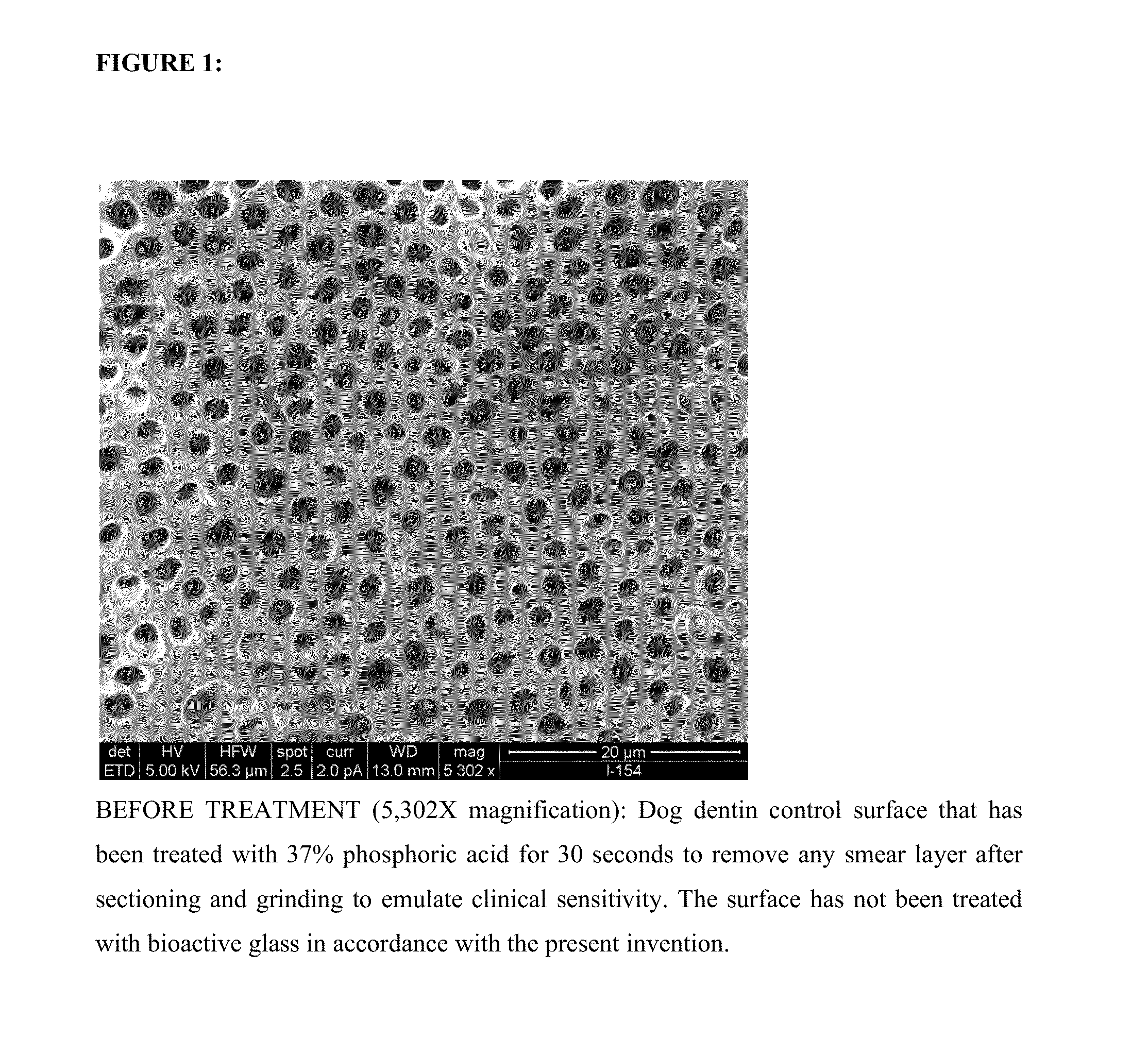
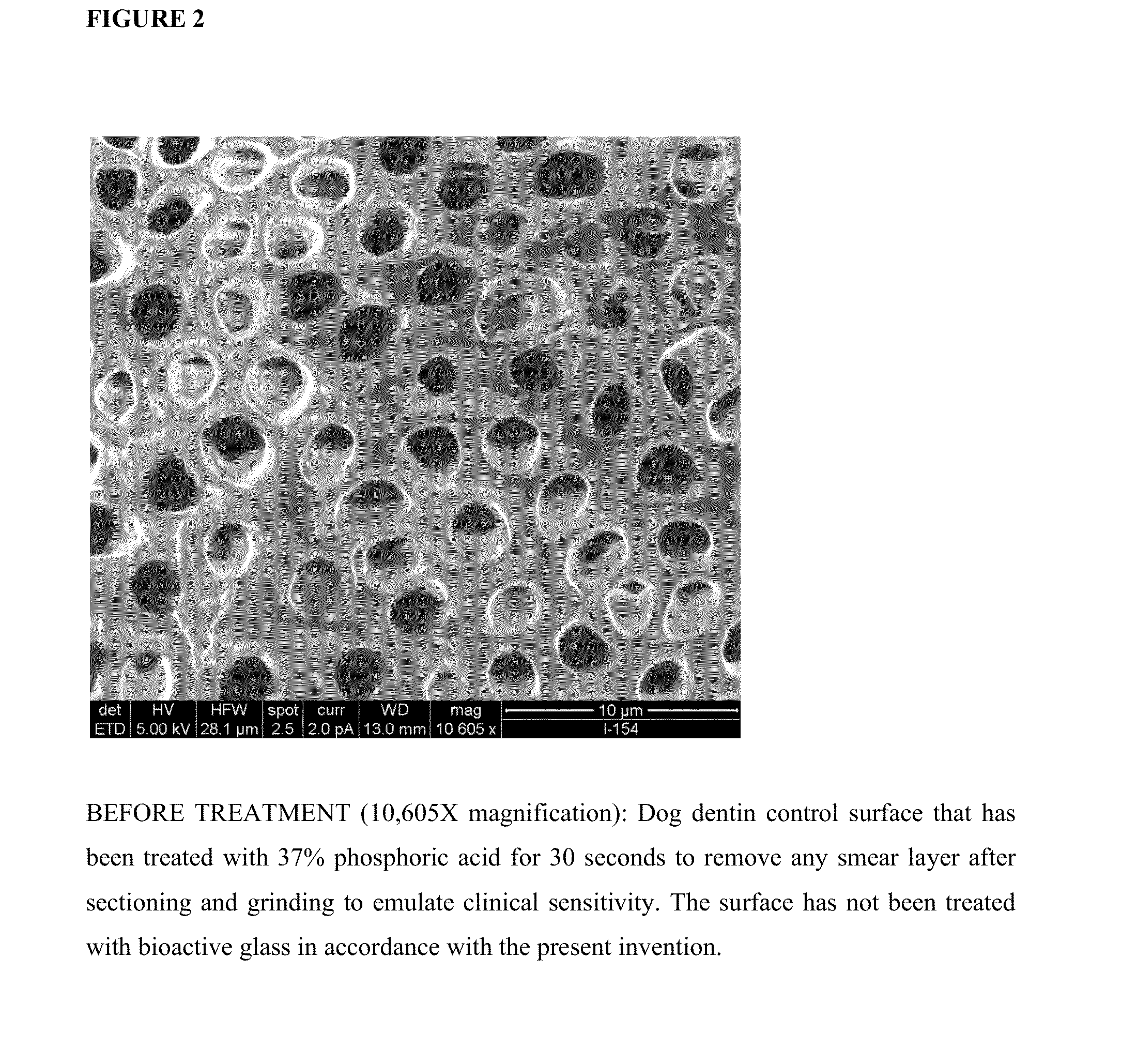
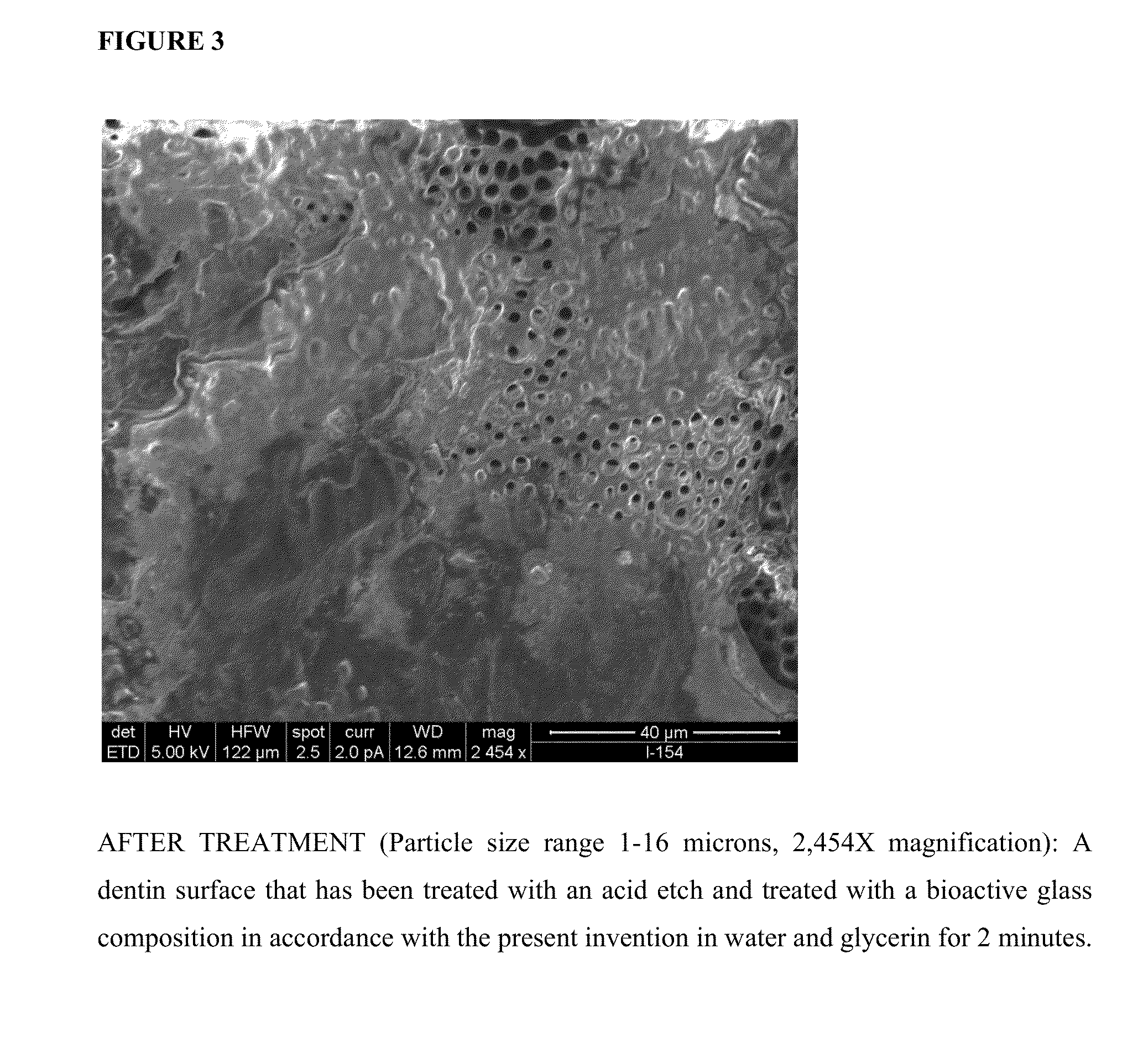
Examples
example 1
[0113]Herein, the effectiveness of a bioactive glass composition in occluding dentinal tubules was tested. The experimental treatment composition was a mixture containing a bioactive glass composition such as described above in Table 2, including Silicon Oxide (45%), Calcium Oxide (24.5%), Sodium Oxide (24.5%), and Phosphorous Oxide (6%). The mixture was melted in a covered platinum crucible at 1,350 C.° for 2 hours in order to achieve homogenization. The mixture was later quenched in deionized water at 0 C.°. Fritted glass was placed in an appropriate milling apparatus, such as a ball mill or impact mill. The glass was milled for 2 hours and separated into appropriate size ranges. This process yielded glass particulates on the order of 1-16 microns, as confirmed by scanning electron microscopy. The resulting compositions were used to treat the dentin sections previously described.
[0114]The exposure times of the experimental composition on the dentinal surfa...
example 2
Treatment of FORL
[0115]FIGS. 8 and 9 indicate the results obtainable by using submicron particles made in accordance with Example 1, in the context of treating resorptive lesions in feline teeth. With the lack of large particles for reservoir activity, there was less complete regeneration as confirmed by FTIR.
example 3
Particle Sizes
[0116]The composition of the starting product for the following examples was the same as Example 1 with the use of a fluoride-containing bioactive glass. The mixture was poured into a slab, allowed to cool to room temperature and crushed. Crushed glass fractions were then separated by sieving through a standard screen. Fractions were then separated and retained. This process yielded particles on the order of 1-16 microns, as confirmed by scanning electron microscopy. These mixtures were used to treat the dentin sections previously described.
[0117]Bioactive glass samples containing 45% silicon oxide were utilized in the preparations with the same results seen in Example 1. Again, the key to these data was the presence of the sized range of particles. Present in these examples are ranges up to 60% silica with a size range in particles ranging from 1-16 micron.
PUM
 Login to View More
 Abstract
Description
Claims
Application Information
 Login to View More