
Database query system
a database and database technology, applied in relational databases, database models, instruments, etc., can solve the problem that the implementation of sql code is not completely interchangeable among different database systems
- Summary
- Abstract
- Description
- Claims
- Application Information
AI Technical Summary
Benefits of technology
Problems solved by technology
Method used
Image

Examples
Embodiment Construction
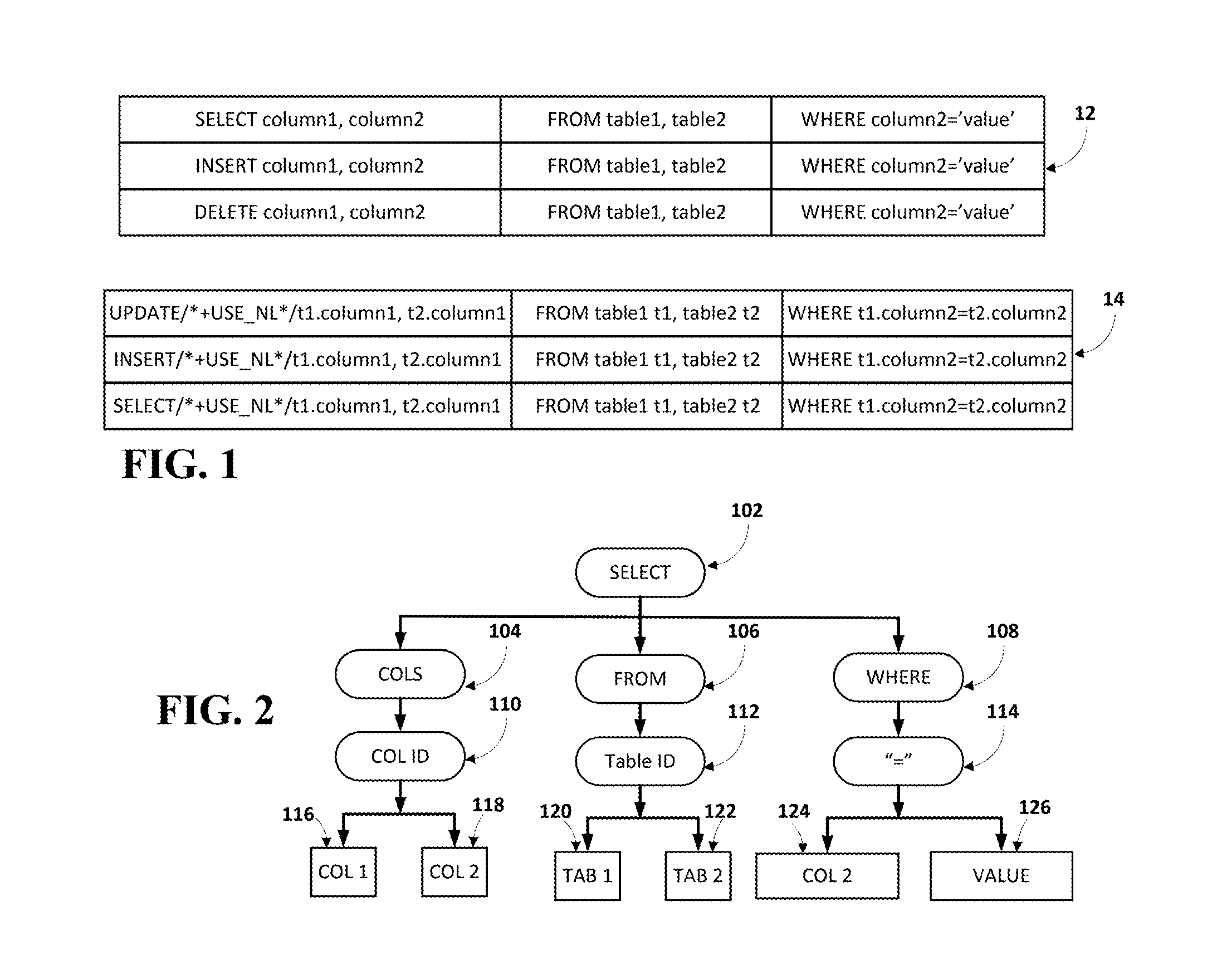
[0018]Implementations of the disclosed subject matter can map a set of database query statements suitable for execution on one kind of database to a set of query statements that are suitable for execution on a different target database. This can occur for example, when a user wants to run a stored query formulated for a one kind of database on a different kind of target database.
[0019]For example, many different commercial database systems are readily available in the marketplace, some of which implement standard SQL. SQL is a high-level programming language used for Creating, Reading, Updating, and Deleting (“CRUD”) records in most database systems. SQL defines a standard set of commands, including “SELECT”, “INSERT”, “UPDATE”, “DELETE”, “CREATE TABLE”, “DROP TABLE”, and so forth. However, many other commercial databases have incorporated proprietary extensions into the standard SQL architecture. For example, PL / SQL is one example of a procedural extension of SQL, offering features...
PUM
 Login to View More
 Abstract
Description
Claims
Application Information
 Login to View More