
ANTIBODY TO PEPTIDE ENCODED BY Exon-21 OF PERIOSTIN, AND PHARMACEUTICAL COMPOSITION FOR PREVENTION OR TREATMENT OF INFLAMMATORY DISEASE CONTAINING SAID ANTIBODY
a technology of periostin and peptide, which is applied in the direction of peptides, drug compositions, and infusion cells, etc., can solve the problems of less effective chronic inflammatory diseases, serious side effects, and immunoregulatory activity
- Summary
- Abstract
- Description
- Claims
- Application Information
AI Technical Summary
Benefits of technology
Problems solved by technology
Method used
Image

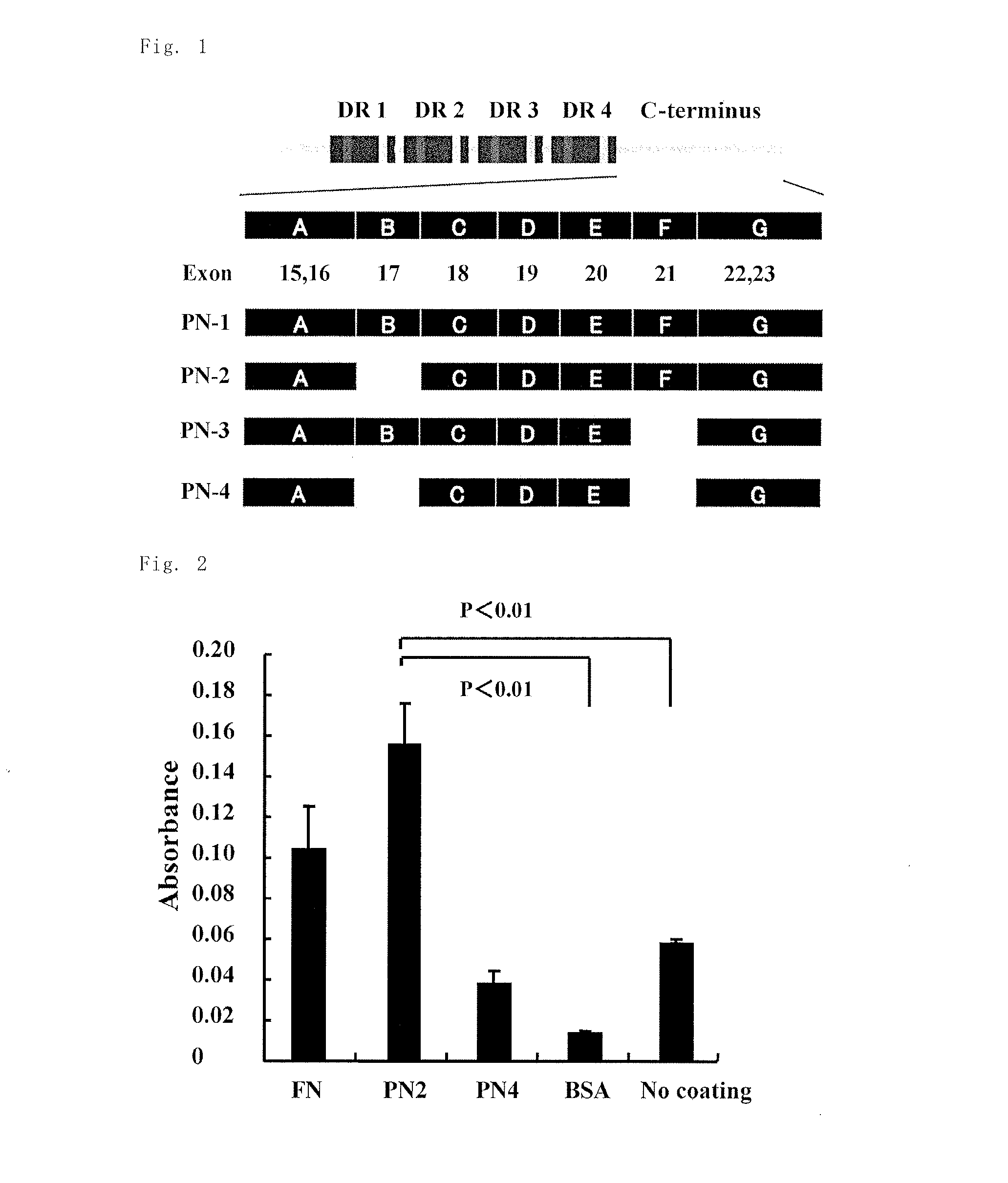
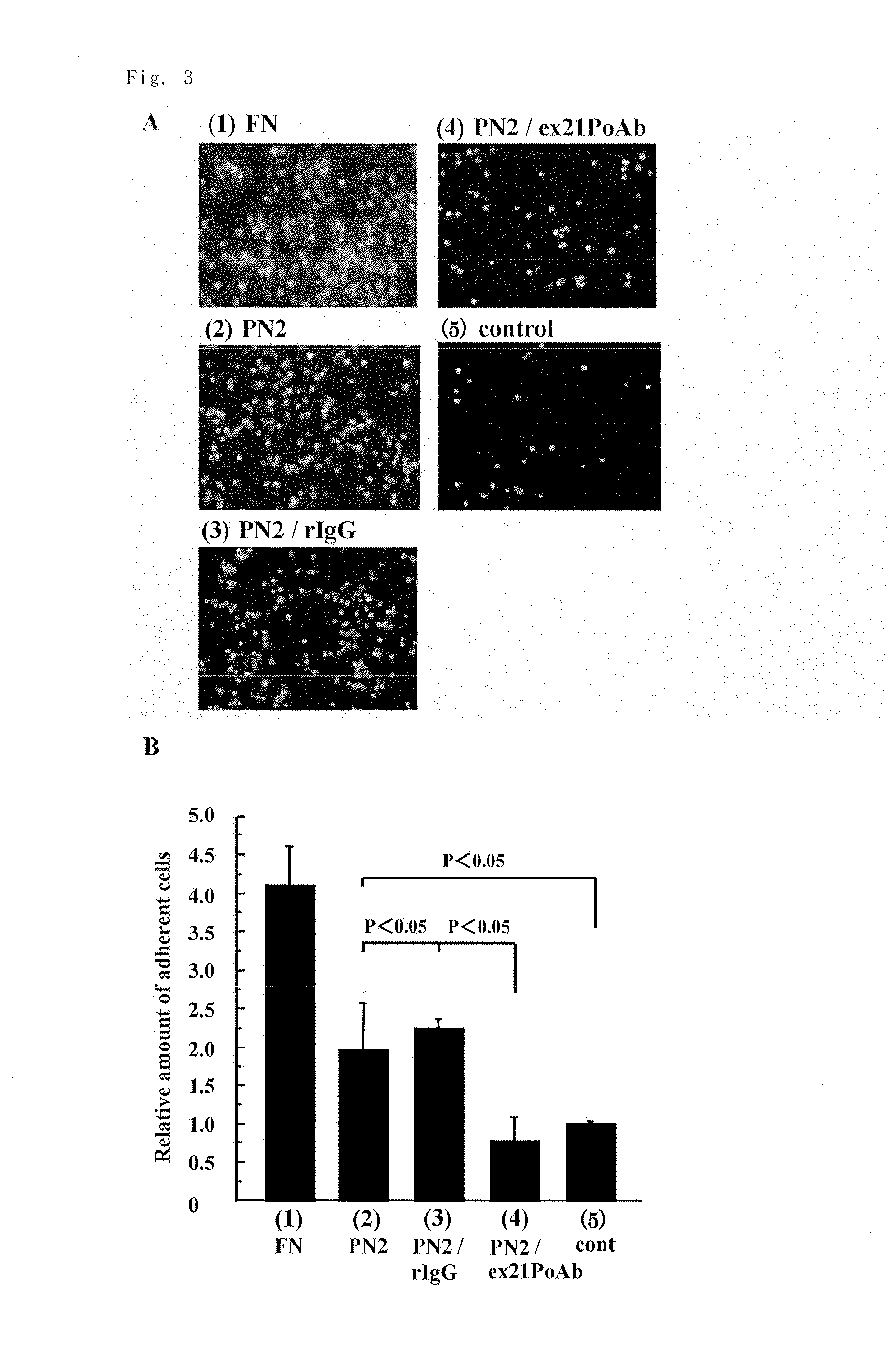
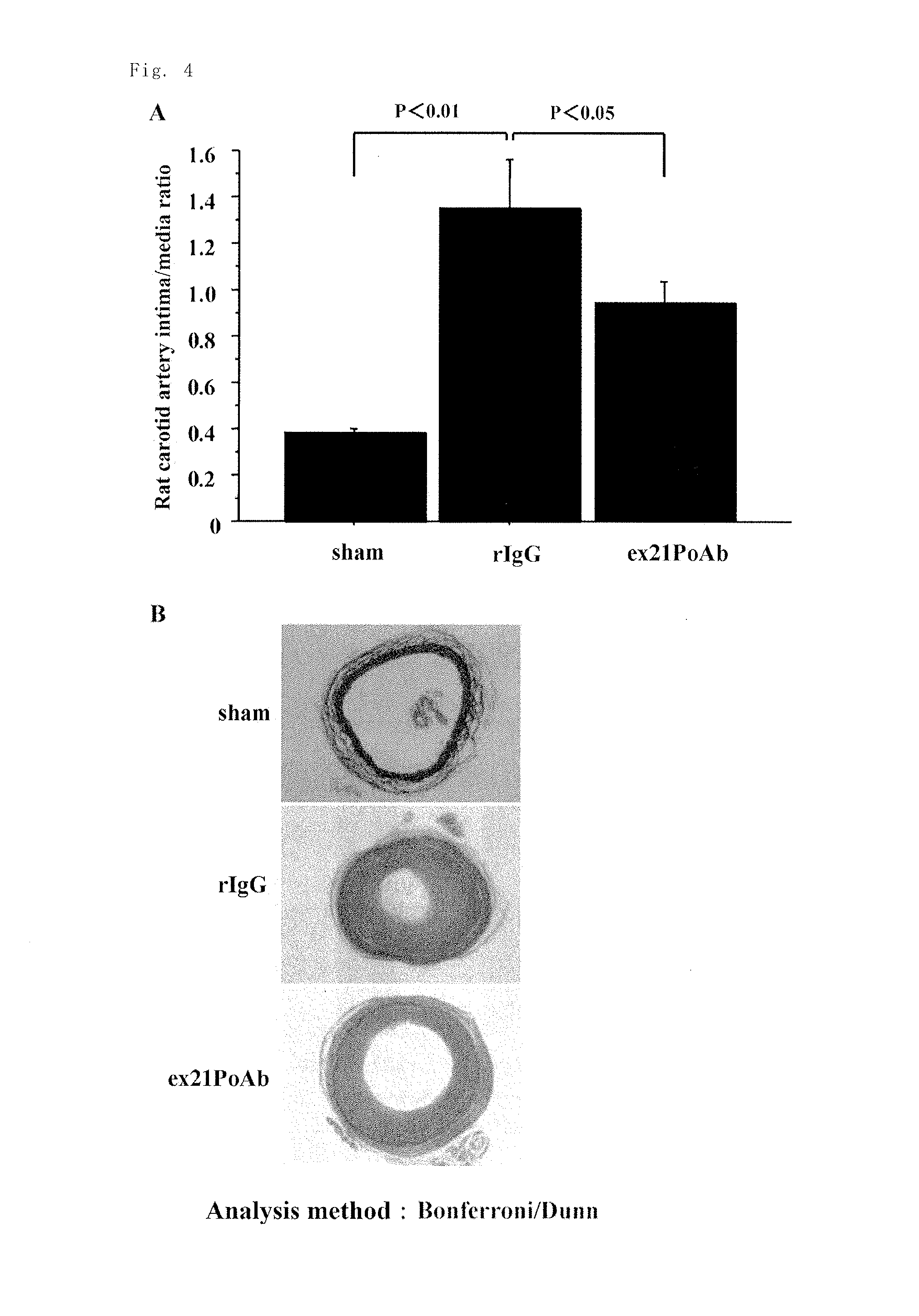
Examples
preparation example 1
Search for Periostin by Subtraction 1-1 Establishment of Pathological Model Rats of Heart Failure and Harvest of Left Ventricular Samples
[0179]Male Dahl salt-sensitive rats (Dahl-S) (Shimizu Laboratory Supplies Co., Ltd.) were raised on an 8% high salt diet from 6 weeks of age, and the left ventricles were harvested from three animals at the cardiac hypertrophy stage (11 weeks of age) and from three animals at the heart failure stage (14 weeks of age).
1-2 Preparation of mRNAs
[0180]Total RNAs were prepared from about 500 mg of each left ventricle using ISOGEN (Nippon Gene) as instructed by the manufacturer. The total RNAs from the three animals at the cardiac hypertrophy stage and the total RNAs from the three animals at the heart failure stage were separately combined. mRNAs were purified from about 400 μg of each of the combined total RNAs using Fast Track 2.0 Kit (Invitrogen) as instructed by the manufacturer to recover about 3 μg of mRNA from each stage.
1-3 cDNA Subtraction
[0181]...
preparation example 2
Cloning of Rat Periostin-1 cDNA
[0187]Rat periostin cDNA was isolated as follows. A rat aorta cDNA library (Clontech) was inserted into λgt 11 vector to generate 10 phage subpools of about 4,000 clones (a total of about 40,000 clones). The phage subpools were screened by PCR using primers (1) 5′-GTTCATTGAAGGTGGCGATGGTC-3′ (SEQ ID NO: 23) and (2) 5′-GAGATAAAATCCCTGCATGGTCCT-3′ (SEQ ID NO: 24) that were designed based on the nucleotide sequence of SF014. As a result of the screening, three positive subpools were obtained. One of the subpools was screened by hybridization using the above fragment amplified by PCR as a probe, labeled with alkaline phosphatase using AlkPhos Direct™ (Amersham Pharmacia), to give one positive clone rat periostin #1. Its insert fragment was subcloned into the EcoRI site of pBluescript II (Stratagene) and the complete nucleotide sequence was determined by the method described in 1-5 of Preparation example 1.
[0188]The resulting clone had a length of about 3 kb...
preparation example 3
Cloning of cDNAs of Rat Periostins-2 and -4
[0192]PCR was performed from the cDNA of the Dahl rats at the cardiac hypertrophy stage used in Preparation example 1 and the gene sequence cloned in Preparation example 2 using primers 5′-AAGCTAGCGAAGATGGTTCCTCTCCTGCCCT-3′ (SEQ ID NO: 27) and 5′-CTTTGGGTTTTTCCAGCCTC-3′ (SEQ ID NO: 28). The PCR product was TA cloned into pCR4 Blunt TOPO vector (Invitrogen). From the resulting colonies, 96 colonies were selected and transferred to a 96-well plate so as to be 1 colony / well. Screening for candidate rat periostin-2 and -4 genes was performed using primers 5′-CCCCATGACTGTCTATAGACCT-3′ (SEQ ID NO: 29) and 5′-ATTTCCCTTAAAAATCAGATTG-3′ (SEQ ID NO: 30). The selected clones were further screened by sequencing for clones with no PCR errors.
PUM
| Property | Measurement | Unit |
|---|---|---|
| Adhesion strength | aaaaa | aaaaa |
| Molecular weight | aaaaa | aaaaa |
| Cell adhesion | aaaaa | aaaaa |
Abstract
Description
Claims
Application Information
 Login to View More