Compositions and methods for pattern treatment

a pattern and composition technology, applied in the field of compositions for treating patterns and pattern treatment methods, can solve the problems of inability to achieve high-resolution patterns, add to the complexity of the process, and disadvantage in the process throughput, etc., and achieve the effect of high-resolution patterns

a pattern and composition technology, applied in the field of compositions for treating patterns and pattern treatment methods, can solve the problems of inability to achieve high-resolution patterns, add to the complexity of the process, and disadvantage in the process throughput, etc., and achieve the effect of high-resolution patterns

US20160357111A1Inactive Publication Date: 2016-12-08DOW GLOBAL TECH LLC +1

Image

Smart Image Click on the blue labels to locate them in the text.
Viewing Examples
Smart Image
  • Compositions and methods for pattern treatment
  • Compositions and methods for pattern treatment
  • Compositions and methods for pattern treatment

Examples

Experimental program
Comparison scheme
Effect test

example 1

[0075]0.019 g dimethyl 2,2′-azobis(2-methylpropionate) (DMAMP), 10 g monomer M4, 15 g monomer M10, 0.114 g 2-cyanopropan-2-yl benzodithioate (CPBD), 32 mL PGMEA and a magnetic stir bar were loaded into a 200 mL air-free flask. The mixture was freeze-pump-thawed three times with liquid nitrogen and the flask was then placed in a heat block at 70° C. for 16 hours. After the reaction, the flask was cooled. The reaction mixture was then precipitated into 500 mL of methanol. The precipitate was collected and re-precipitated. The polymer was collected and dried in a vacuum oven at 50° C. overnight. The resulting Polymer PP-1 had an Mn of 36 k (kg / mol) and a PDI of 1.15.

examples 2-6

[0076]Polymers PP-2 to PP-6 were synthesized using a similar procedure as described above for Polymer PP-1, with the materials and amounts shown in Table 1. “Monomer A” and “Monomer B” were fed to the reactor at the same time.

TABLE 1ExamplePolymerMnPDICPBDDMAMPSolventMonomer AMonomer B1PP-136k1.150.114 g0.019 gPGMEAM4M10  (32 mL)(10 g) (15 g)2PP-267k1.330.097 g0.016 gPGMEAM3M4  (23 mL)(6.4 g)  (15 g)3PP-335k1.240.068 g0.012 gPGMEAM4M6  (13 mL)(10 g)(2.5 g)4PP-415.6k 1.230.74 0.023PGMEAM1M7(17.4 mL) (5 g)(9.7 g)5PP-515.6k 1.220.0670.019PGMEAM1M8(22.7 mL)(10 g)(3.5 g)6PP-618k1.23 0.81 g0.023 gPGMEAM1M9(18.5 mL)(10 g)(6.25 g) CPBD = 2-cyanopropan-2-yl benzodithioate; DMAMP = Dimethyl 2,2′-azobis(2-methylpropionate).

Block Copolymer Synthesis

example 7

[0077]10 g Polymer PP-1, 2 g Monomer M13, 0.007 g dimethyl 2,2′-azobis(2-methylpropionate) (DMAMP), 25.44 mL dioxane and a magnetic stir bar were loaded into a 200 mL air-free reactor. The mixture was freeze-pump-thawed three times with liquid nitrogen. The reactor was then sealed with a septum and placed in a heat block at 70° C. for 16 hours. After the reaction, the flask was cooled. The reaction mixture was then precipitated into 500 mL methanol. The precipitate was collected and re-precipitated. The resulting Polymer P-1 was collected and dried in a vacuum oven at room temperature overnight.

the structure of the environmentally friendly knitted fabric provided by the present invention; figure 2 Flow chart of the yarn wrapping machine for environmentally friendly knitted fabrics and storage devices; image 3 Is the parameter map of the yarn covering machine
Login to View More

PUM

PropertyMeasurementUnit
compositionsaaaaaaaaaa
densityaaaaaaaaaa
refractive indexaaaaaaaaaa
Login to View More

Abstract

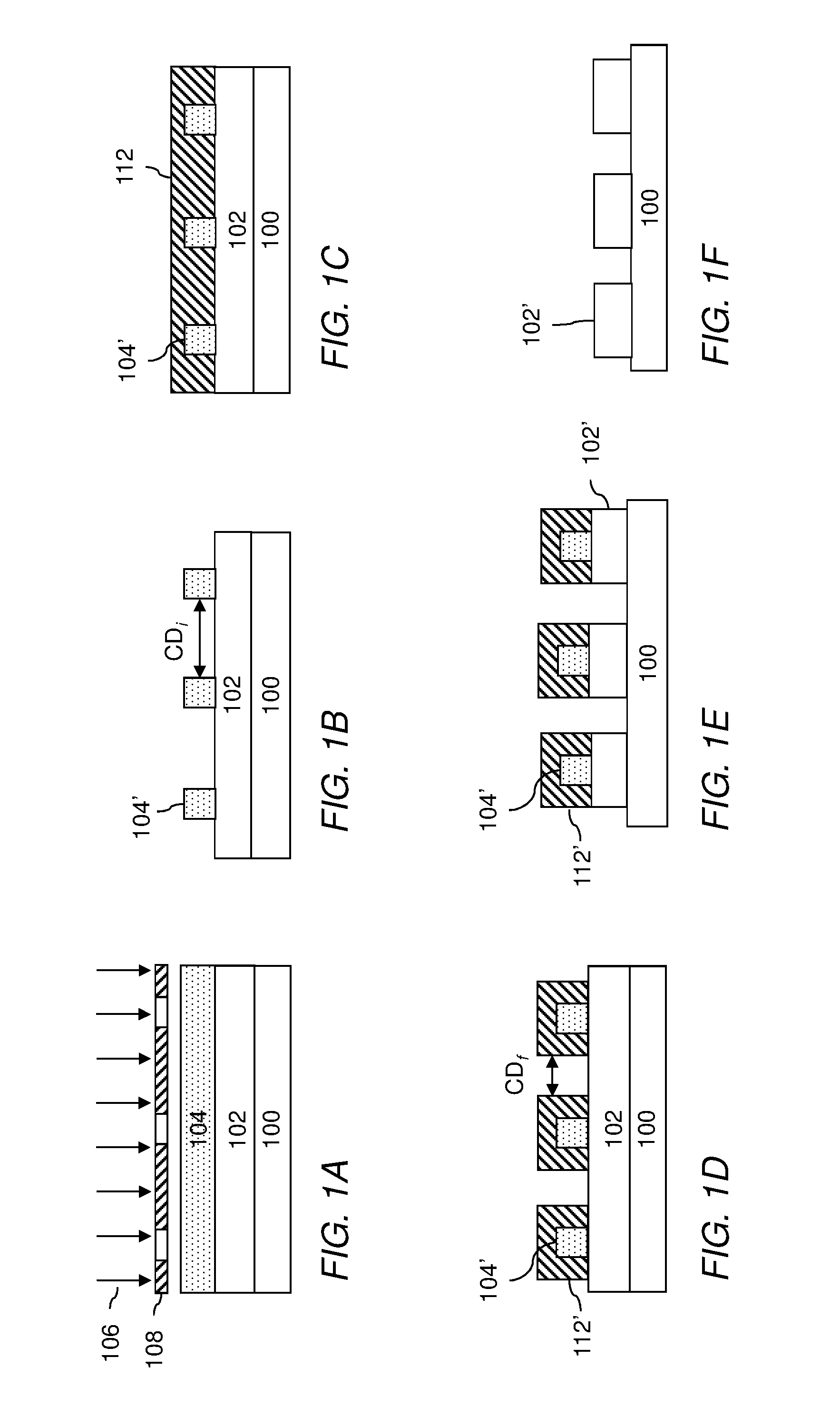
Pattern treatment compositions comprise a block copolymer and an organic solvent. The block copolymer comprises a first block and a second block. The first block comprises a unit formed from a first monomer comprising an ethylenically unsaturated polymerizable group and a hydrogen acceptor group, wherein the hydrogen acceptor group is a nitrogen-containing group. The second block comprises a unit formed from a second monomer comprising an ethylenically unsaturated polymerizable group and a cyclic aliphatic group. Wherein: (i) the second block comprises a unit formed from a third monomer comprising an ethylenically unsaturated polymerizable group, and the second monomer and the third monomer are different; and / or (ii) the block copolymer comprises a third block comprising a unit formed from a fourth monomer comprising an ethylenically unsaturated polymerizable group, wherein the fourth monomer is different from the first monomer and the second monomer. Also provided are pattern treatment methods using the described compositions. The pattern treatment compositions and methods find particular applicability in the manufacture of semiconductor devices for providing high resolution patterns.

Description

CROSS-REFERENCE TO RELATED APPLICATIONS[0001]This application claims the benefit of priority under 35 U.S.C. §119(e) to U.S. Provisional Application No. 62 / 170,534, filed Jun. 3, 2015, the entire contents of which are incorporated herein by reference.FIELD OF THE INVENTION[0002]The invention relates generally to the manufacture of electronic devices. More specifically, this invention relates to compositions for treating patterns and to pattern treatment methods using the compositions. The compositions and methods find particular use in the manufacture of semiconductor devices in negative tone development shrink processes for the formation of fine patterns.BACKGROUND OF THE INVENTION[0003]In the semiconductor manufacturing industry, photoresist materials are used for transferring an image to one or more underlying layer, such as metal, semiconductor and dielectric layers, disposed on a semiconductor substrate, as well as to the substrate itself. To increase the integration density of...

Claims

the structure of the environmentally friendly knitted fabric provided by the present invention; figure 2 Flow chart of the yarn wrapping machine for environmentally friendly knitted fabrics and storage devices; image 3 Is the parameter map of the yarn covering machine
Login to View More

Application Information

Patent Timeline
08 Dec 2016
Publication
US20160357111A1
IPC
G03F7/40
CPC
G03F7/405; C08F297/08; C08F297/083; C08L23/0815; C08L23/14; C08L23/142; C08L23/16; C08L53/00
Inventors
JAIN, VIPUL; LI, MINGQI