
Brain-protecting helmet lining apparatus and method
a technology for helmets and linings, applied in helmets, helmet covers, headwear, etc., can solve the problems of coup coup coup coup coup injuries to the brain, unnecessary secondary movement of the head during the immediate elastic recoil, and too much space for the head to move around without support, etc., to achieve the effect of discharging some energy
- Summary
- Abstract
- Description
- Claims
- Application Information
AI Technical Summary
Benefits of technology
Problems solved by technology
Method used
Image

Examples
Embodiment Construction
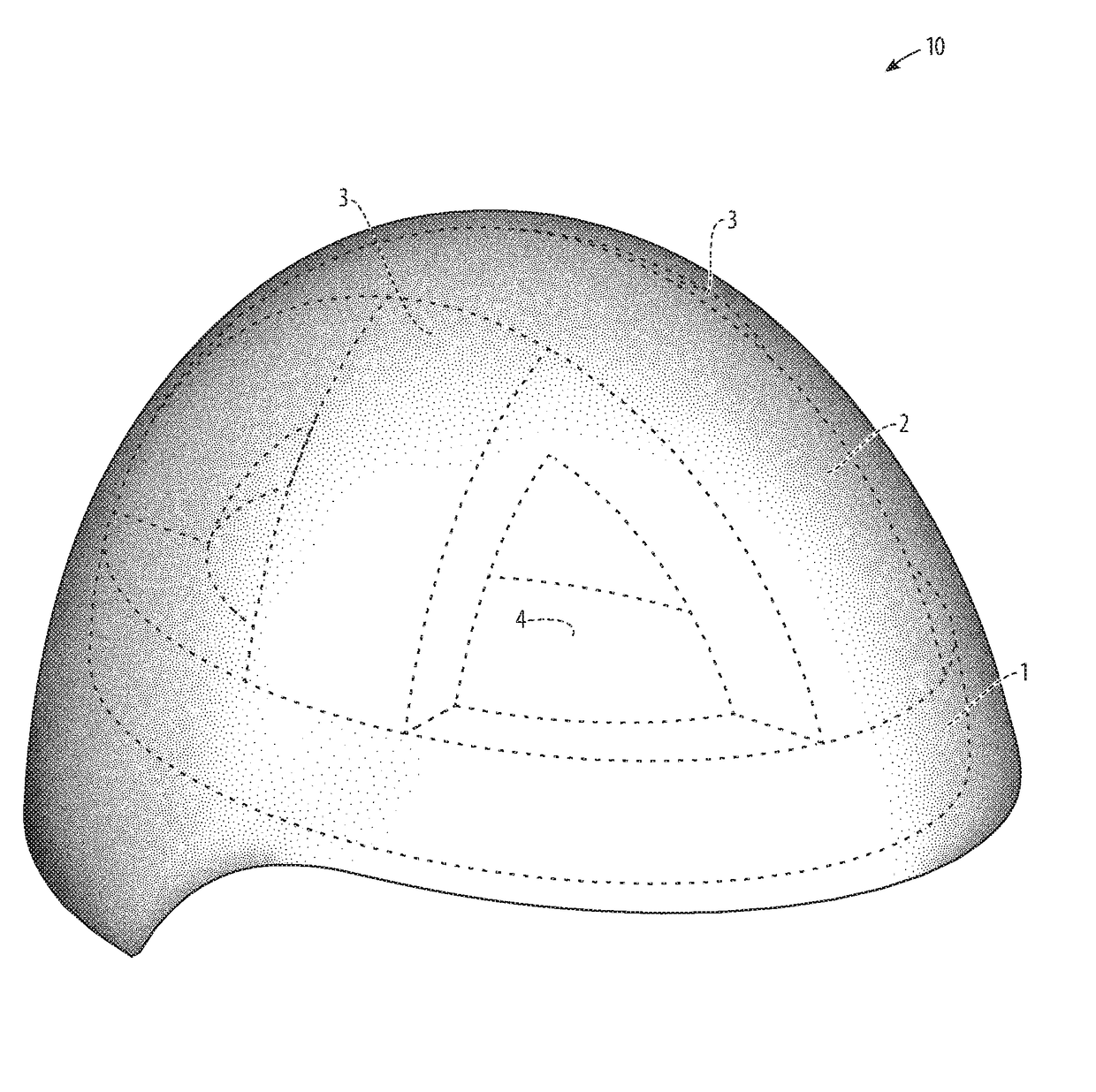
[0029]Referring to all figures generally, embodiments of the invention method and apparatus 10 are illustrated.
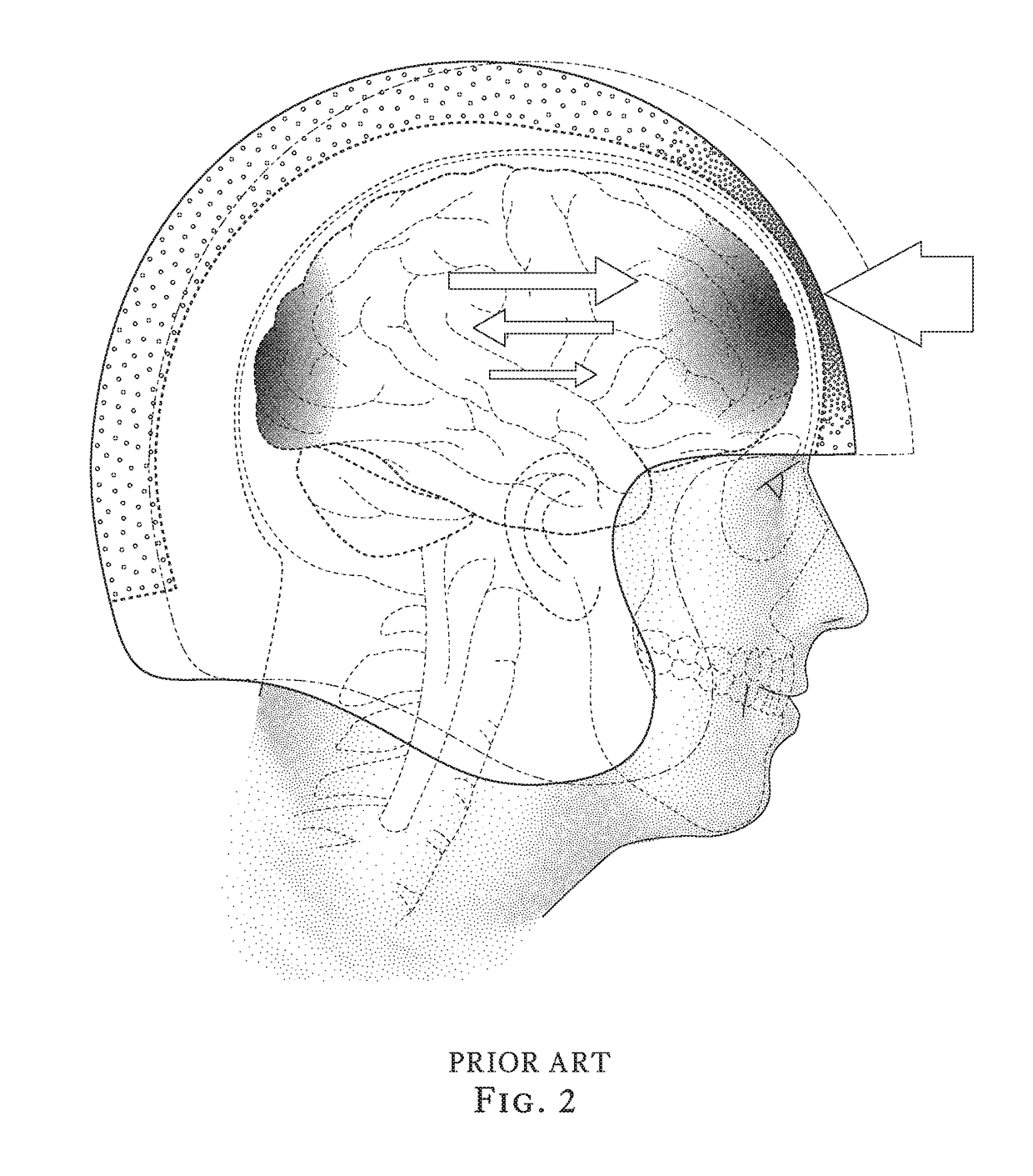
[0030]Referring to FIG. 2, representing PRIOR ART, presently-available helmet-lining materials are elastic materials which will deform and recoil in a linear, elastic fashion, which presents the three problems of transmitting too much force to the head, creating too much space for the head to move about without support, and causing an unwanted additional secondary movement of the head during the immediate elastic recoil. The transmission of force to the head, and the secondary, bouncing movements of the head, lead to coup-contrecoup injuries to the brain because the brain slams into the skull both at the site of the blow and on the opposite side.
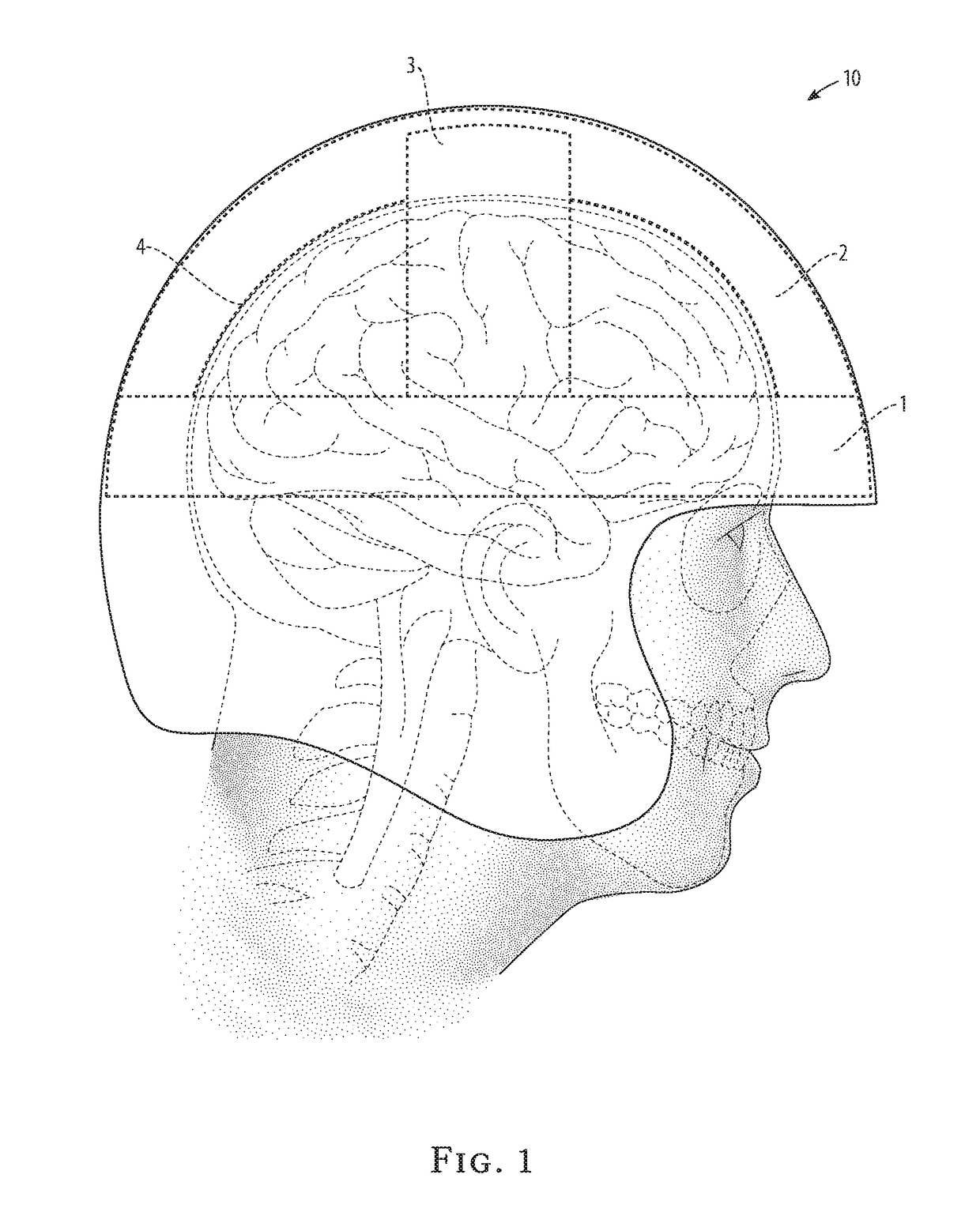
[0031]Referring to FIG. 1, the brain-protecting helmet lining 10 of the invention uses a viscoelastic material which deforms in a time-dependent and nonlinear way, and has a capability of storing strain energy when deformed, while d...
PUM
 Login to View More
 Abstract
Description
Claims
Application Information
 Login to View More