
Formulation, dosage form and method of reducing knee pain
a knee pain and dosage form technology, applied in the field of joint pain relief methods, can solve the problems of limiting leg movement, joint pain, major quality of life problems, etc., and achieve the effect of reducing the frequency of overall joint pain and less pain
- Summary
- Abstract
- Description
- Claims
- Application Information
AI Technical Summary
Benefits of technology
Problems solved by technology
Method used
Image

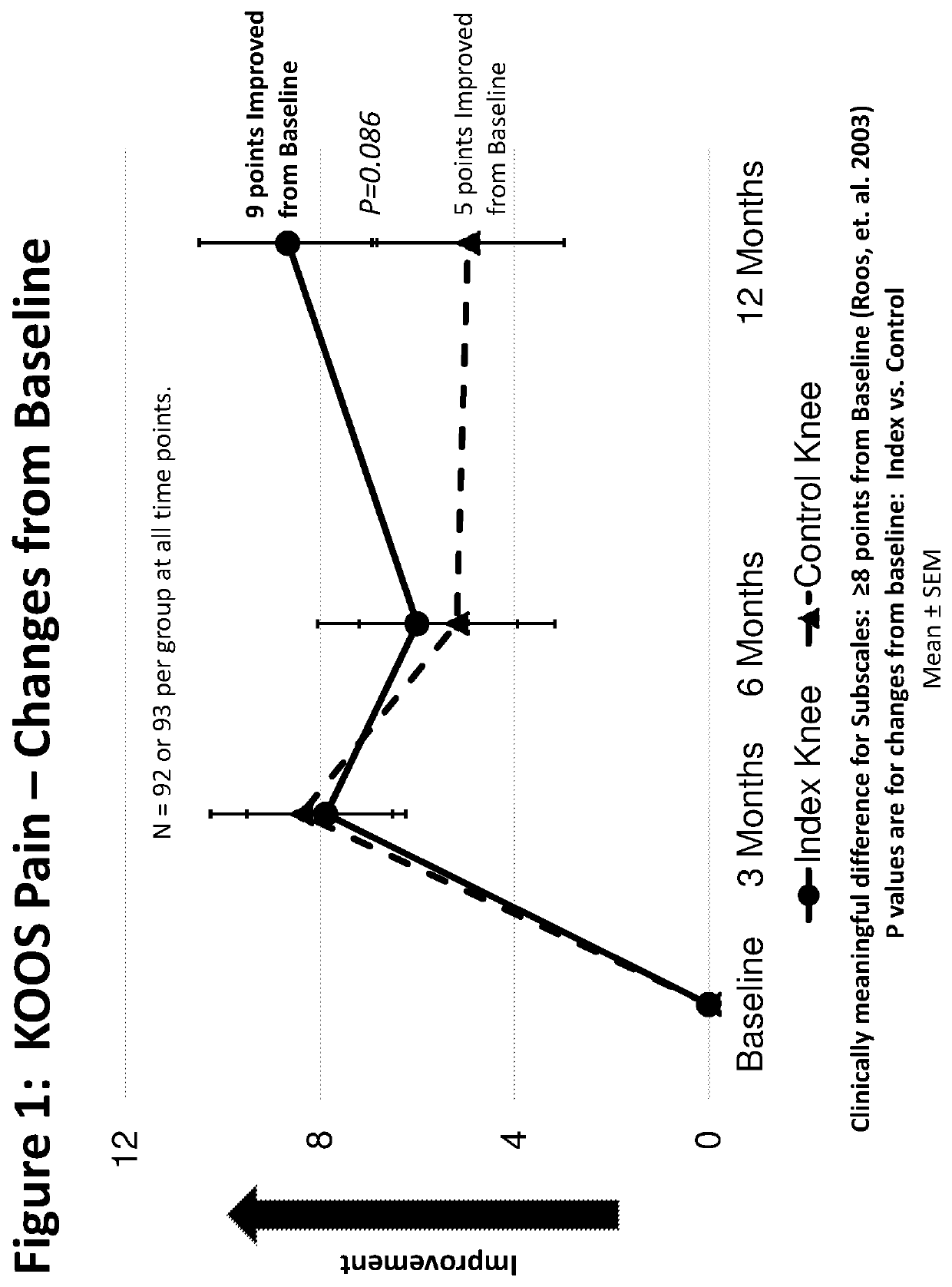
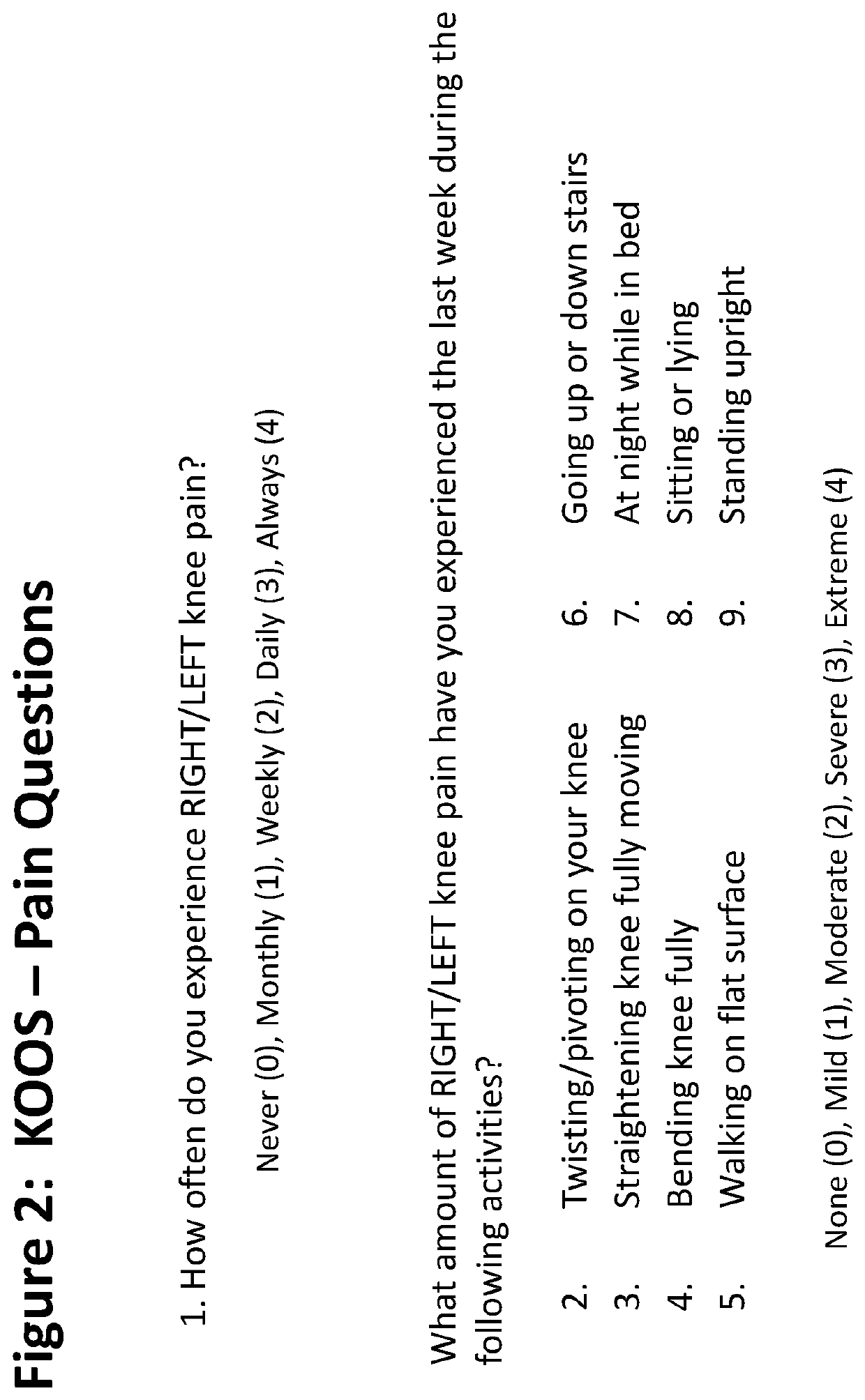
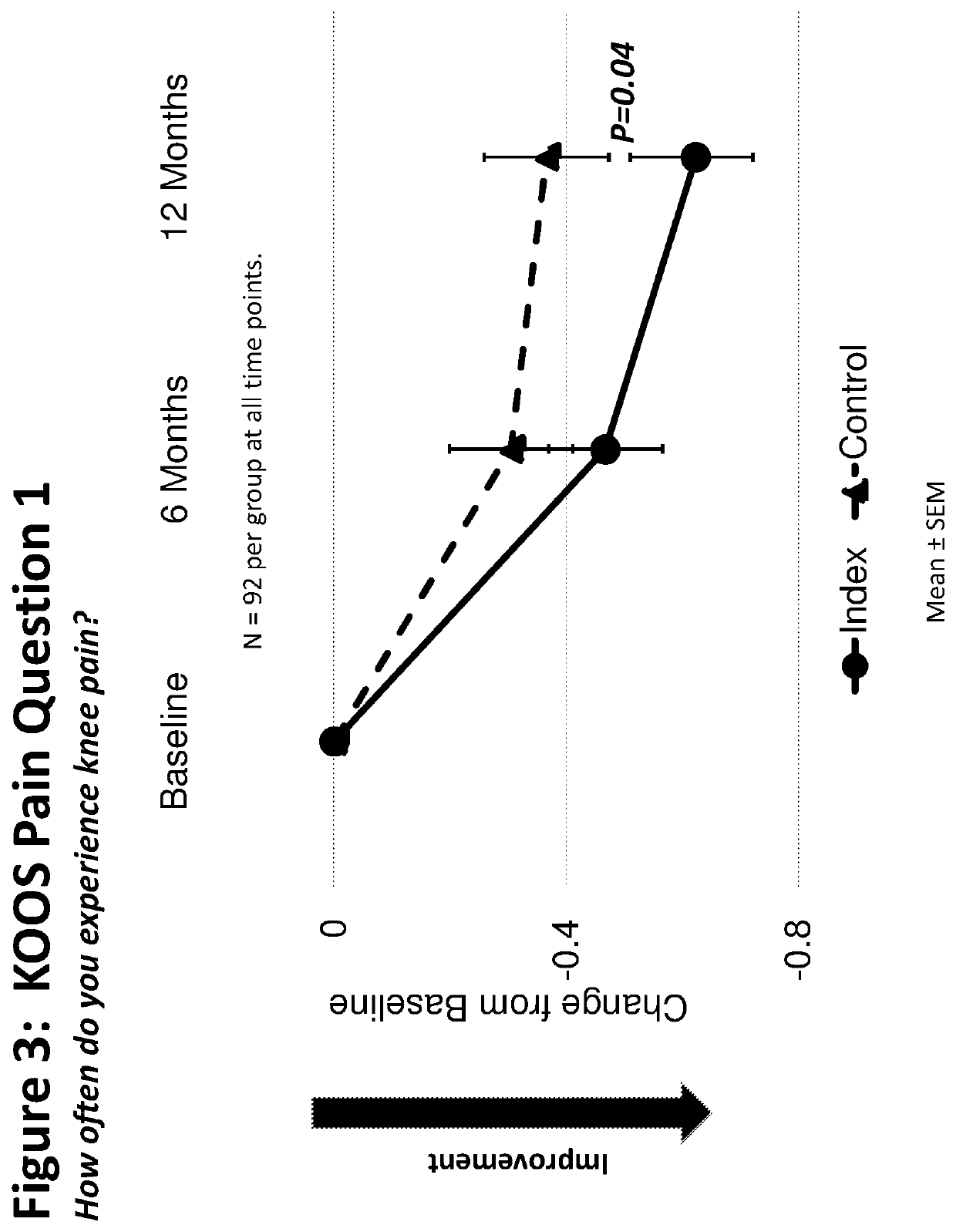
Examples
example 1
A Randomized Double-blind Placebo Control Study of TPX-100 in the Patients with Osteoarthritis of the Knees
Clinical Study Methodology
Outline of the Study
[0229]A multicenter, randomized double-blind, placebo controlled study was designed to investigate the safety, tolerability, pharmacokinetics, and efficacy of TPX-100 administered in four weekly doses in subjects with bilateral patello-femoral knee osteoarthritis. The study was conducted under an open IND (investigational new drug application) at CDER (Center for Drug Evaluation and Research) of the U.S. FDA (The United States Food and Drug Administration) in compliance with GCP (Good Clinical Practice) and ICH (International Conference on Harmonization of Technical Requirements for Registration of Pharmaceuticals for Human Use) guidelines. Eighteen (18) orthopedic, rheumatologic and family practice centers in the U.S. participated in the study.
[0230]The study was divided into Part A and Part B. The Part A was to evaluate safety of ...
PUM
| Property | Measurement | Unit |
|---|---|---|
| time | aaaaa | aaaaa |
| time | aaaaa | aaaaa |
| stress | aaaaa | aaaaa |
Abstract
Description
Claims
Application Information
 Login to View More