
Cell culture media for differentiation of stem cells into hepatocytes
- Summary
- Abstract
- Description
- Claims
- Application Information
AI Technical Summary
Benefits of technology
Problems solved by technology
Method used
Image

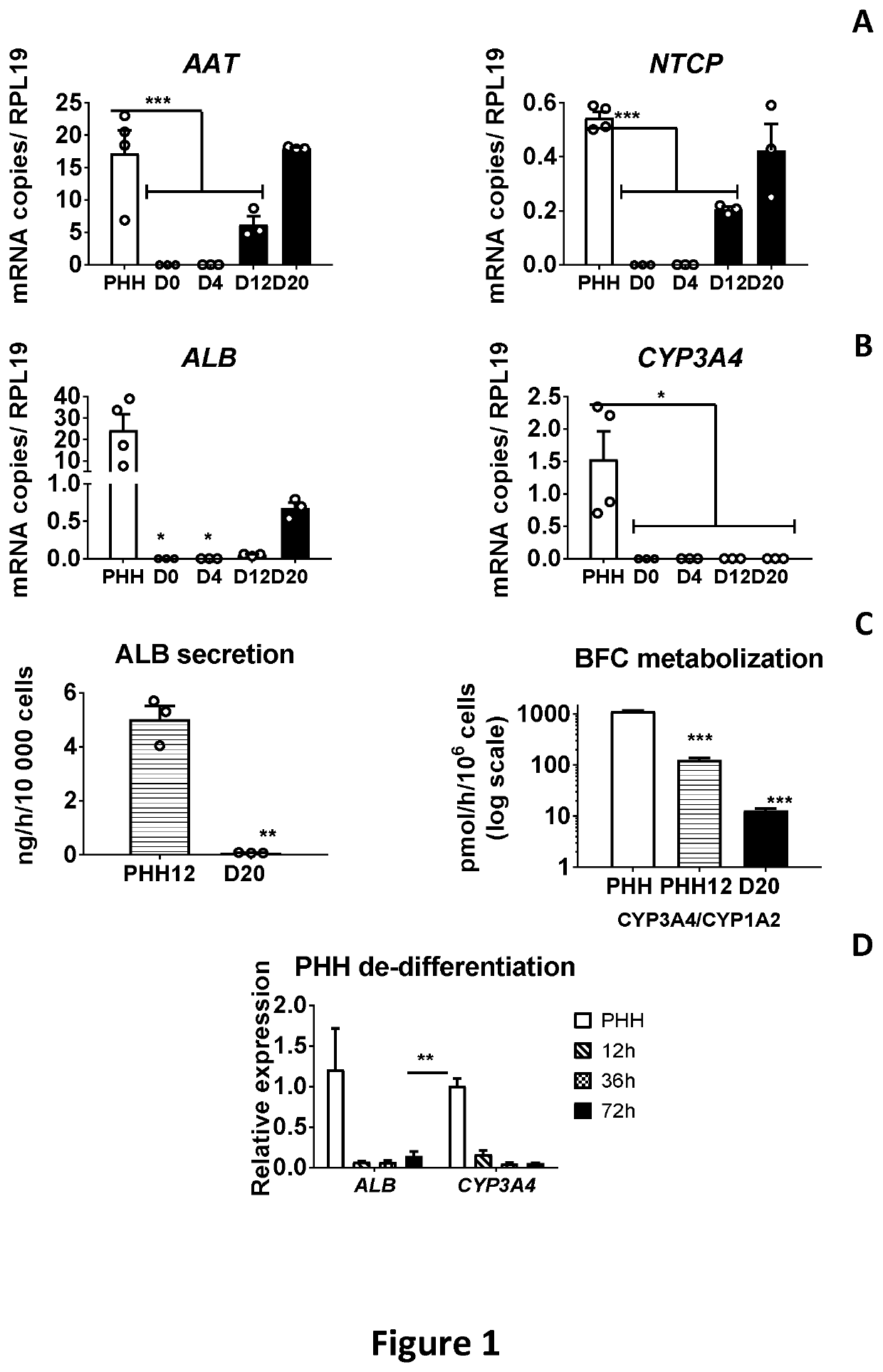
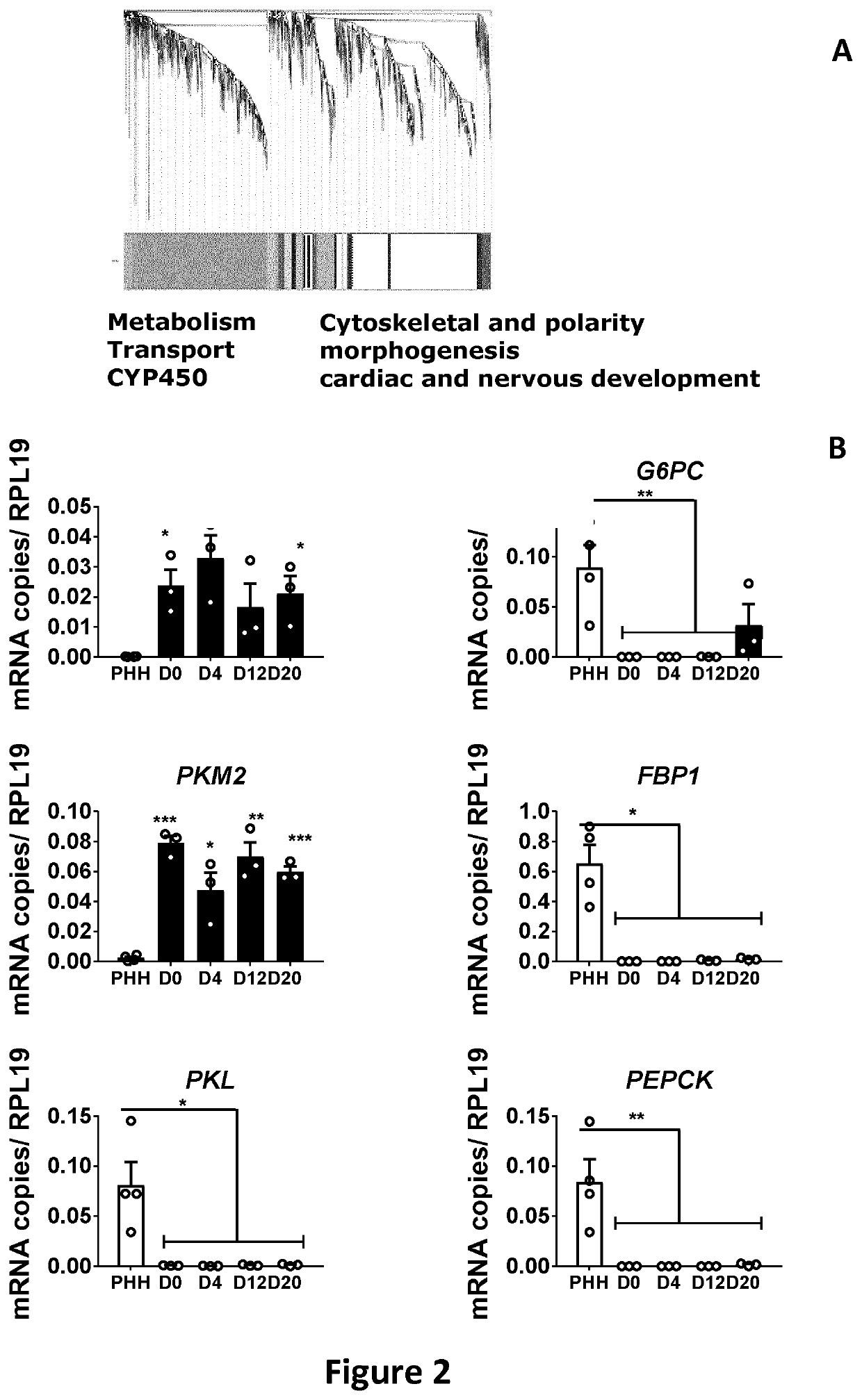
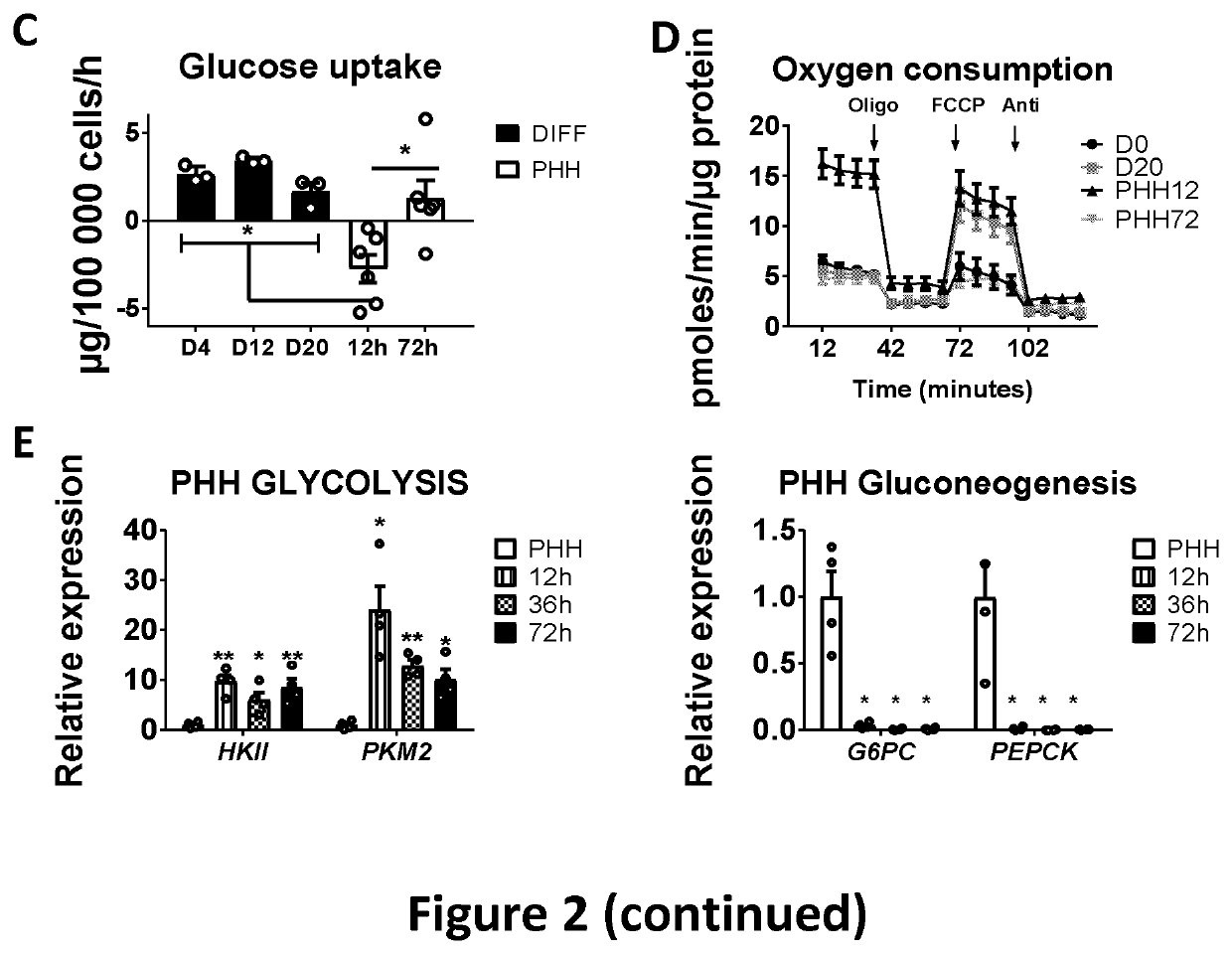
Examples
example 1
roves Function of PSC-Derived Hepatocytes
[0090]Differentiation of PSC to the Hepatic Lineage Using Growth Factors Yields Progeny that is Functional as Well as Metabolic Immature.
[0091]In order to evaluate and improve CYP450 function in PSC-derived HLCs, we differentiated human embryonic stem cells (hESCs; H9 cells) to the hepatic lineage and compared the transcriptional profile of HLCs with that of cryopreserved PHHs from 4 donors. By d20 hepatocyte specific transcripts, such as al-antitrypsin (AAT) and Na+-taurocholate co-transporting polypeptide (NTCP), reached levels near those in PHHs (hepatocytes isolated by laser capture microscopy from cryopreserved liver biopsies of 3 different donors; termed hereafter “Fresh PHHs”). (FIG. 1A). However, consistent with our and other previous reports, transcript levels for mature hepatocyte genes, such as albumin (ALB) or cytochrome P450 (CYP)3A4, one of the key phase 1 drug metabolizing enzymes in the human liver, remained significantly lowe...
example 2
roves Function of PSC-Derived Hepatocytes
[0100]In the previous example we showed that the supplementation of high levels of amino acids to the culture medium of PSC-derived hepatocytes induced both metabolic and functional maturation to levels found in PHHs. Furthermore, we showed that only under these conditions, the cells could be used for the screening of hepat- and mito-toxic compounds in relevant concentrations, and for a stable duration. Since this finding is of high interst for the pharmaceutical industry, we next tested whether the same media optimization might also result in maturation of commonly used hepatocellular carcinoma cell lines, that are now commonly used in industry. Indeed, supplementation of the AAG-composition to standard culture media (composition as shown in material and methods) of either hepG2 or HUH7 hepatoma cell lines greatly induced the expression of CYP3A4 (FIG. 8A) and other CYP450 isoforms (FIG. 8C) after 7 days of incubation. Again this induction w...
example 3
Also Induces Functional Improvement in Non-Hepatic Cells
[0102]Data from several studies indicate that the correlation between an immature cellular phenotype and a dysregulated nutrient utilization in vitro is not a liver-specific phenomenon, but that most cell types display the same problem. Differentiation protocols aimed at generating functional cardiomyocytes from PSCs have been found to generate cells that structurally resemble the phenotype observed in the embryonic hearth tube21 and also transcriptionally resemble fetal heart tissue22 Like hepatocytes, also myocardial cells display very high levels of mitochondrial activity, a large and elaborated mitochondrial network and a high dependency on OXPHOS23.
[0103]By contrast, and as we observed for PSC-hepatocytes, both fetal and PSC-derived cardiomyocytes use glycolysis24, even if mitochondrial abundance increases following prolonged culture25. However, cardiomyocytes appear to be sufficiently mature to become glucose independent,...
PUM
 Login to View More
 Abstract
Description
Claims
Application Information
 Login to View More