
Sensor unit, body fluid monitoring device and method for detecting an analyte
a technology of body fluid and sensor unit, applied in the field of sensor unit for detecting an analyte, to achieve the effect of saving cell- or battery-life and advantageously simplifying the design of the surfa
- Summary
- Abstract
- Description
- Claims
- Application Information
AI Technical Summary
Benefits of technology
Problems solved by technology
Method used
Image

Examples
Embodiment Construction
[0049]It should be understood that the detailed description and specific examples, while indicating exemplary embodiments of the apparatus, systems and methods, are intended for purposes of illustration only and are not intended to limit the scope of the invention. These and other features, aspects, and advantages of the apparatus, systems and methods of the present invention will become better understood from the following description, appended claims, and accompanying drawings. It should be understood that the Figures are merely schematic and are not drawn to scale. It should also be understood that the same reference numerals are used throughout the Figures to indicate the same or similar parts.
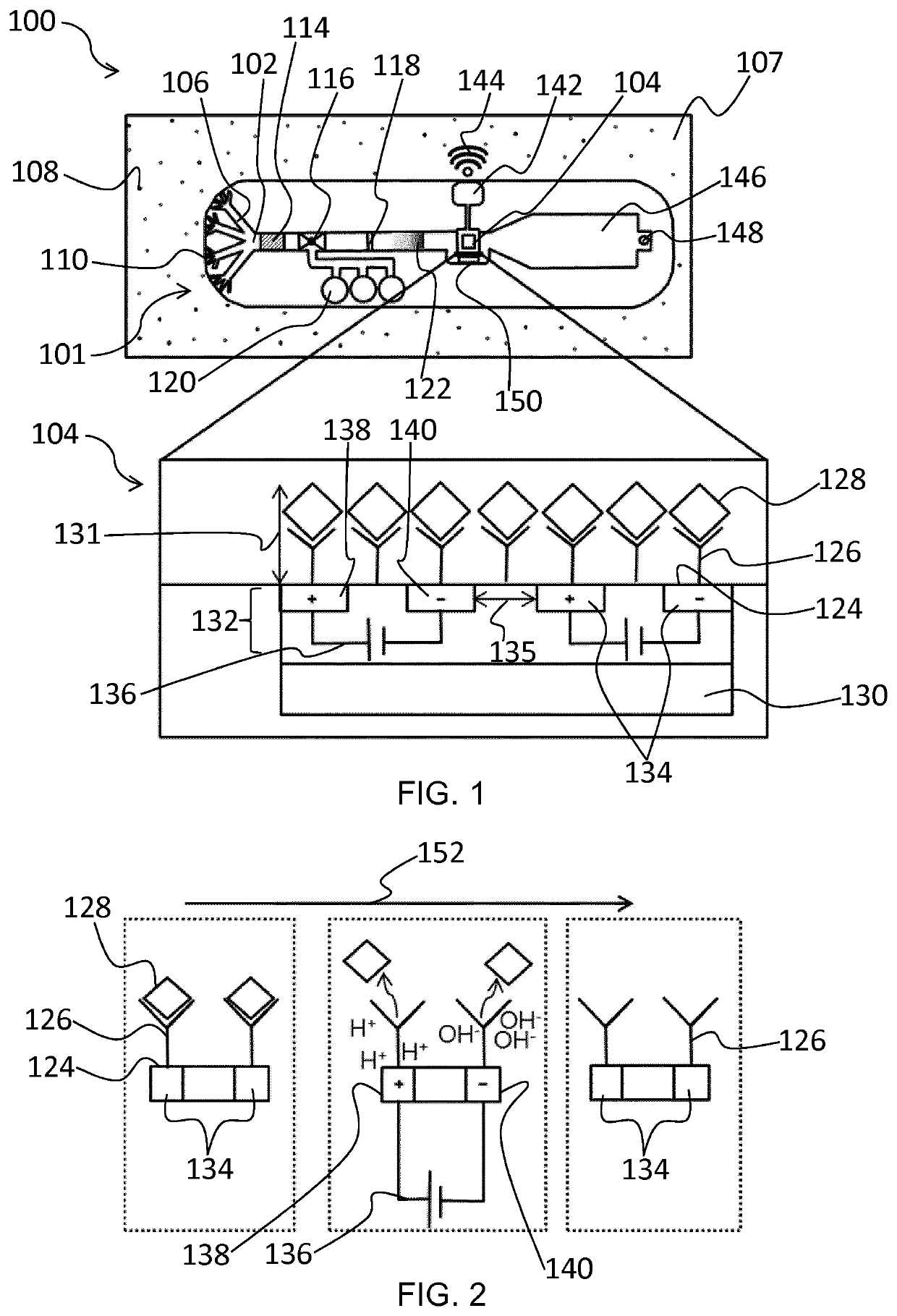
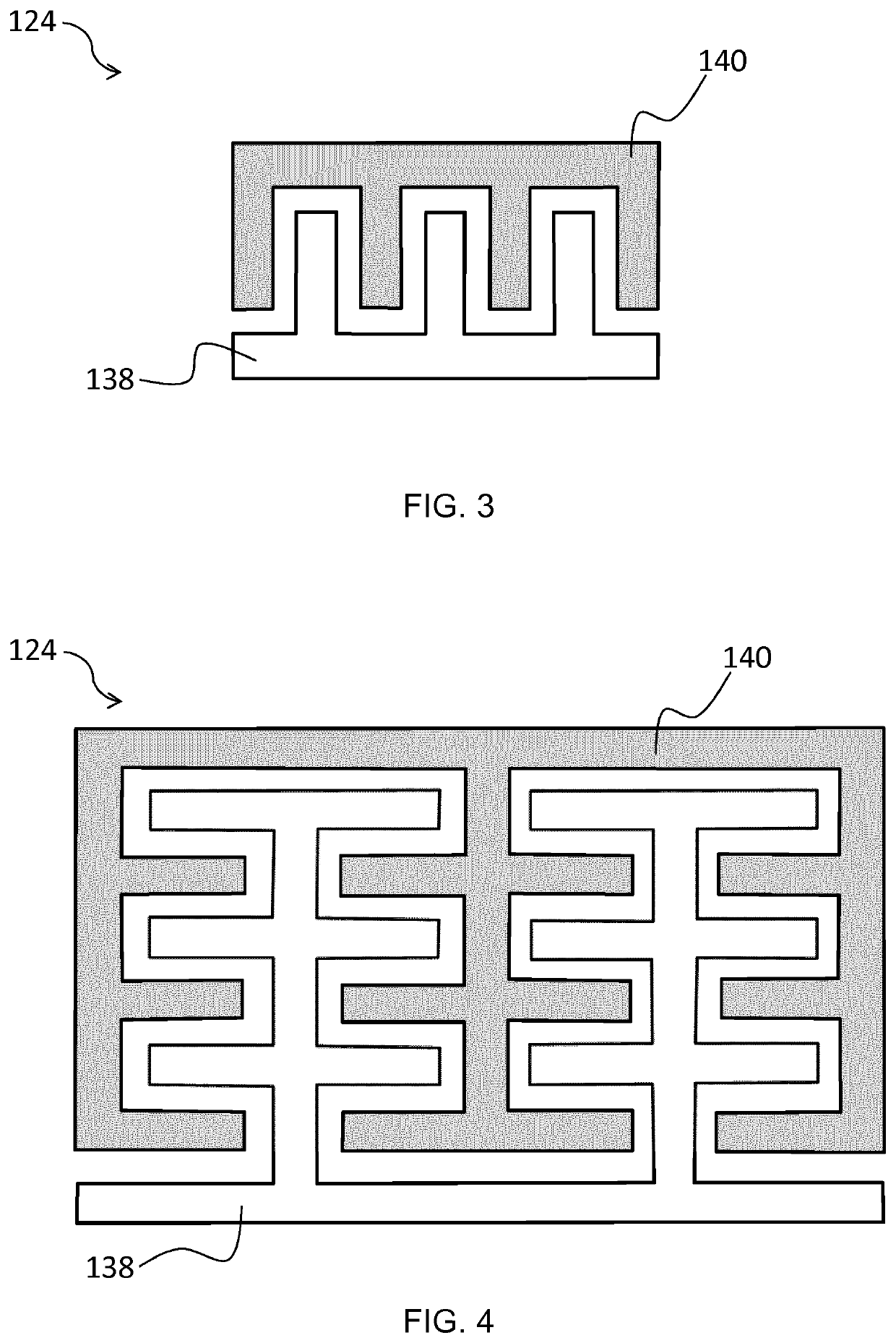
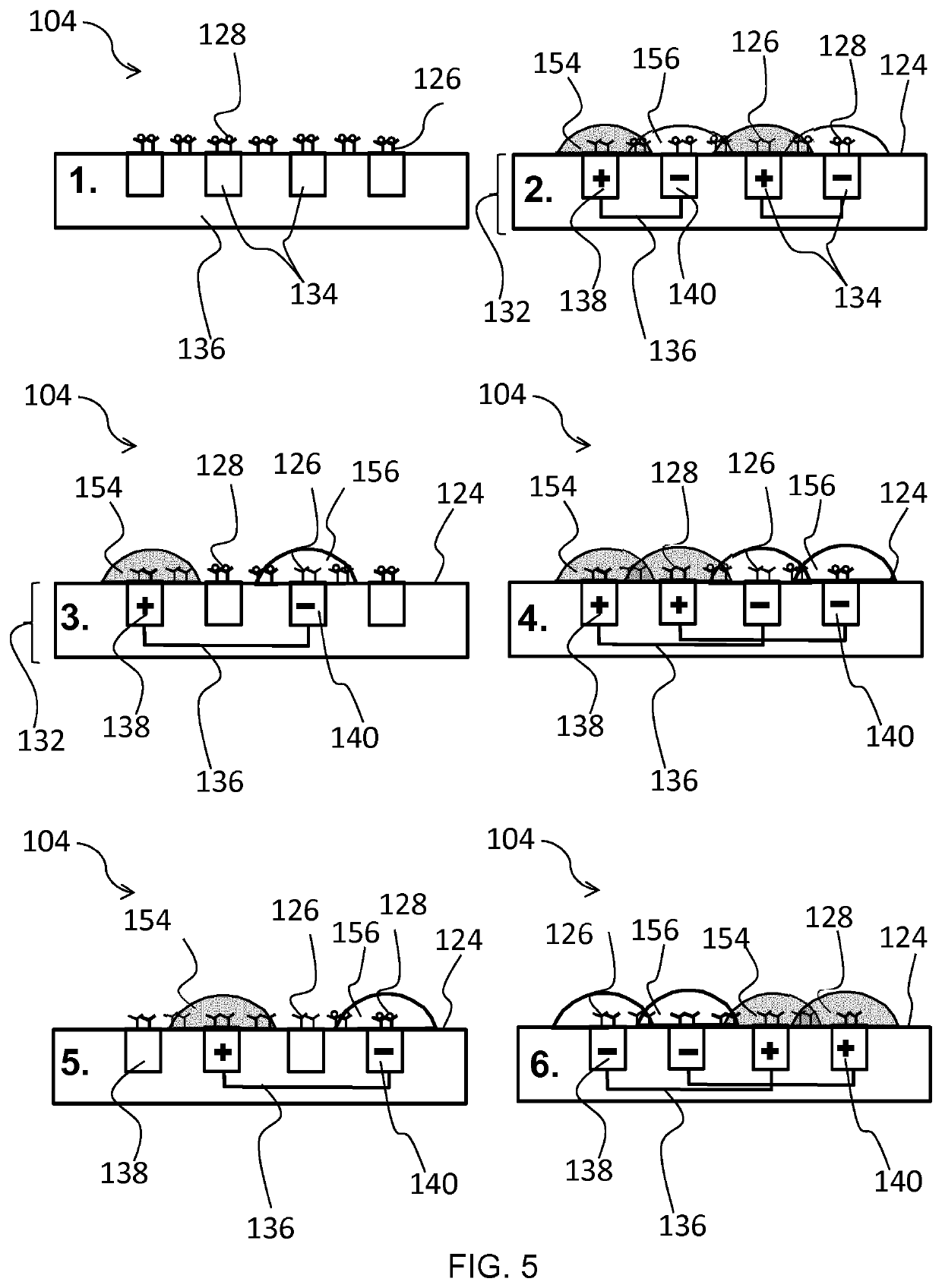
[0050]Provided is a sensor unit for detecting an analyte in an aqueous medium. The sensor unit comprises a surface for receiving the aqueous medium thereon. Capture species immobilized on the surface reversibly bind the analyte. A detector detects the analyte when the analyte is bound to t...
PUM
 Login to View More
 Abstract
Description
Claims
Application Information
 Login to View More