Longitudinal double-mode saw filter utilizing electrode finger phase weighting

a technology of longitudinal double-mode saw filter and electrode finger phase weighting, which is applied in the direction of piezoelectric/electrostrictive/magnetostrictive devices, piezoelectric/electrostriction/magnetostriction machines, waveguide types, etc., can solve the problems of deteriorating performance, increasing the resistance of electrodes, and reducing the length of the device, so as to achieve excellent performance and reduce the effect of device length

US6937116B2Inactive Publication Date: 2005-08-30SEIKO EPSON CORP
7 Cites 6 Cited by

Patent Information

Authority / Receiving Office
US · United States
Current Assignee / Owner
Publication Date
2005-08-30
Estimated Expiration
Not applicable · inactive patent

Smart Images

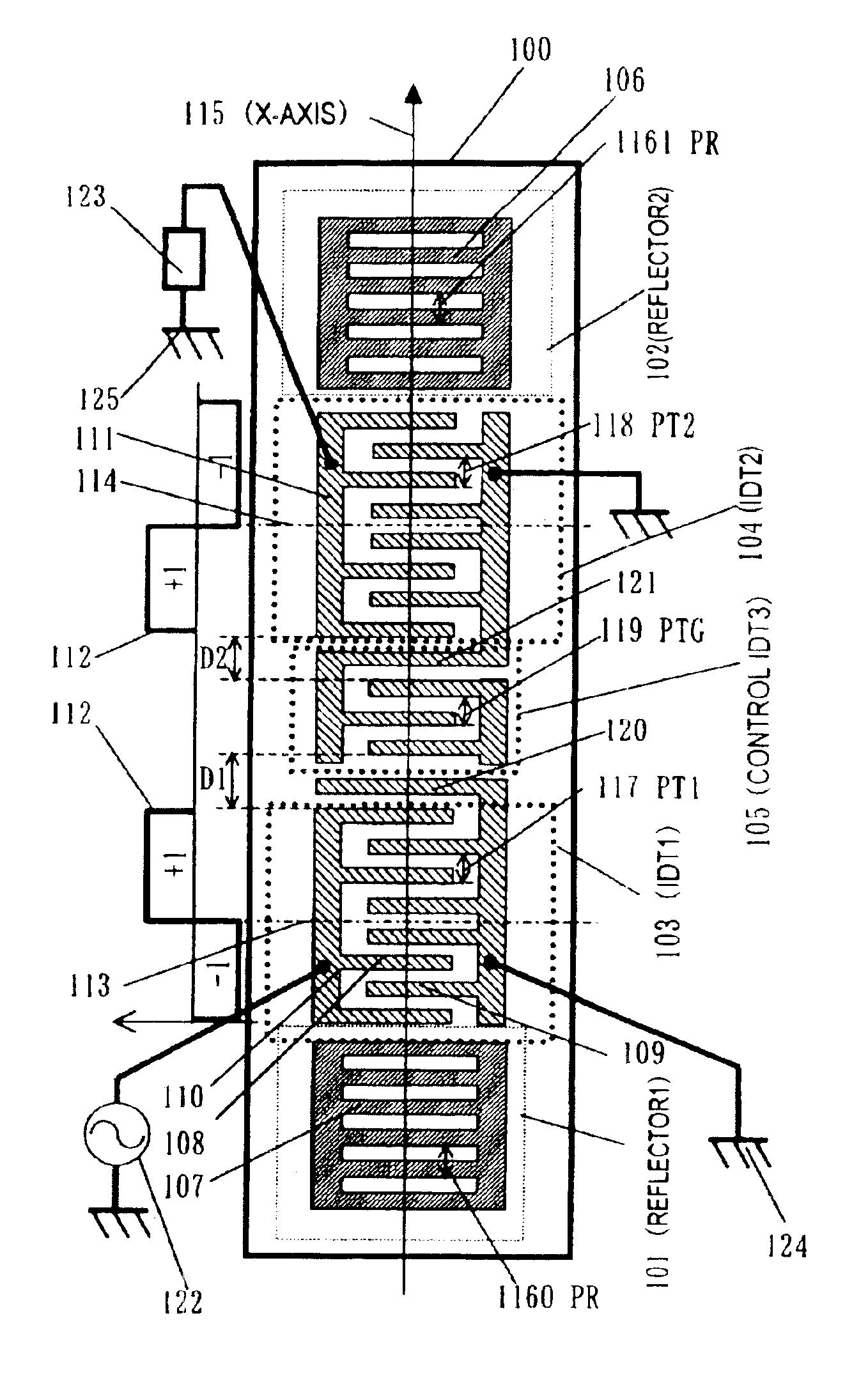
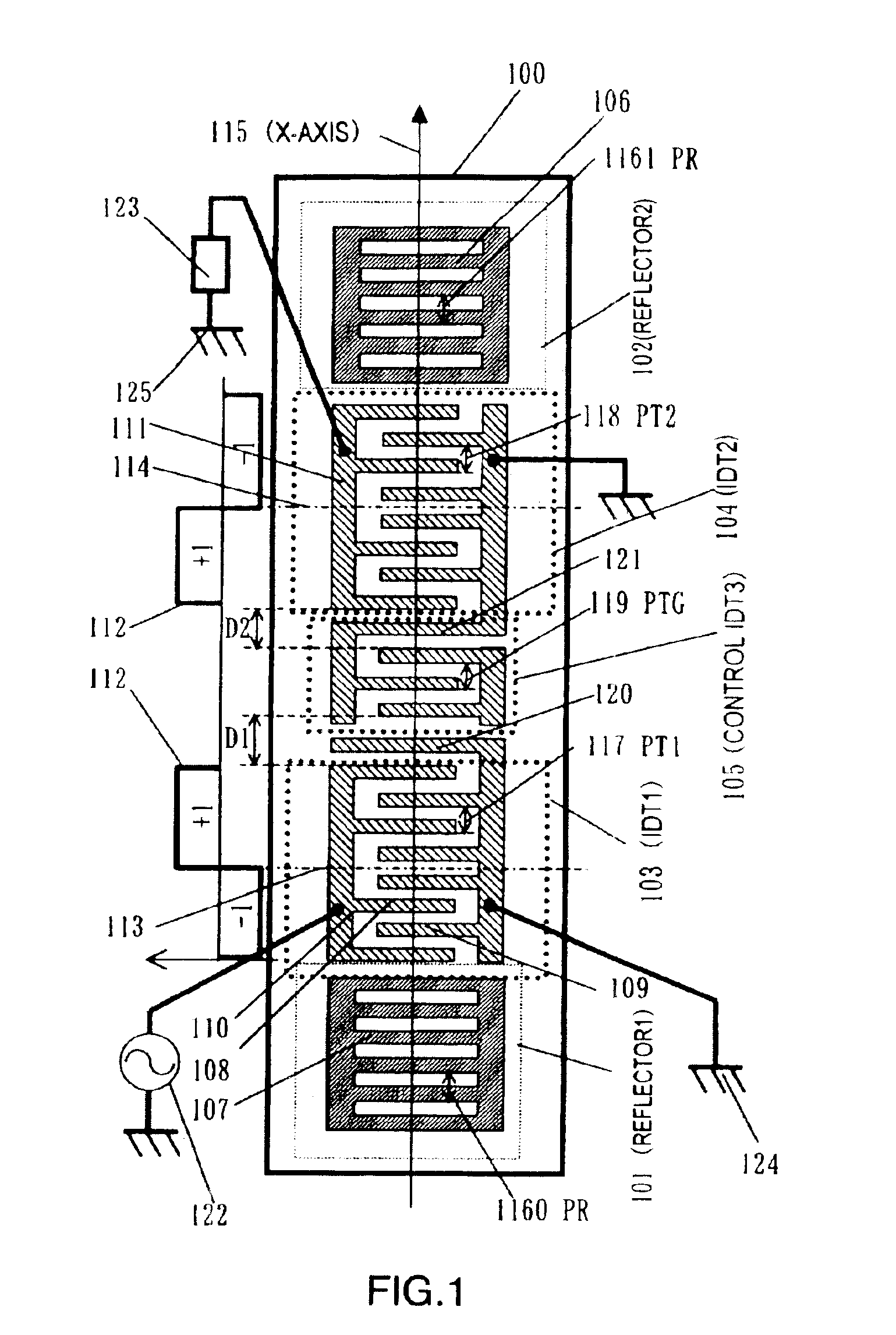
  • Figure 1
    Figure 1
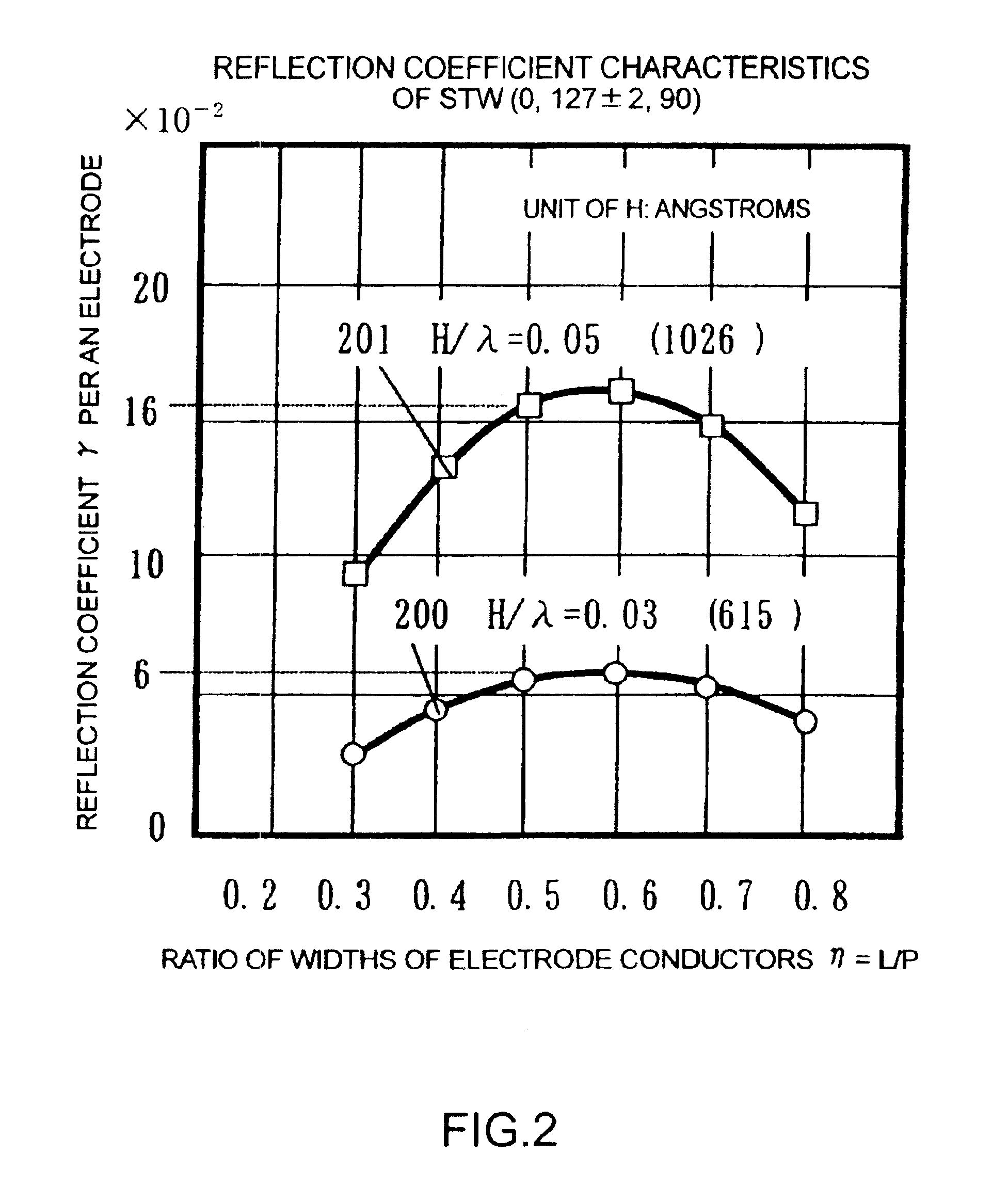
  • Figure 2
    Figure 2
  • Figure 3
    Figure 3
Patent Text Reader

Abstract

The invention provides a longitudinal double-mode SAW filter that has a large reflection coefficient by the electrode conductors and having flat pass band characteristics. In the longitudinal double-mode SAW filter, nearly all of higher-order natural mode oscillation displacements A0, S1 and A1 are made present in the first and second interdigital transducer regions. An electrode finger phase weighting is formed to correspond to a BPSK sign where a phase sign changes into 0 or π at a polarity-changing point on an electrode charge distribution function Q(x) that generates on the electrode due to natural modes of oscillation. A single pair of natural modes, which exist stationary in the direction X of propagation of the surface acoustic waves that are utilized, is selected. A symmetrical mode charge distribution (Q(x), −Q(x)) and an obliquely symmetrical mode charge distribution (Q(x), Q(x)) are generated in order to correspond to the regions of IDT1 and IDT2. The PTNG in the control IDT3 region is set to be in the range of 1.02 to 1.04 so as to couple the two together.
Need to check novelty before this filing date? Find Prior Art

Description

BACKGROUND OF THE INVENTION

[0001] 1. Field of Invention

[0002] The present invention relates to technology for constituting a resonance type of longitudinal double-mode SAW filter obtained by utilizing surface acoustic waves, wherein when the device is formed on a piezoelectric plate that is used, a reflection coefficient γ of the surface acoustic waves possessed by an electrode conductor can be as large as about 0.1.

[0003] 2. Description of Related Art

[0004] Resonance type longitudinal double-mode SAW filters having two interdigital transducers (hereinafter abbreviated as IDTs)) and three IDTs have been disclosed in JP-A-61-285814 and JP-A-1-231417, respectively.

[0005] According to the above in which a piezoelectric plate is fabricated, for example, with ST-cut quartz or STW cut, however, the insertion loss of the longitudinal double-mode SAW filter greatly increases as the operation frequency of the device exceeds 800 MHz. In particular, when a longitudinal double-mode SAW filter is to ...

Examples

Embodiment Construction

[0032]First, described below are fundamental matters related to the present invention prior to describing concrete embodiments of the invention.

[0033]A flat plate is cut out from a piezoelectric material of quartz, lithium tantalate (LitaO3), lithium niobate (LiNbO3) or KNO3 crystals, and the surface thereof is polished like a mirror surface. Then, many electrode fingers of a metal, such as aluminum or copper, are periodically arranged in parallel to form IDTs at right angles to the direction of phase propagation of the surface acoustic waves of the Rayleigh type, leaky type, ram type or SH type. Then, a pair of reflectors is arranged on both sides thereof all by arranging a number of strip conductors in parallel and periodically like those described above, thereby to obtain a 1-port SAW resonator.

[0034]In the 1-port SAW resonator, it has been known that the importance for constituting the IDTs is that when M pairs of IDTs are constituted each pair including a positive electrode and...