Process for plating a piezoelectric composite

a piezoelectric composite and composite technology, applied in the field of piezoelectric composite, can solve problems such as prone to cracking, and achieve the effects of less expansion, less stress, and less expansion

US7082655B2Inactive Publication Date: 2006-08-01GE INSPECTION TECH LP
34 Cites 15 Cited by

Patent Information

Authority / Receiving Office
US · United States
Patent Type
Patents(United States)
Current Assignee / Owner
Publication Date
2006-08-01
Estimated Expiration
Not applicable · inactive patent

Smart Images

  • Figure 1
    Figure 1
  • Figure 2
    Figure 2
  • Figure 3
    Figure 3
Patent Text Reader

Abstract

A transducer having a ceramic element in which the ceramic is elevated above a polymer and a method of manufacturing the transducer. The transducer comprises a piezo-composite element comprising a ceramic element embedded in epoxy. In an array, the ceramic elements may be in the form of posts. The plurality of ceramic elements is slightly elevated above the polymer and in staggered arrangement with the polymer. The element is manufactured by first grinding the face of the composite and removing damaged ceramic by acid etching the ceramic. The epoxy is removed by plasma etching so that the ceramic is above the epoxy. The composite is sputter plated so that a maximum temperature that could damage the plating is not exceeded. The ceramic is then poled so that a maximum temperature that could damage the plating is not exceeded. Contacts are then attached to the plating adjacent the ceramic.
Need to check novelty before this filing date? Find Prior Art

Description

FIELD OF THE INVENTION

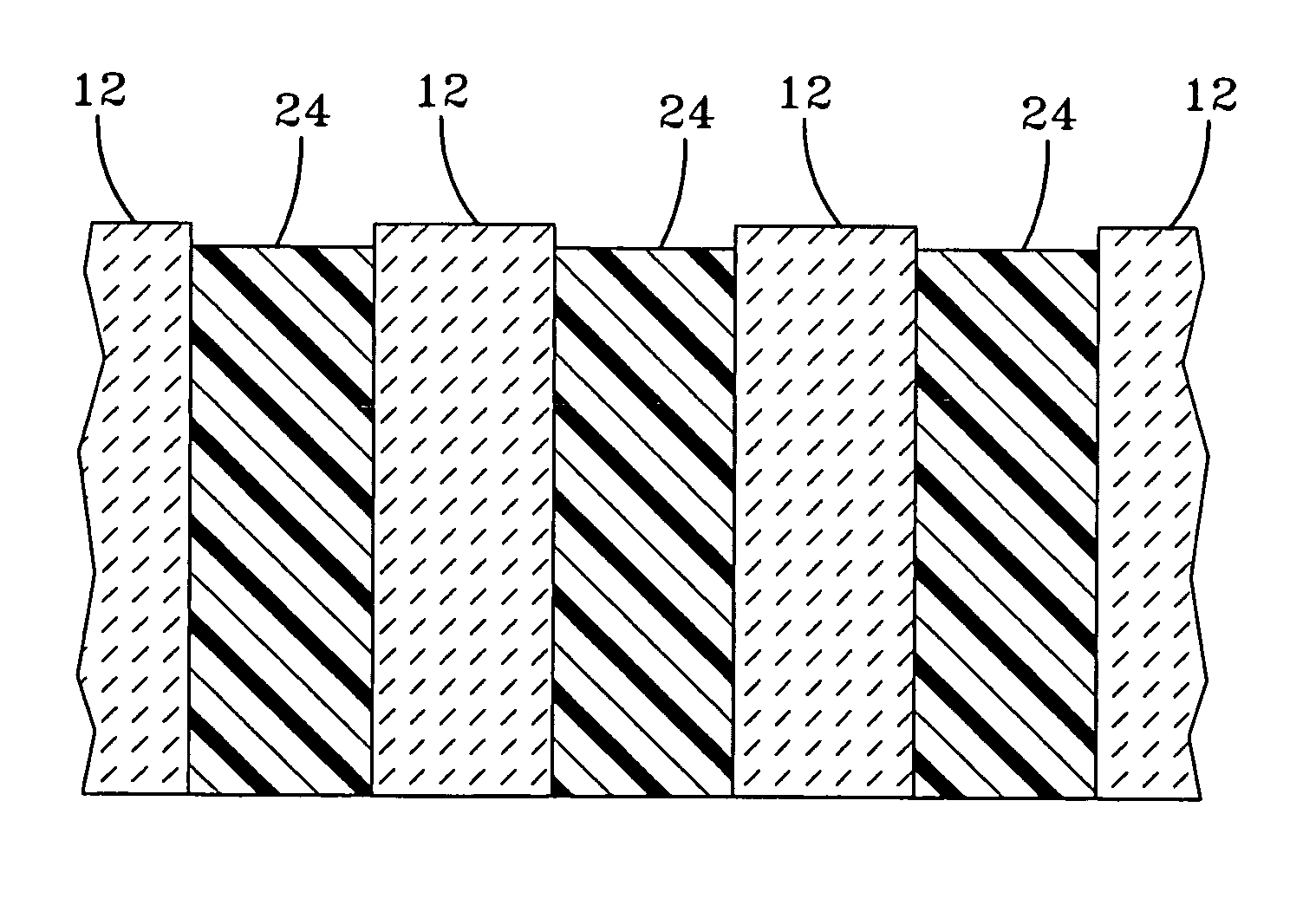
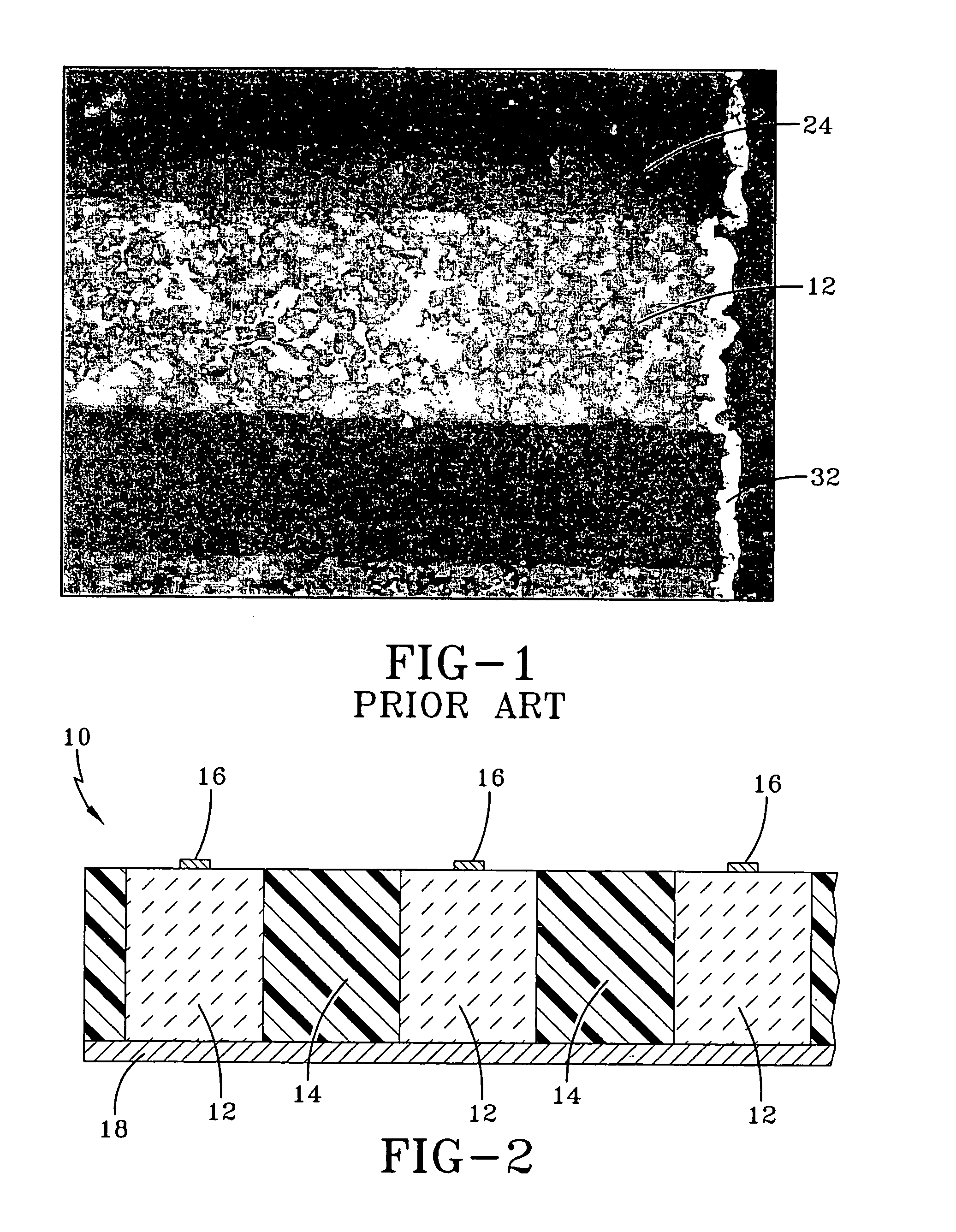
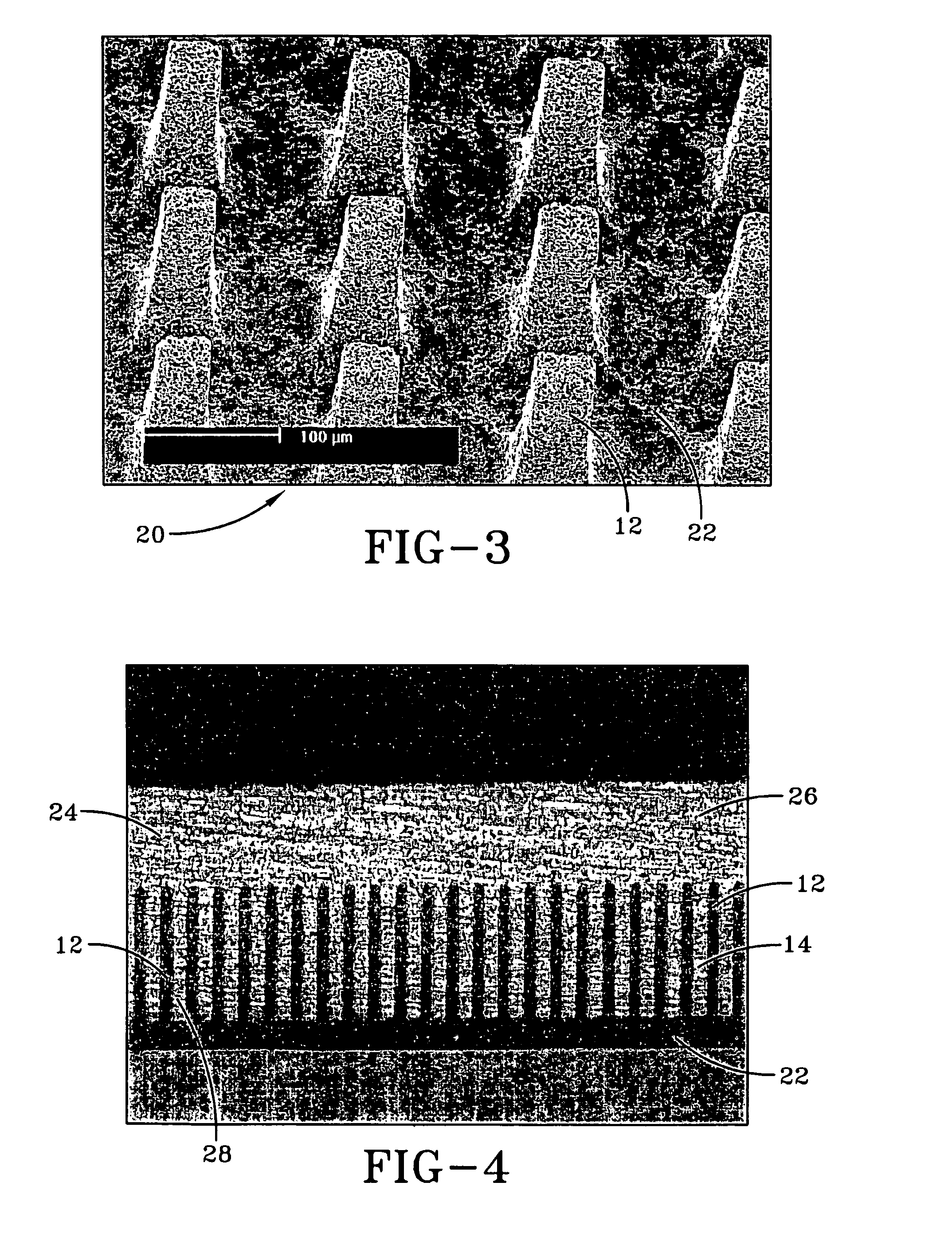
[0001] The present invention is directed to a piezoelectric composite to which plating is applied and a method for applying such a plating to provide improved adhesion and reliability, and specifically to a ceramic piezoelectric composite ultrasonic transducer having an array of ceramic posts and a method for manufacturing such transducers.BACKGROUND OF THE INVENTION

[0002] Ultrasonic transducers incorporate one or more piezoelectric vibrators which are electrically connected to a pulsing-receiving unit in the form of an ultrasonic test unit. The piezoelectric transducer converts an electrical pulse from the pulsing unit and converts the electrical signal to a mechanical vibration which is transmitted through a material such as a metal to which it is coupled. The piezoelectric material has the ability to receive a mechanical vibration from the material to which it is coupled and convert it to an electrical pulse which is sent to the receiving unit. By tracking the...

Examples

Embodiment Construction

[0027]FIG. 2 depicts a multi-arrayed transducer 10 that incorporates the piezo-electric composite of the present invention. The transducer is comprised of a plurality of piezo-composite ceramic posts 12. Each ceramic post 12 is spaced from an adjacent ceramic post 12 by a nonconductive material 14, such as a polymer. In a preferred embodiment, the polymer is an epoxy. The piezo-ceramic composite posts are characterized by their ability to vibrate when exposed to an electrical excitation, thereby generating a mechanical or sound wave, hereinafter referred to as an acoustic wave, and to generate an electrical pulse when excited by an incident acoustic wave. A preferred ceramic material is lead-zirconate-titanate (PZT), although other equivalent materials such as polycrystalline relaxor materials (PZN-PT materials) and biased electrorestrictor materials (PMN-PT ferroelastic relaxor materials) may be used as is known in the art. Each ceramic post 12 or element includes an electrical con...