Transaction device with noise signal encryption

US7392396B2Active Publication Date: 2008-06-24SYMBOL TECH LLC
87 Cites 7 Cited by

Patent Information

Authority / Receiving Office
US · United States
Current Assignee / Owner
Publication Date
2008-06-24

Smart Images

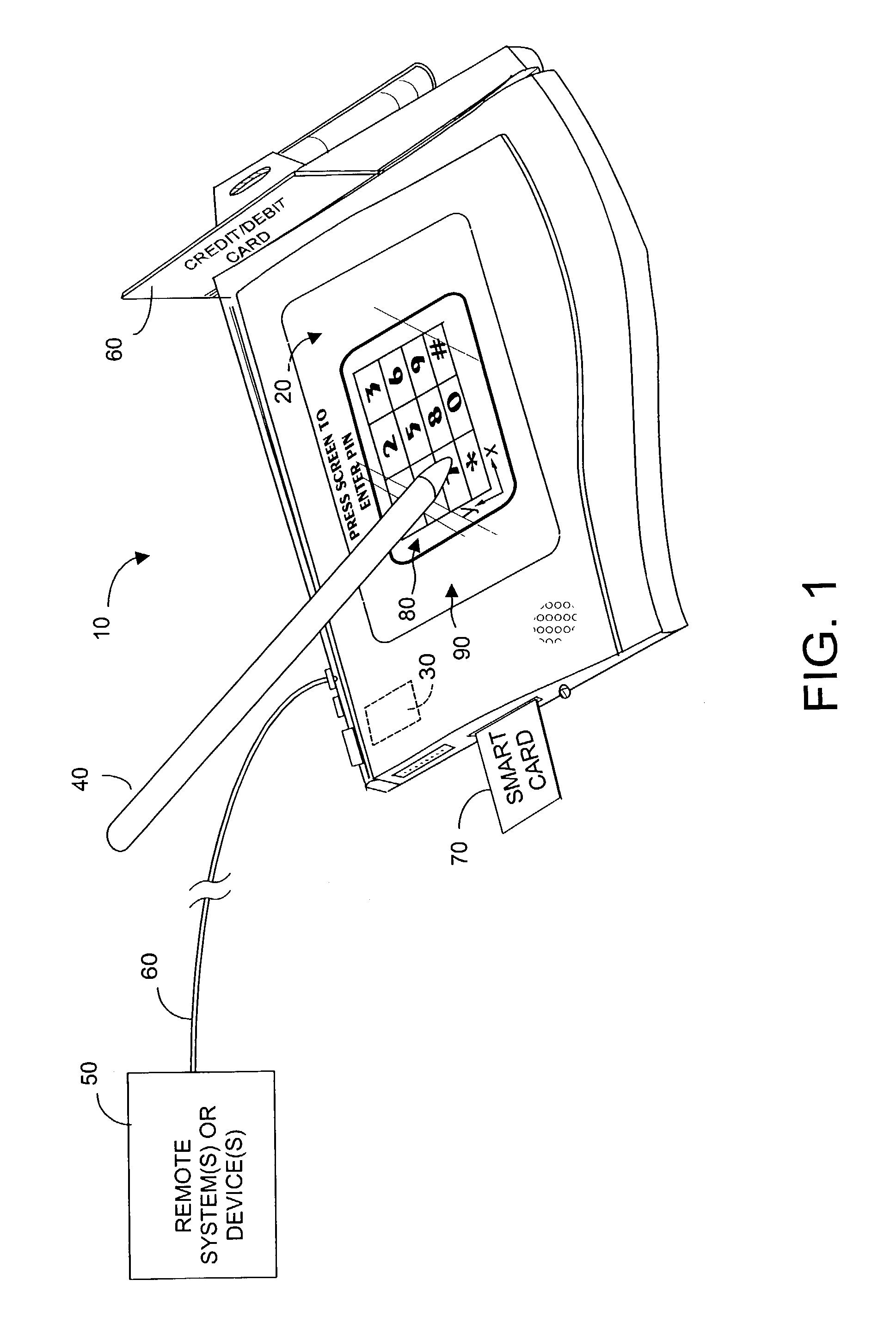
  • Figure 1
    Figure 1
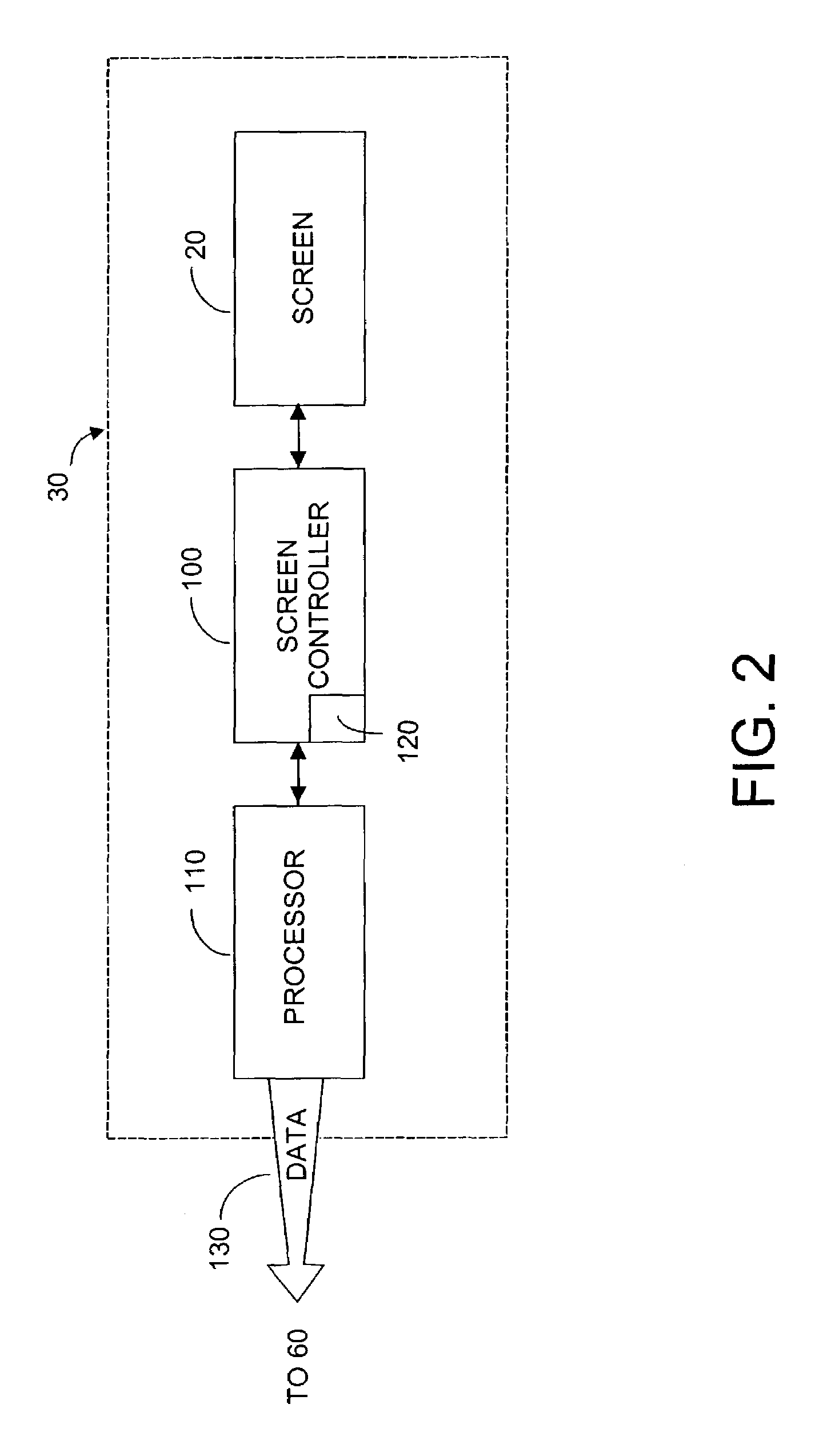
  • Figure 2
    Figure 2
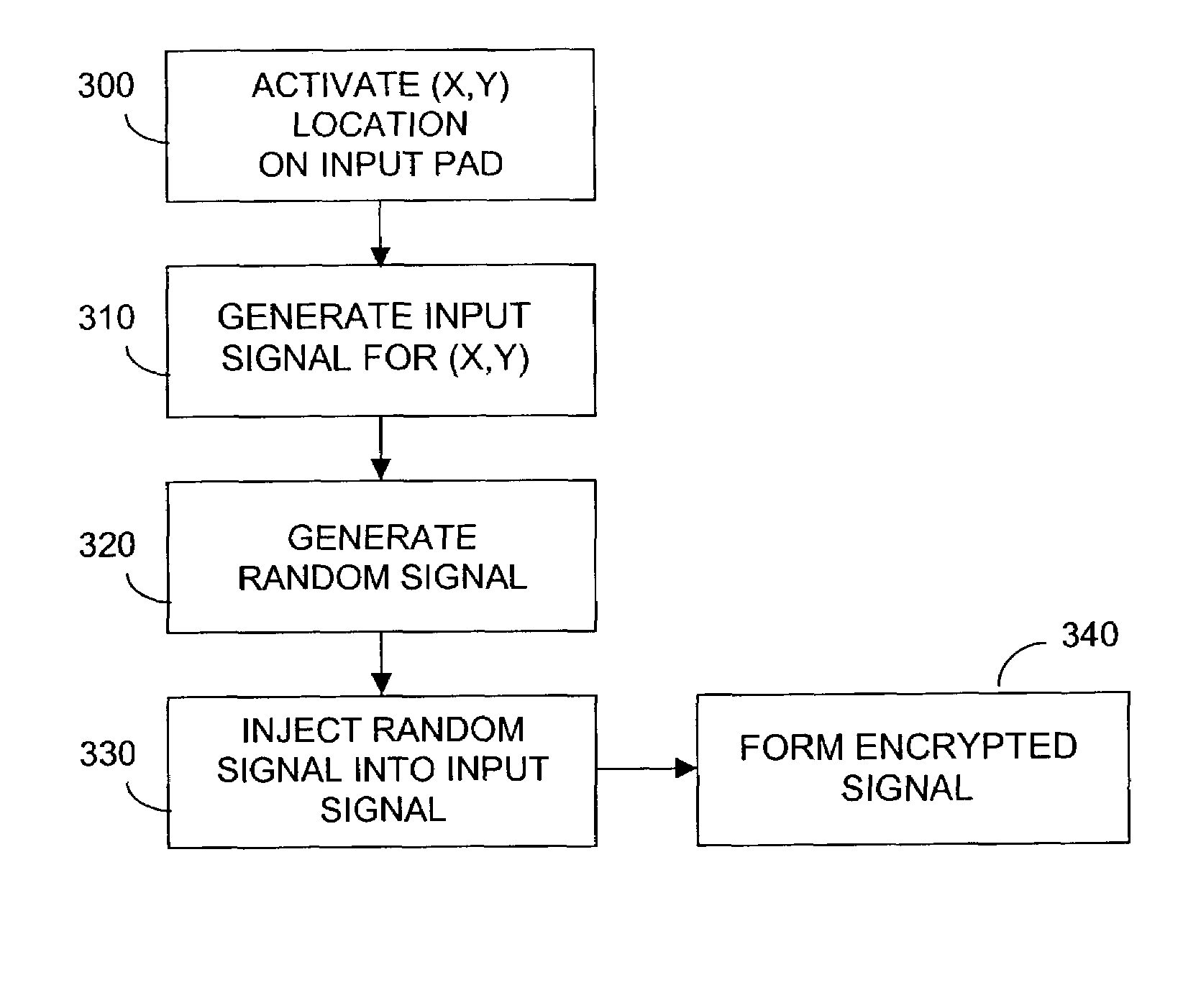
  • Figure 3
    Figure 3
Patent Text Reader

Abstract

A transaction device adds or injects a random noise component into signals representing (x,y) coordinate signals associated with user interface with an input screen associated with the device. The noise component can be generated by converting to analog the output of a random number generator, and then adding the noise component to the x-axis and / or y-axis component of the (x,y) coordinate signal. Alternatively the noise component can be injected into the x-axis and / or y-axis operating potential for the input screen. The result is a masking of the original (x,y) positional information. The randomly generated number is only available internal to the device. The device can use this number to de-crypt the true (x,y) signals, which signals can then be re-encrypted before transmitting from the device.
Need to check novelty before this filing date? Find Prior Art

Description

RELATIONSHIP TO PENDING APPLICATION

[0001] Priority is claimed from U.S. provisional patent application Ser. No. 60 / 363,034 filed by applicants herein on 7 Mar. 2002, entitled “Active Noise Injection and Secure Input Pad Partition”.FIELD OF THE INVENTION

[0002] The invention relates generally to electronic transaction devices including point of sale (POS) devices, and more particularly to increasing the security of data encryption within such devices.BACKGROUND OF THE INVENTION

[0003] In recent years, electronic transaction devices such as point of sale (POS) devices, ATMs, personal digital assistants (PDAs), personal computers (PCs), and bank system networks have found much use in commerce. Transactions involving such devices are carried out everyday over media including the Internet, as well as through POS or bank system networks. Such transactions typically request from the customer-user private information such as a personal identification number (PIN), signature, password, or some ot...

Examples

Embodiment Construction

[0014]FIG. 1 depicts an exemplary embodiment of a transaction device 10 configured for operation by a user. Although device 10 is shown as a point-of-sale (POS) device such as may be used when paying for a transaction at a merchant store, it is understood that device 10 could instead be a personal digital assistant (PDA), a personal computer, a kiosk terminal, and so forth.

[0015]In an exemplary embodiment, transaction device 10 includes a screen 20 that preferably can display information for the user and can also be used to receive information input by the user, for example a screen sensitive to at least one of touch, pressure, electrical charge, interruption of light, and heat resulting from user interface with the screen. Device 10 typically operates responsive to internal electronics 30, which electronics preferably includes electronics and / or software to encrypt data input by a user to device 10. In one embodiment, screen 20 is configured to both display information to the user ...