
Method and apparatus for providing network security using role-based access control
a technology of access control and network security, applied in the field of information network security, can solve the problems of dramatic increase in size, significant impact on the size of a substantial number of acls, and a number of infirmities of today's security acls
- Summary
- Abstract
- Description
- Claims
- Application Information
AI Technical Summary
Benefits of technology
Problems solved by technology
Method used
Image

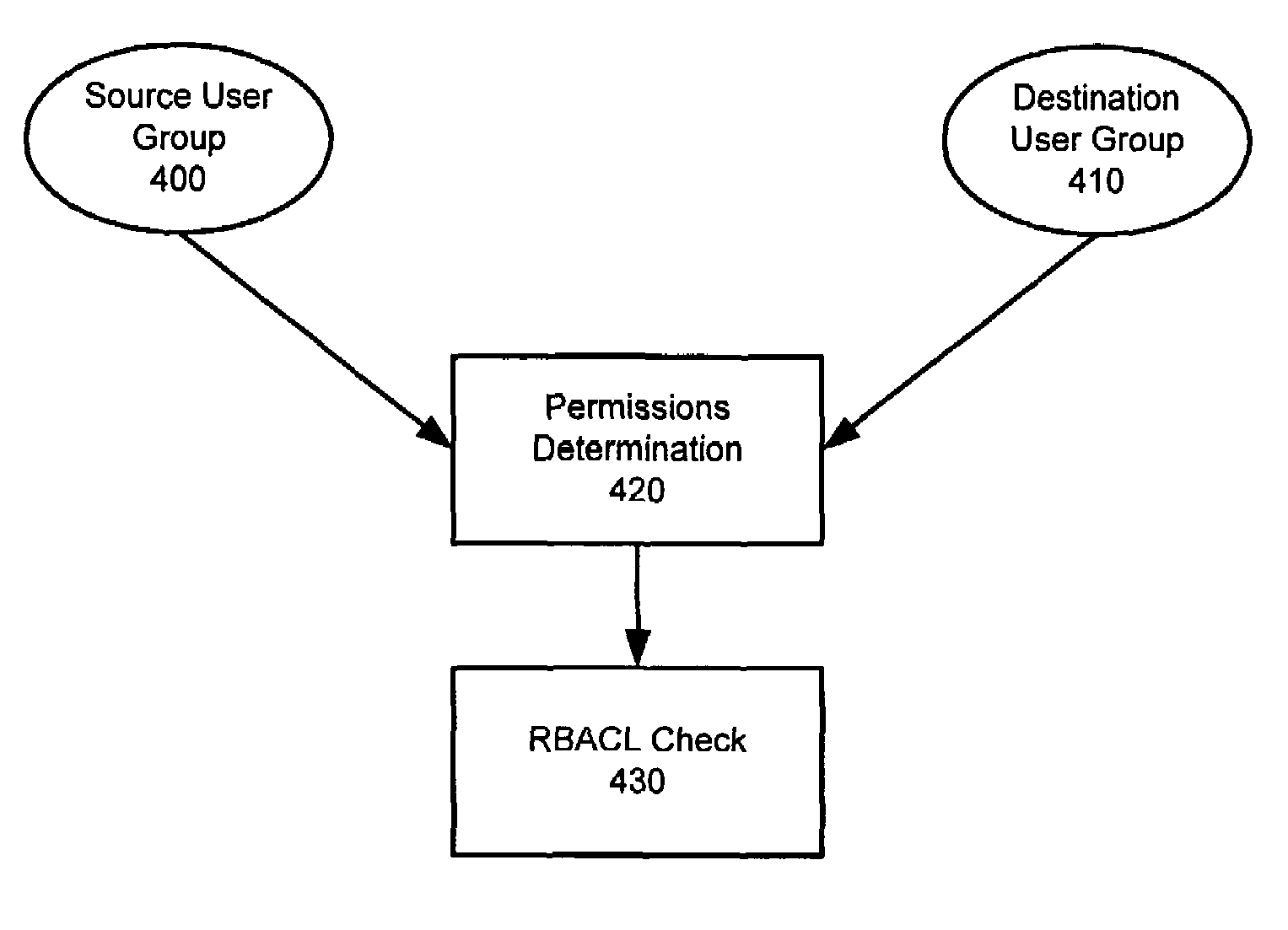
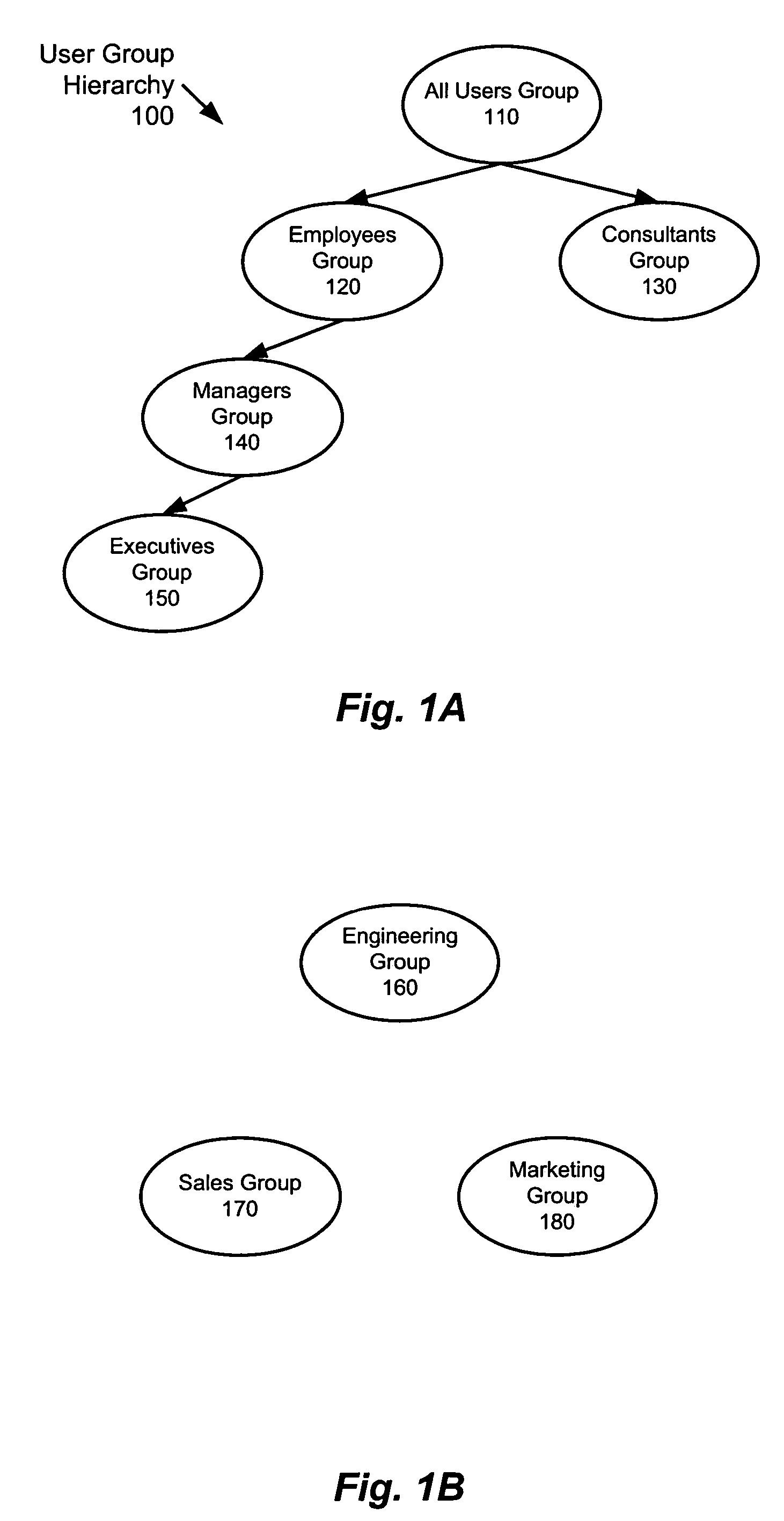
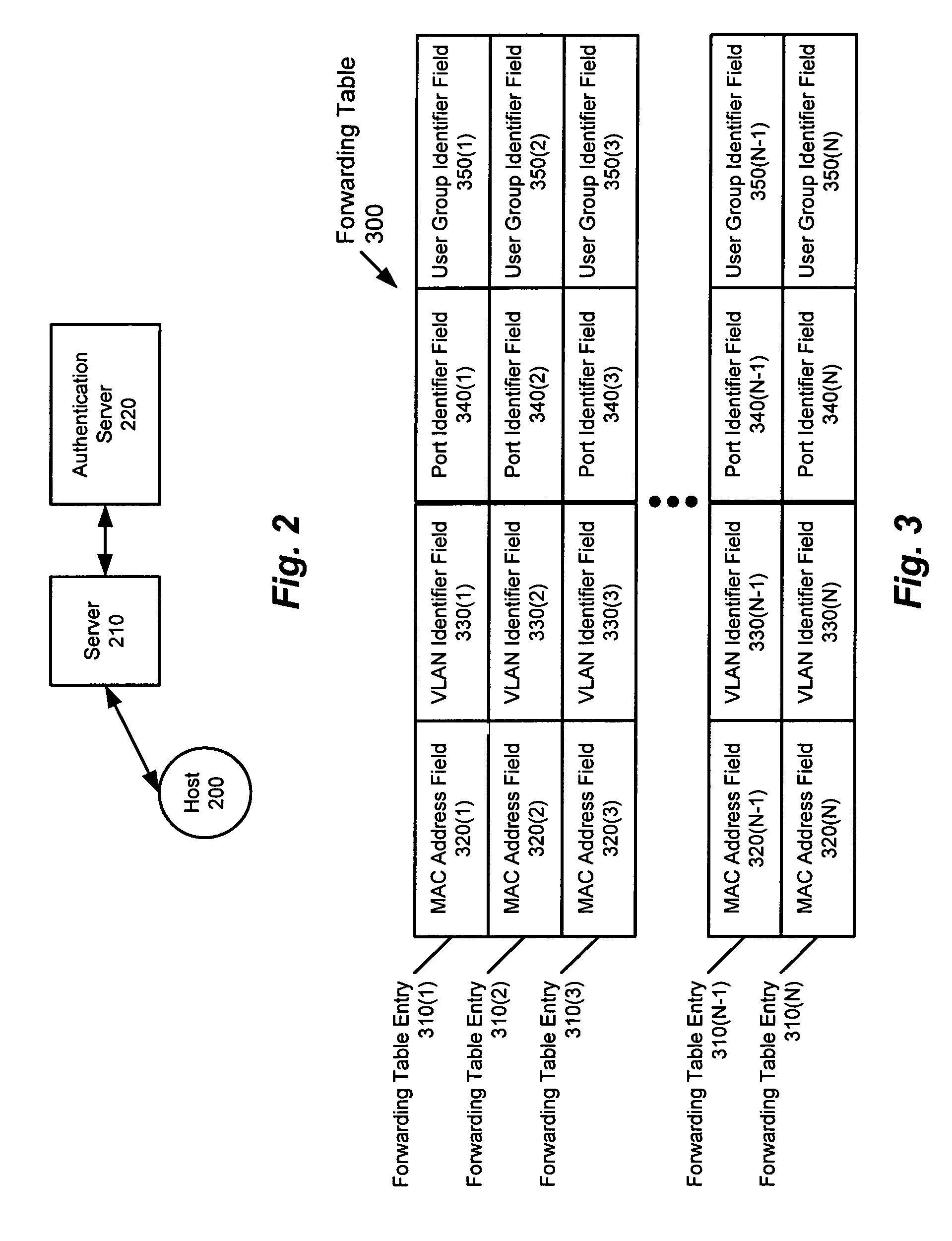
Examples
Embodiment Construction
[0035]The following is intended to provide a detailed description of an example of the invention and should not be taken to be limiting of the invention itself. Rather, any number of variations may fall within the scope of the invention which is defined in the claims following the description.
Introduction
[0036]The present invention provides a method and apparatus that addresses the limitations outlined above through the use of role-based access control lists (RBACLs), which are designed to directly address such problems. The network access permitted a user (e.g., a person having a user identifier, a server, internet protocol (IP) telephone, and other such network devices) is conventionally based on the group(s) to which the user belongs, the role(s) assigned to the user by the enterprise, the privilege(s) the user has as an ISP customer or similar criteria. It will be appreciated that such a user can, in fact, be a person having a user identifier, a network device, a telecommunicati...
PUM
 Login to View More
 Abstract
Description
Claims
Application Information
 Login to View More