
Using atomic sets of memory locations
a technology of memory locations and atomic sets, applied in the field of information processing, can solve the problems of difficult to find and debug, inability to define races in terms of synchronization, and inability to correct certain interleaved code behavior
- Summary
- Abstract
- Description
- Claims
- Application Information
AI Technical Summary
Problems solved by technology
Method used
Image

Examples
Embodiment Construction
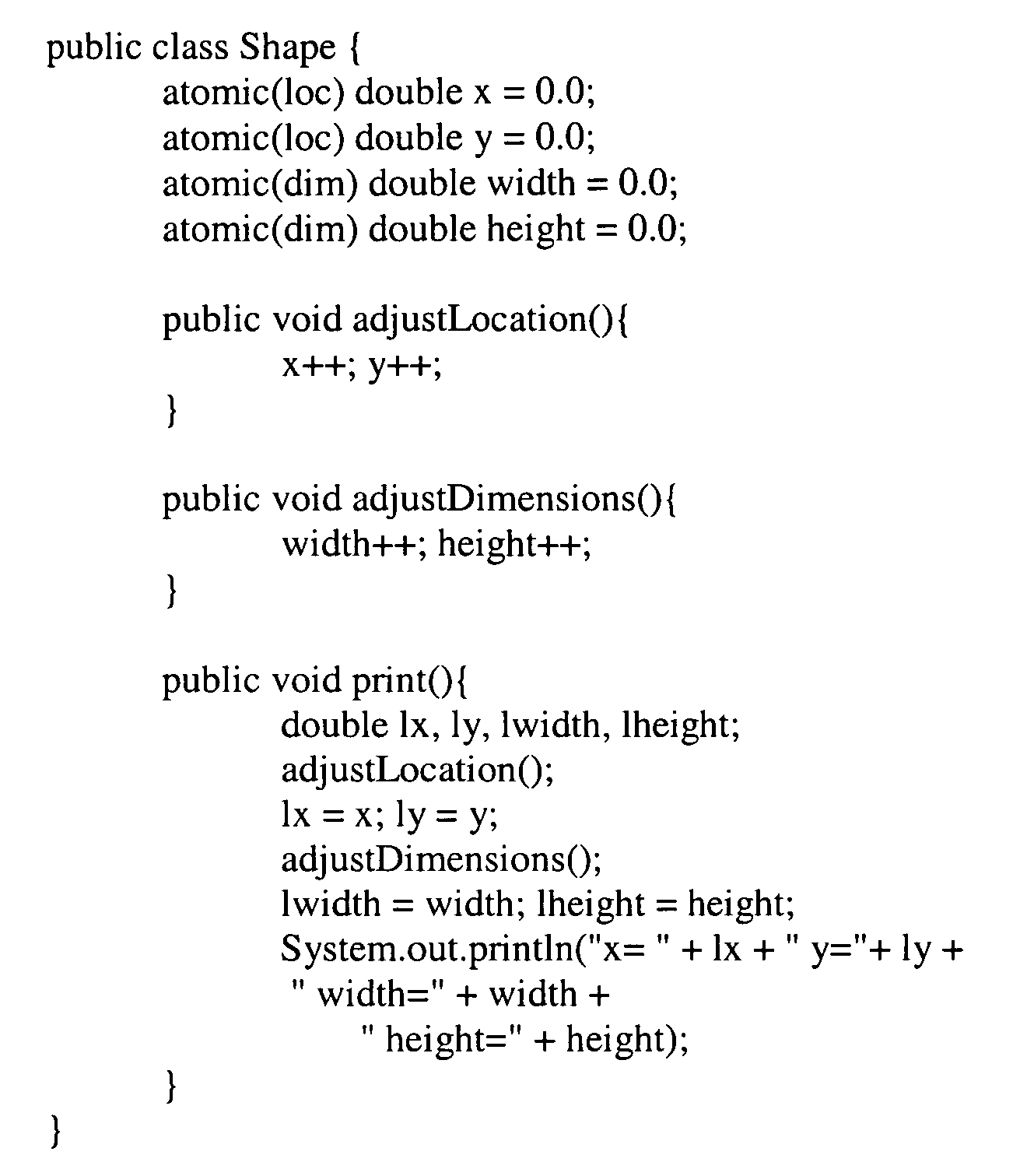
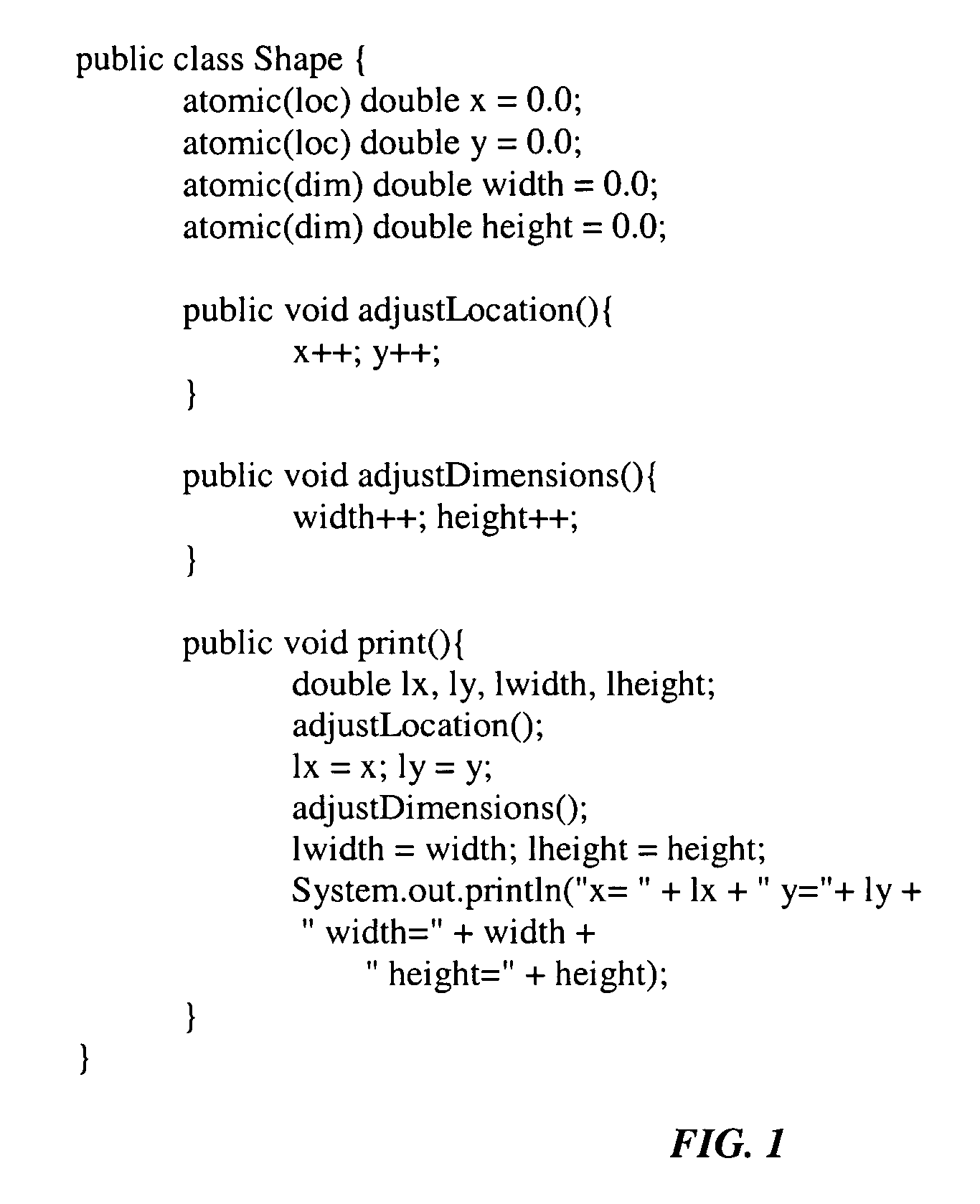
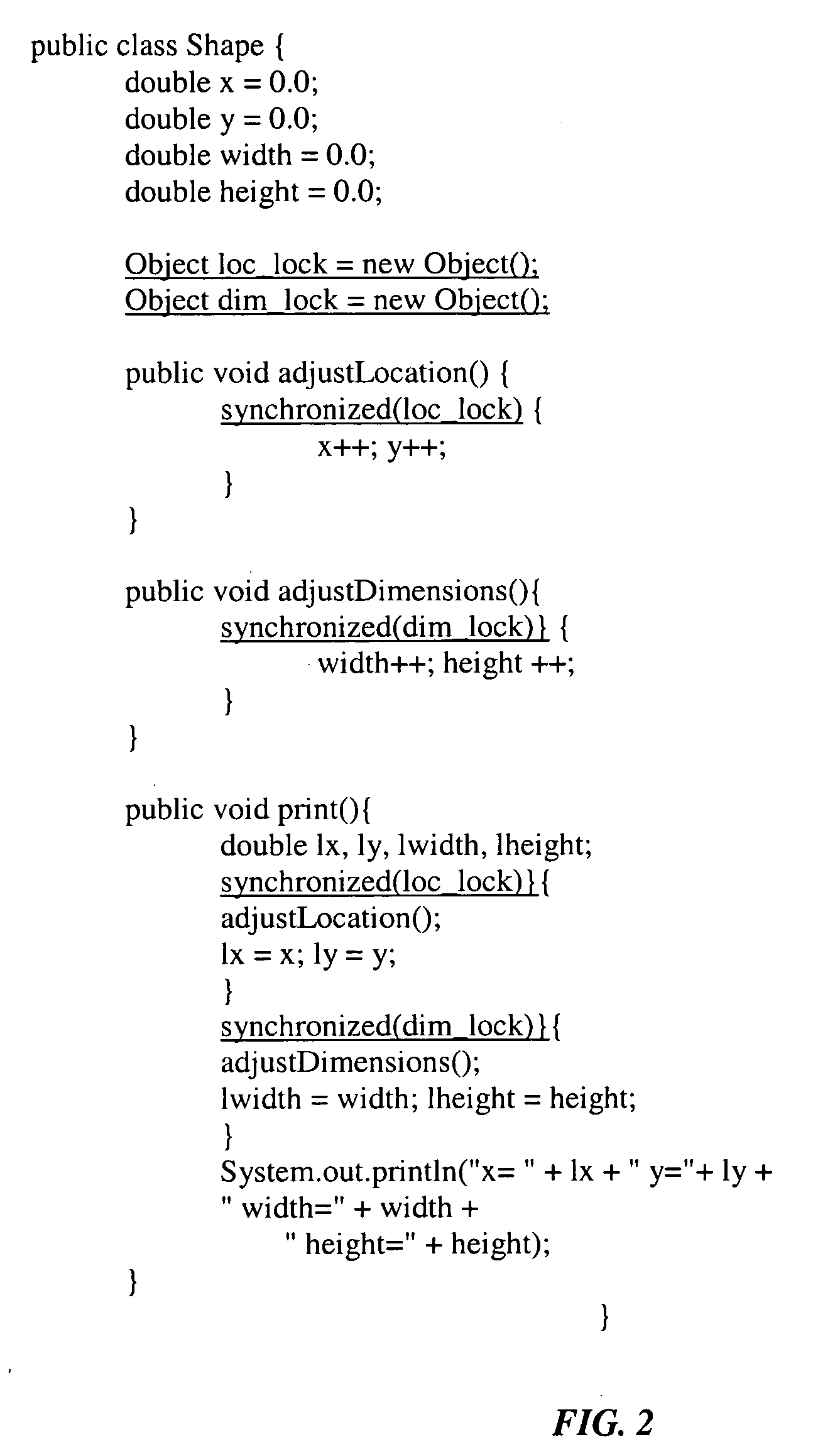
[0013]According to an embodiment of the invention we use a program written in an object-oriented language such as Java. A new language construct allows the programmer to express what fields form atomic sets, meaning that there exists a consistency property among these memory locations, and that they must be accessed and updated atomically (i.e., without interruption). Based on this information, an inference engine analyzes accesses to these atomic sets and infers appropriate synchronization blocks in the code automatically.
[0014]The inference engine assumes the existence of units of work, code blocks that mark transactional boundaries. In Java, the methods of a class naturally form units of work for all atomic sets declared in that class. The analysis builds call graphs rooted at each of these, and propagates accesses to an atomic set in a bottom-up fashion. Synchronization is added to the code to ensure that in any execution, units of work are serializable for each atomic set, i.e....
PUM
 Login to View More
 Abstract
Description
Claims
Application Information
 Login to View More