
Dual spool retractor in belt-in-seat
a seat belt and dual-spool technology, applied in the direction of safety belts, pedestrian/occupant safety arrangements, vehicular safety arrangements, etc., can solve the problems of adding cost and complexity to the occupant seat belt system of the motor vehicle, and achieve the effect of significant efficiencies in design, weight and complexity reduction
- Summary
- Abstract
- Description
- Claims
- Application Information
AI Technical Summary
Benefits of technology
Problems solved by technology
Method used
Image

Examples
Embodiment Construction
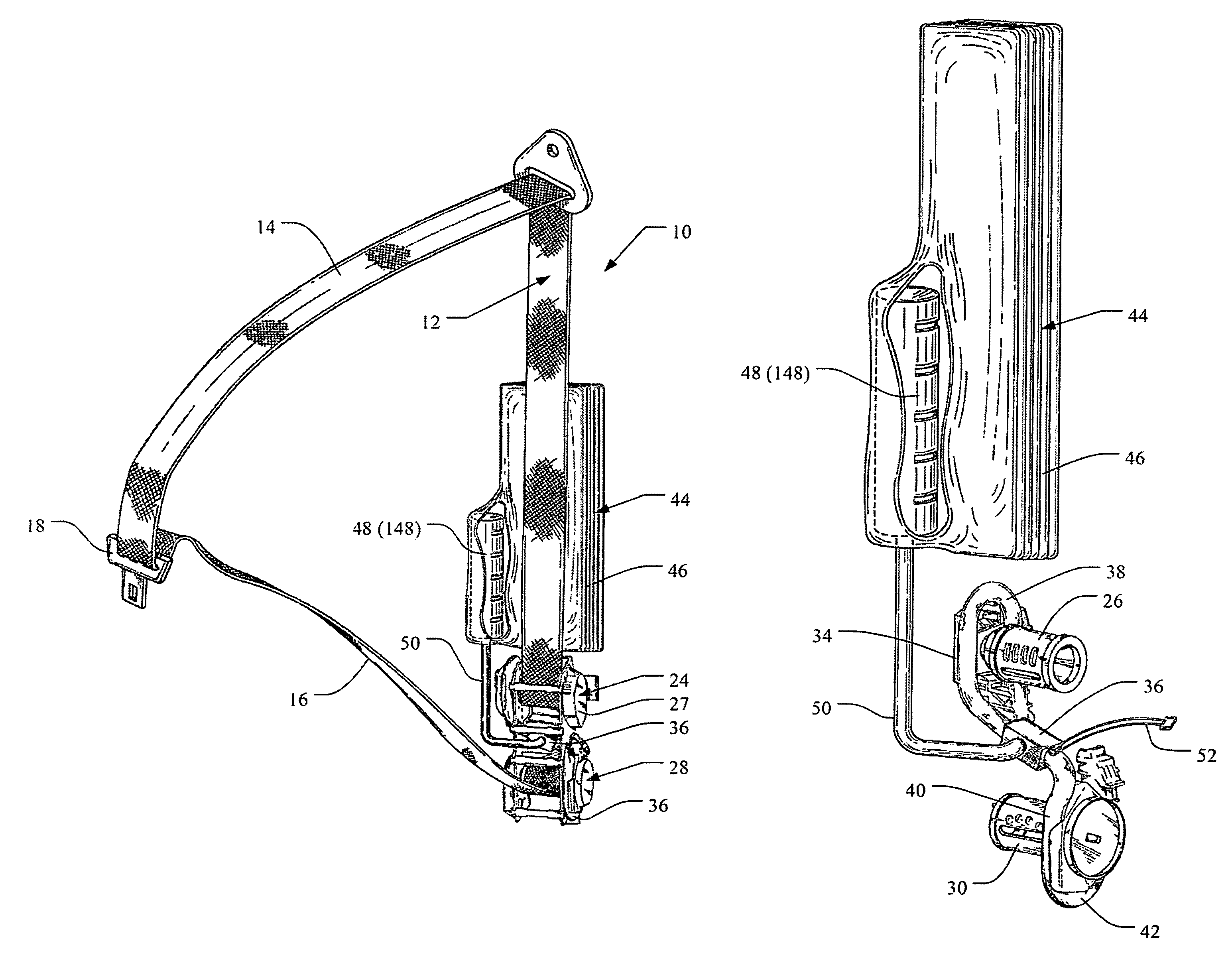
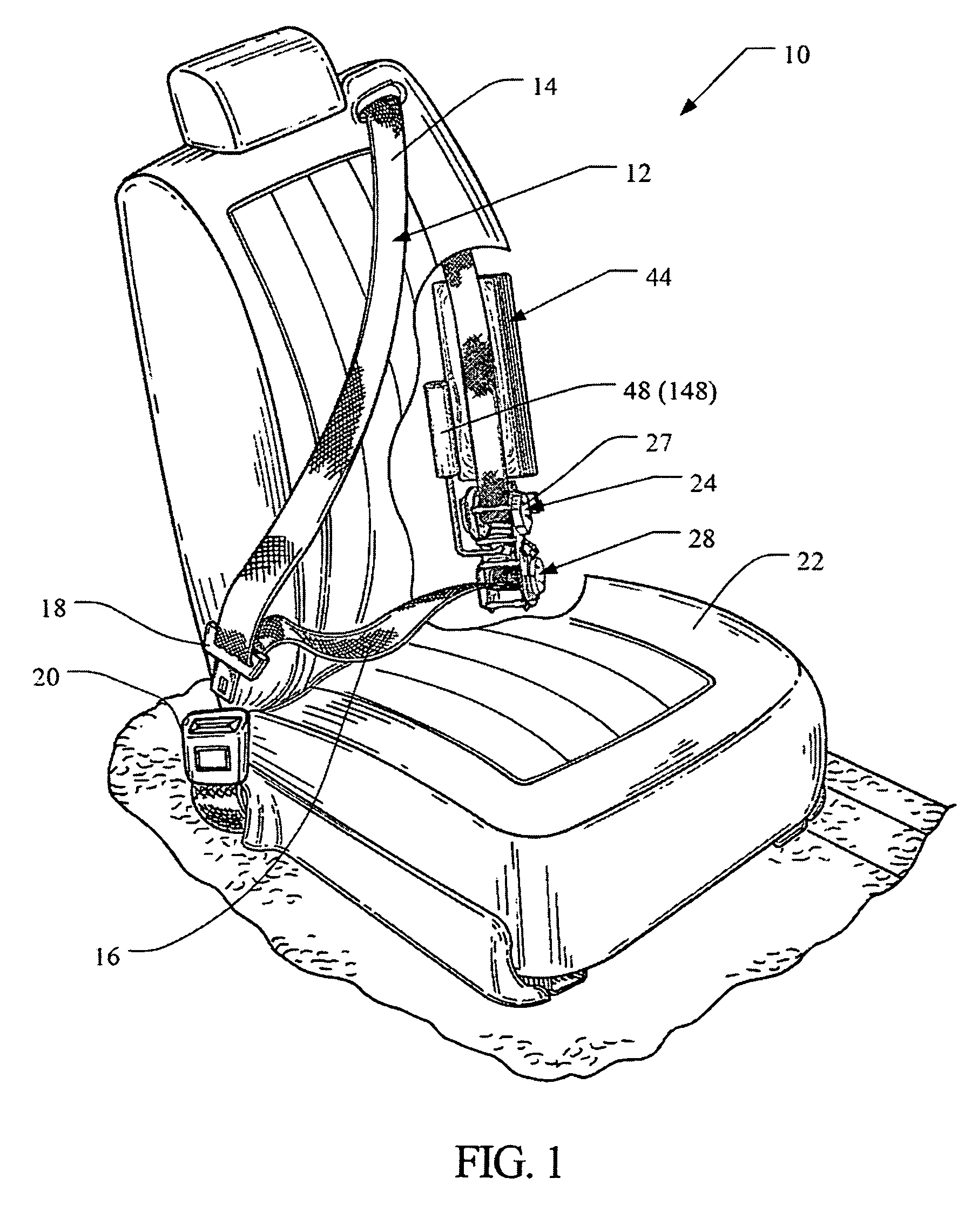
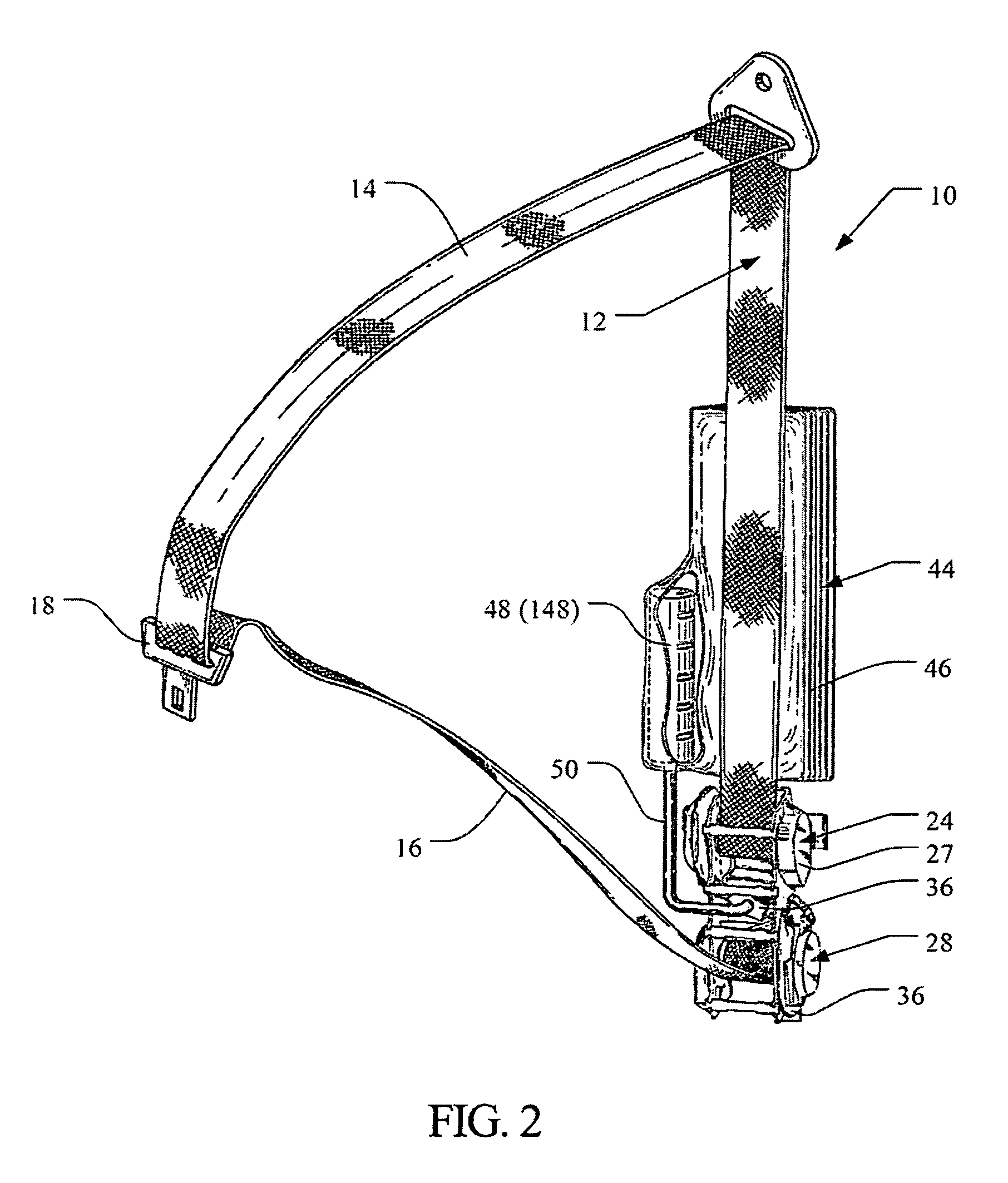
[0013]A motor vehicle restraint system in accordance with the present invention is illustrated in FIG. 1 and generally designed by reference number 10. Restraint system 10 principally comprises seat belt webbing 12, divided into an upper or shoulder belt section 14, and a lower or lap belt section 16, for respectively restraining the upper and lower torso of a motor vehicle occupant. Restraint system 10 further includes latch plate 18 which can be affixed to seat belt buckle 20 in a conventional manner.
[0014]In use, as is conventional, an occupant sitting in seat 22 grasps latch plate 18, extends the shoulder belt and lap belt sections 14 and 16 across their body and fastens the latch plate into buckle 20.
[0015]With reference to FIGS. 1 and 3, the end of shoulder belt section 14 of the seat belt webbing is affixed to shoulder belt retractor 24 which has a spool 26 upon which the seat belt webbing 12 is wrapped. Shoulder belt retractor 24 operates in a conventional manner for stowing...
PUM
 Login to View More
 Abstract
Description
Claims
Application Information
 Login to View More