
Methacrylate copolymers for medical devices
a technology of methacrylate and copolymer, applied in the field of polymer materials, can solve the problems of low tsub>g/sub>, stent thrombosis remains, and chronic problems such as restenosis
- Summary
- Abstract
- Description
- Claims
- Application Information
AI Technical Summary
Benefits of technology
Problems solved by technology
Method used
Image

Examples
example 1
[0044]3×18 mm Vision stents were coated with 80 μg poly(butyl methacrylate) (PBMA, Mw=300K, Tg=30° C., from ESSCHEM) primer. The primer coating solution was 2% PBMA in 70 / 30 acetone / cyclohexanone mixture. After the solution was spray-coated on the stents, the stent was baked at 80° C. to cure the primer.
example 2
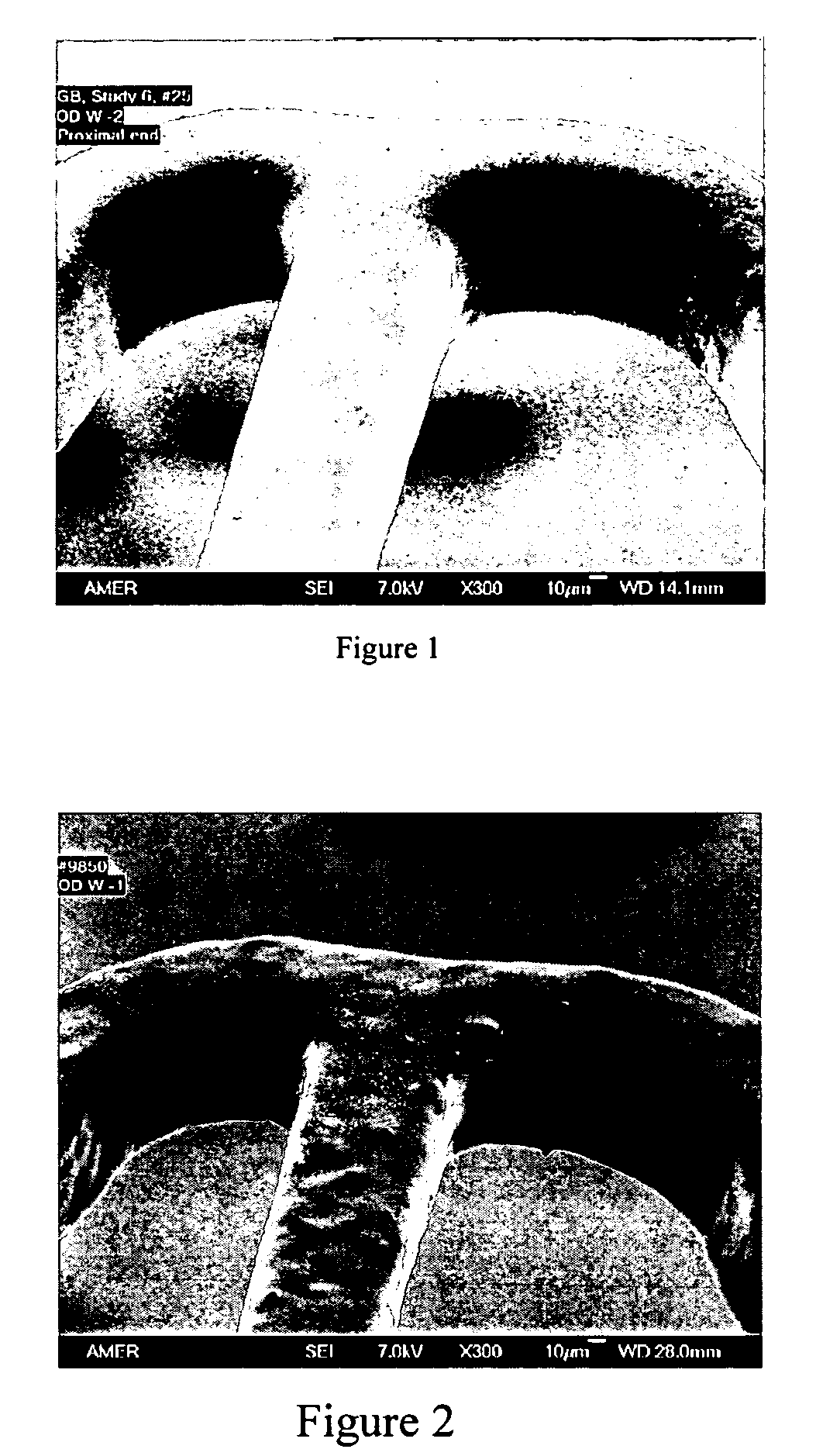
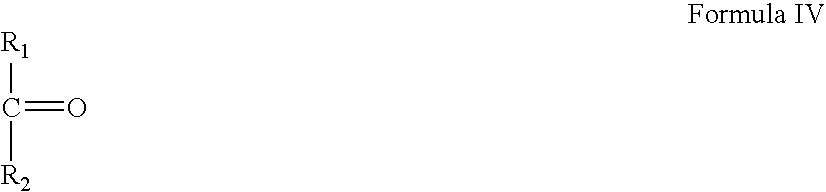
[0045]The drug coating solution was composed of 2% polymer blend and 1.45% everolimus in 30 / 70 dimethylacetamide (DMAC) and tetrahydrofuran (THF). The polymer blend was made of 75:25 w / w PBMA and poly(methyl methacrylate-co-methacrylic acid) (PMMA-co-MA, molar ratio 1:0.016, Tg=105° C. from Aldrich). The solution was spray-coated onto the primer-coated stents. The target drug coat weight was 450 μg. The drug loading was 190 μg. After the coating, the stents were crimped and secured onto the balloon. The stents were over expanded to 3.5 mm in water. The coating integrity was examined with SEM. An SEM picture of the coating after wet expansion is shown in FIG. 1.
[0046]The test of the drug release rate of a coated stent was performed in 4% porcine serum albumin in a PBS (phosphate buffered saline) buffer at 37° C. The everolimus release rate at 24 hours was 11%+ / −1%.
example 3
[0047]The drug coating solution was composed of 2% polymer blend and 1.45% everolimus in 30 / 70 dimethylacetamide (DMAC) and tetrahydrofuran (THF). The polymer blend was made of 75:25 w / w PBMA and poly(methyl methacrylate-co-methacrylic acid) (PMMA-co-MA, molar ratio 95:5 from PolySciences). The solution was spray-coated onto the primer-coated stents. The target drug coat weight was 450 μg. The drug loading was 190 μg. After coating, the stents were crimped and secured onto the balloon. The drug release rate was tested in 4% porcine serum albumin in PBS buffer at 37° C. The release rate at 24 hours was 34%+ / −2%.
PUM
| Property | Measurement | Unit |
|---|---|---|
| Tg | aaaaa | aaaaa |
| Tg | aaaaa | aaaaa |
| Tg | aaaaa | aaaaa |
Abstract
Description
Claims
Application Information
 Login to View More