
Variable-capture supersonic inlet
a supersonic aircraft and variable cap technology, applied in the direction of machines/engines, transportation and packaging, combustion air/fuel air treatment, etc., can solve the problems of inefficiency associated with operation at off-design mach numbers, inability to achieve the desired performance, and inability to achieve the compression
- Summary
- Abstract
- Description
- Claims
- Application Information
AI Technical Summary
Benefits of technology
Problems solved by technology
Method used
Image

Examples
Embodiment Construction
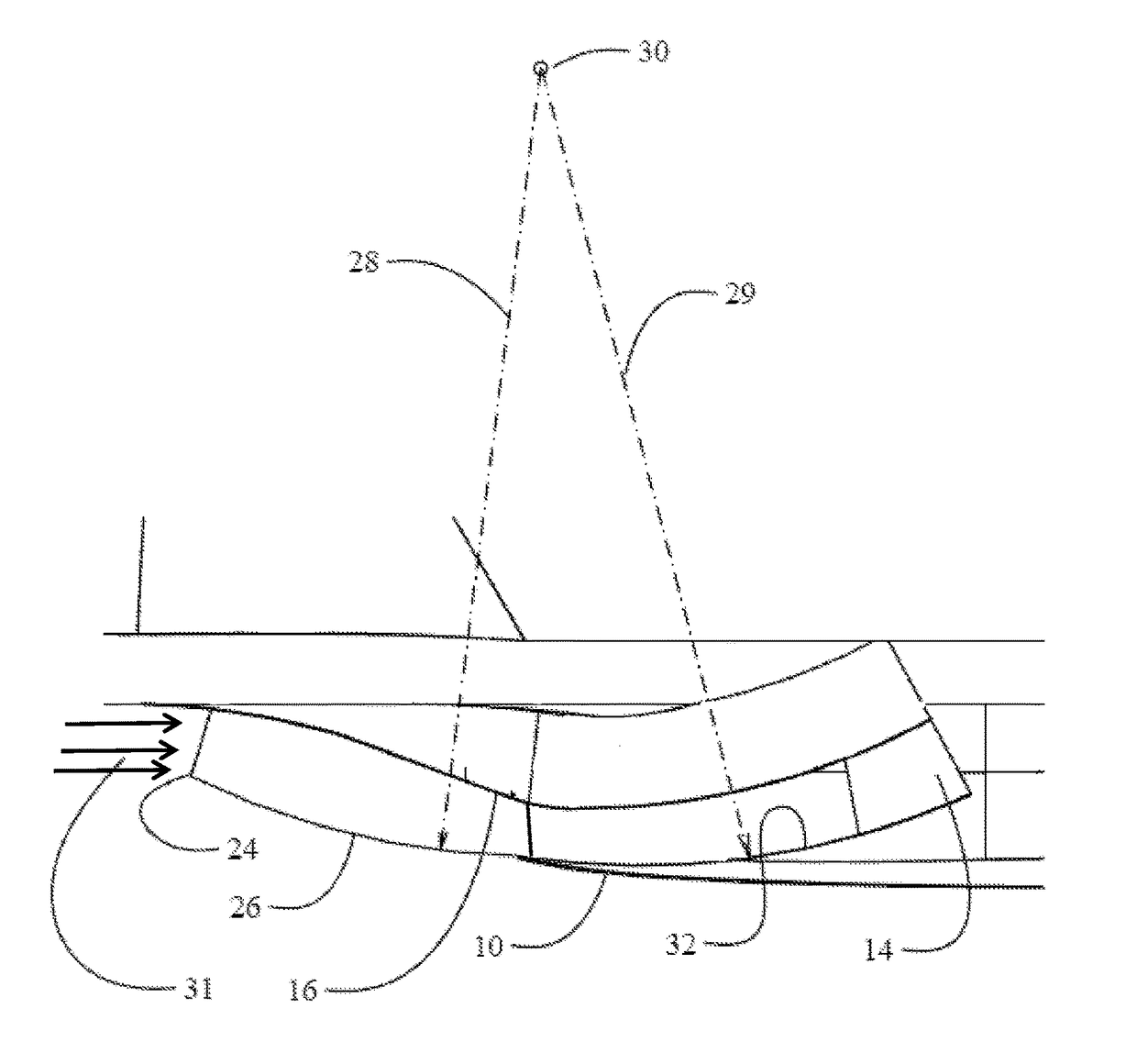
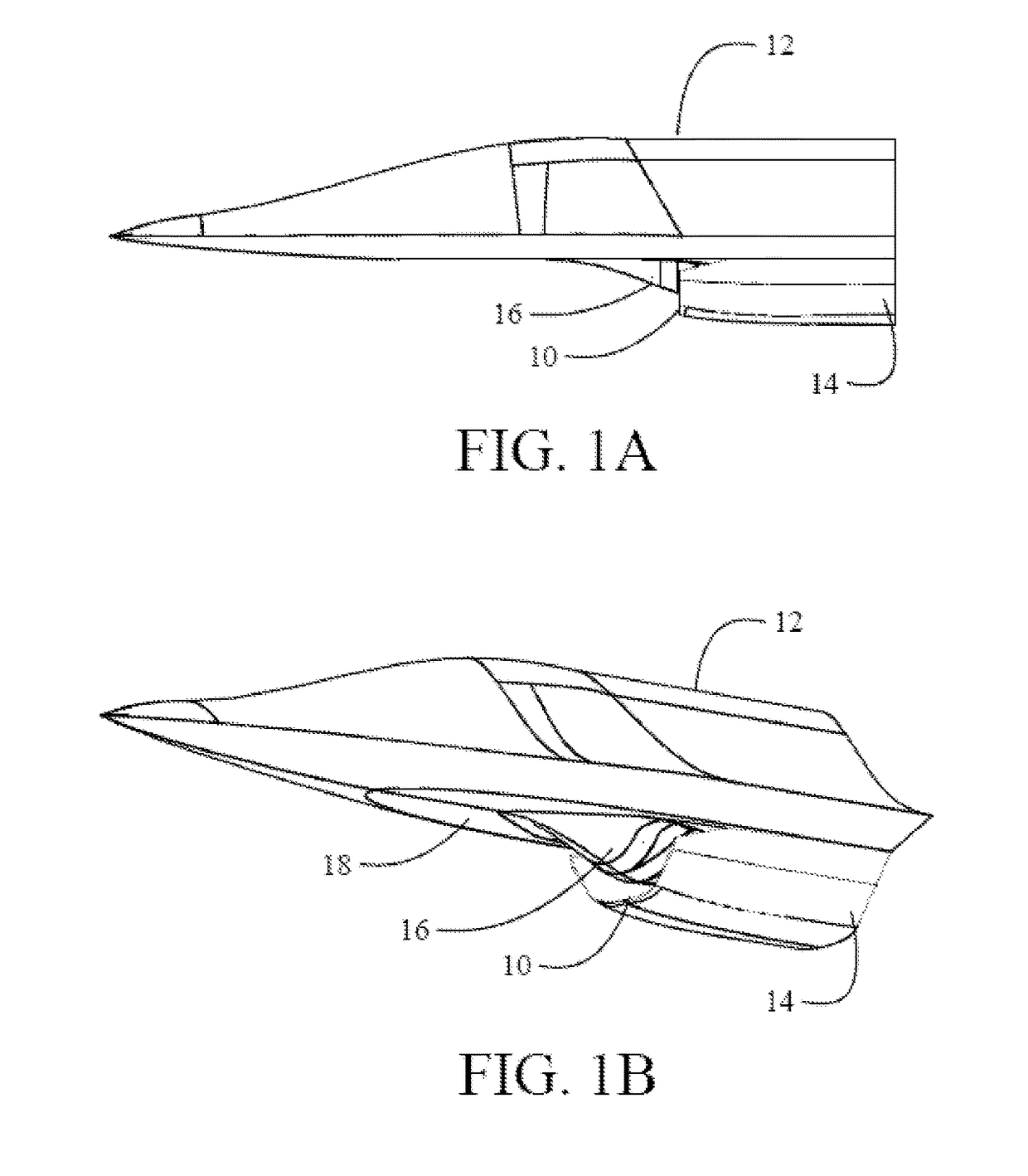
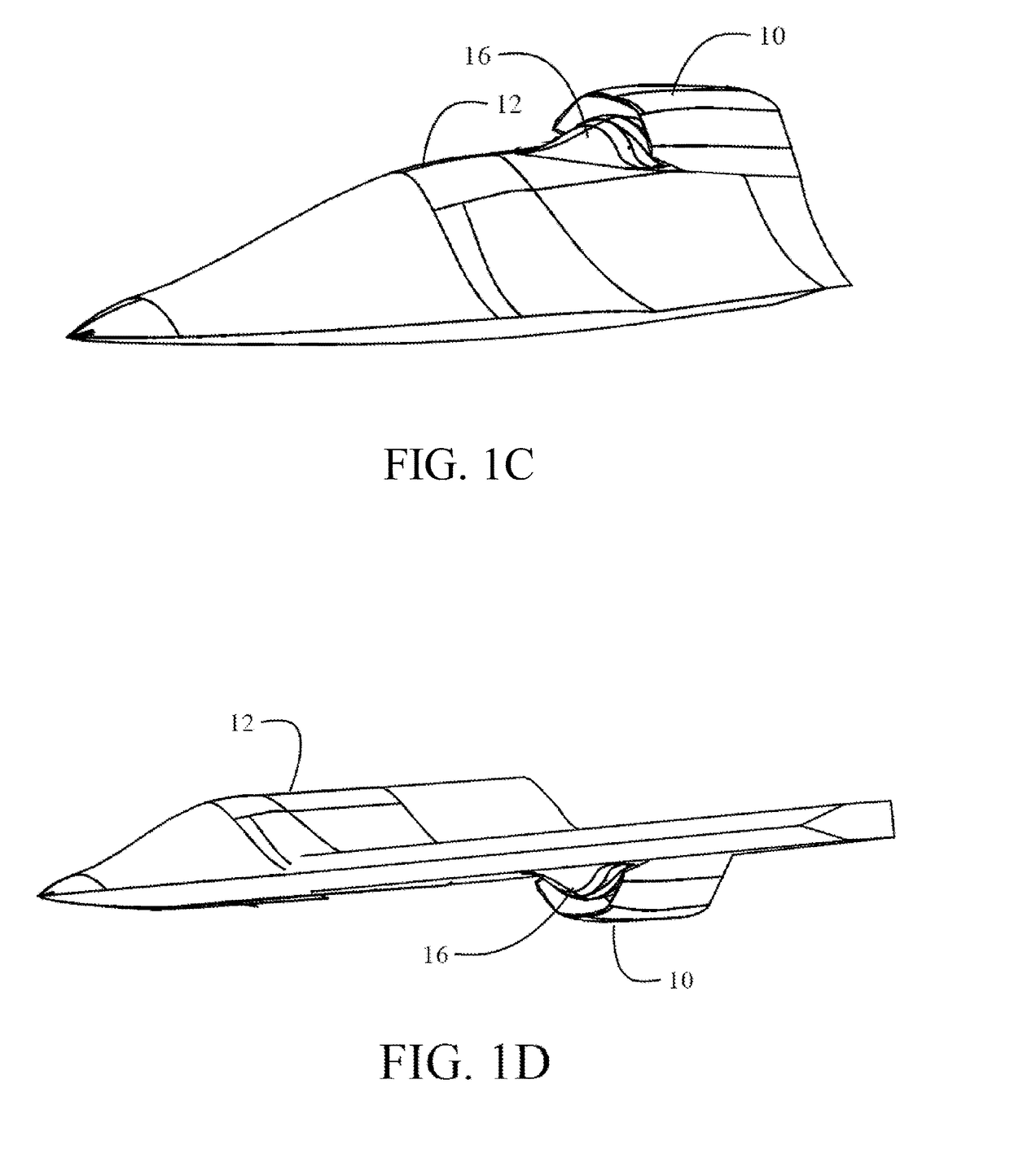
[0034]The system and methods described herein provide embodiments for an inlet having a leading edge variably extendible over a fixed compression surface to simultaneously vary capture area and compression. The inlet leading edge may be configured on a cowl to pivot about a remote axis perpendicular to the direction of airflow and transverse to the compression surface. The capture area is adjusted by extension and retraction of the cowl and leading edge to match mass flow with engine need and / or align with off-design shock waves from the compression surface. Thereby minimizing or obviating excess airflow to be spilled or caused to bypass the inlet. The inlet is also configured such that as the leading edge is retracted with increasing speed and increasing amount of compression surface is exposed thereby increasing the capture area. The position of the inlet leading edge relative to the fixed compression surface also causes the compression to vary and repositions the shock waves crea...
PUM
 Login to View More
 Abstract
Description
Claims
Application Information
 Login to View More