
Preparation method of supermolecule polyelectrolyte micelle magnetic resonance imaging contrast agent
A technology of magnetic resonance imaging and polyelectrolyte, which is applied in preparations for in vivo tests, pharmaceutical formulations, dispersion liquid delivery, etc., can solve problems such as limited applications, achieve instability, broad application prospects and research and development value, and overcome application bottleneck effect
Patent Information
- Authority / Receiving Office
- CN · China
- Patent Type
- Applications(China)
- Current Assignee / Owner
- Publication Date
- 2018-11-27
Smart Images
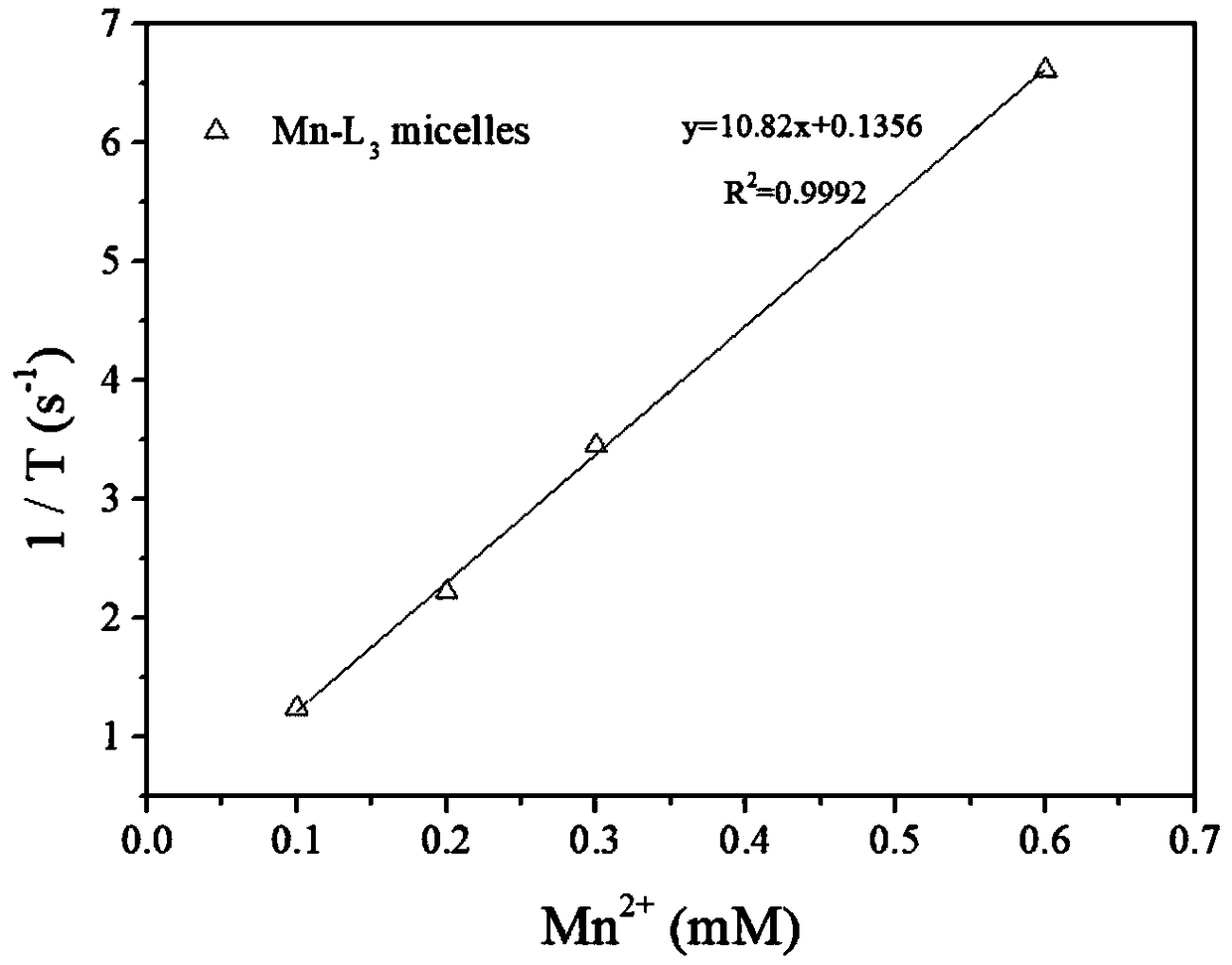
Figure 1 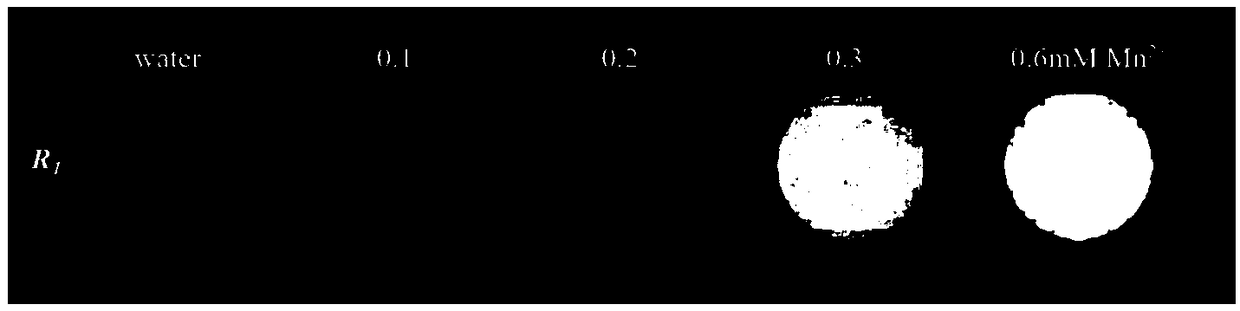
Figure 2
Abstract
Description
technical field
[0001] The invention relates to a novel supramolecular polyelectrolyte micellar magnetic resonance imaging contrast agent, specifically, a water-soluble tridentate ligand and a paramagnetic transition metal ion coordinate and self-assemble to form a negatively charged multi-branched supramolecule. Electric Segment Block Polymer P2MVP 41 -b-PEO 205 Electrostatic action is used to prepare micelles with metal-type core-shell structure, which belongs to the technical field of new materials. Background technique
[0002] In recent years, polyelectrolyte micelles have received more and more attention and research because of their potential applications in the field of biomedical technology, such as carriers for the transport of drugs, enzymes, and DNA in vivo. However, polyelectrolyte micelles are very sensitive to ionic strength because salts can shield electrostatic interactions within the core layer of polyelectrolyte micelles. Polyelectrolyte micelles are ge...
Examples
Embodiment 1
[0019] Example 1P2VP 41 -b-PEO 205 Methylation
[0020] P2VP 41 -b-PEO 205 Dissolve in ultra-dry DMF solution, add methylation reagent methyl iodide under nitrogen protection, and react at 60°C for 48 hours. The cooled reaction solution was precipitated in glacial ether and filtered to obtain a yellow viscous crude product. After washing and filtering with glacial ether several times, the product was vacuum-dried to obtain the final product P2MVP 41 -b-PEO 205 .
Embodiment 2 3
[0021] The synthesis of embodiment 2 tridentate ligand
[0022] Add thionyl chloride to the ethanol solution under ice-salt bath, add chelidonine, and react with magnetic stirring at room temperature for 24 hours. After the reaction solution was distilled under reduced pressure, 10% sodium carbonate solution was added to pH=7. Filter and recrystallize the resulting filter cake from aqueous ethanol. The recrystallized product was collected by filtration and dried under vacuum at 50°C. The dried product was dissolved in DMF, benzyl bromide and potassium carbonate were added, and reacted at 80° C. for 24 hours under the protection of nitrogen. After the reaction, the DMF solvent was removed by rotary evaporation. Dichloromethane and deionized water were added to the rotary evaporated product for extraction. The collected organic phase was washed twice with 1% acetic acid solution and deionized water successively. Anhydrous sodium sulfate was added to the washed organic phase...
Embodiment 3
[0023] The preparation of embodiment 3 supramolecular polyelectrolyte micelles
[0024] Add a certain amount of ultrapure water, Tris buffer, P2MVP to the 5ml cryopreservation tube in the ultrasonic environment 41 -b-PEO 205 Aqueous solution, MnNO 3 The aqueous solution and the tridentate ligand aqueous solution were ultrasonically dispersed and self-assembled for 5 minutes to obtain manganese ion-type supramolecular polyelectrolyte micelles.
[0025] The P2MVP 41 -b-PEO 205 The charge concentration of the aqueous solution is 10mmol / L;
[0026] The concentration of the tridentate ligand aqueous solution is 5mmol / L;
[0027] The MnNO 3 The concentration of the aqueous solution is 5mmol / L;
[0028] The MnNO 3 The molar ratio of aqueous solution and tridentate ligand aqueous solution is 3:2;
[0029] The P2MVP 41 -PEO 205 Molar charge concentration of aqueous solution and MnNO 3 The molar concentration ratio of the aqueous solution is 2:1;
[0030] The concentration ...