
Biochar-based soil conditioner and application thereof
A soil conditioner, biochar technology, applied in soil conditioning materials, applications, fertilizer mixtures, etc., can solve the problems of reducing the content of heavy metals in the edible part of vegetables, affecting the safety of vegetable products, increasing soil fertility, etc., and achieving good long-term effect. , easy to popularize and improve the effect of soil quality
Patent Information
- Authority / Receiving Office
- CN · China
- Patent Type
- Applications(China)
- Current Assignee / Owner
- Publication Date
- 2019-03-12
- Estimated Expiration
- Not applicable · inactive patent
Smart Images
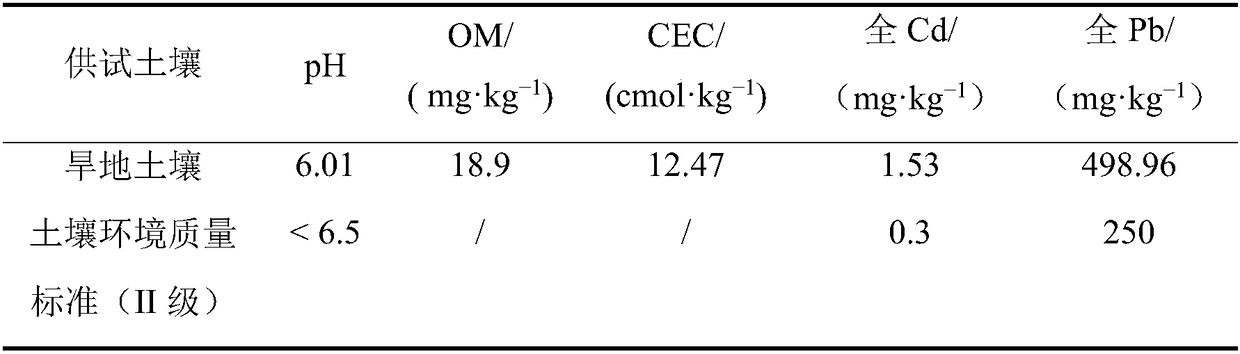
Figure 1 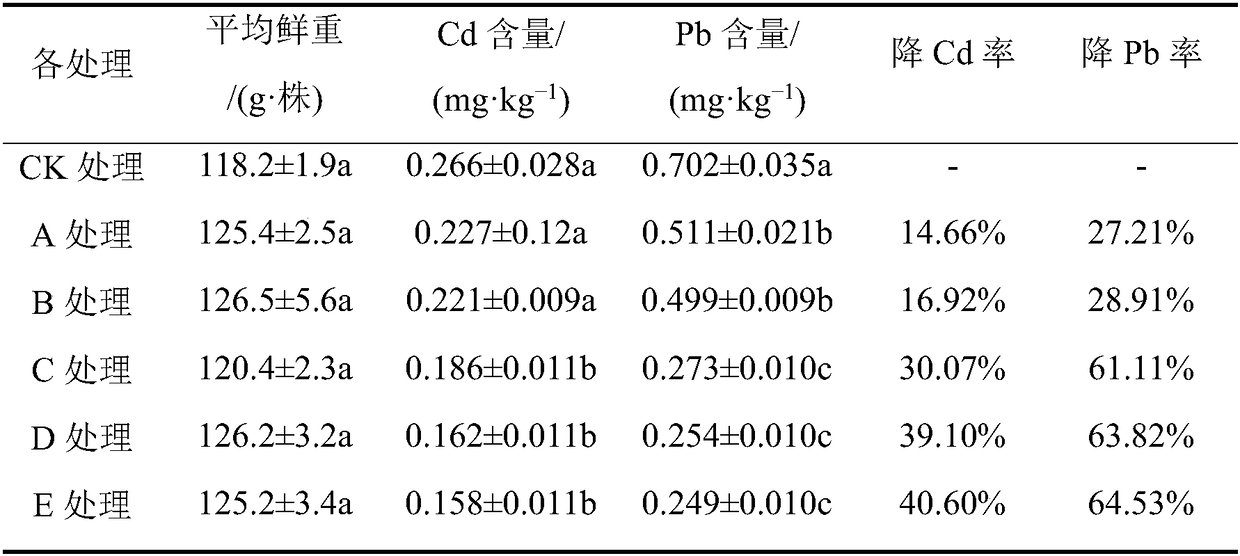
Figure 2 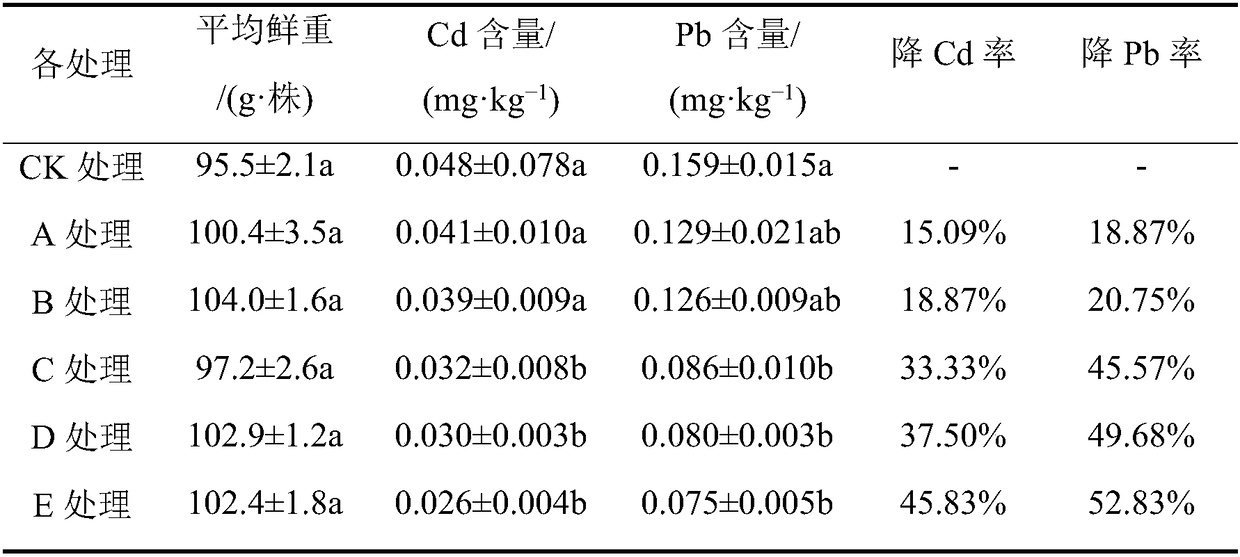
Figure 3
Abstract
Description
technical field
[0001] The invention relates to soil improvement technology, in particular to a biochar-based conditioner capable of passivating heavy metals in dry land soil and application thereof. Background technique
[0002] In recent years, due to factors such as industrial pollution, sewage irrigation, application of heavy metal-containing pesticides and fertilizers, agricultural land soils have been increasingly polluted by heavy metals, especially vegetable fields in the suburbs. Vegetables are a common food for people, and their quality and safety issues are closely related to human health. According to the survey, 59.1% of the soil in our country is short of phosphorus and nitrogen, 22.9% of the soil is short of potassium, and the available arable land with soil organic matter below 0.65% accounts for 10.6%. The phenomenon of potassium deficiency in southern soil is serious, and the supply of phosphorus and potassium Insufficient nitrogen fertilizer will signific...
Examples
Embodiment
[0035] Example experimental design:
[0036] The material of the present embodiment biochar-based conditioner by weight percentage: 30% to 35% of biochar, 5% of diammonium phosphate, 5% of potassium sulfate, 10% of calcium magnesium phosphate fertilizer, 5% of humic acid, and 25% of limestone 30%, dolomite 15%, mix directly. Among them, the preparation method of biochar is that rice husks are carbonized at 400-500°C under oxygen protection under the protection of nitrogen, pulverized with a pulverizer or ball mill, and passed through a 1mm sieve to obtain rice husk biochar (this case is also referred to as biochar for short).
[0037] On the same piece of dry land soil, different treatment modes were set: CK treatment: experimental blank control, no treatment; A treatment: single application of rice husk biochar; B treatment: single addition of nutrients (biochar, diammonium hydrogen phosphate, Potassium sulfate, calcium magnesium phosphate fertilizer, humic acid, the mass ra...
Embodiment 2
[0042] Embodiment two: test crop capsicum
[0043] EXAMPLES The experimental design is similar to that of Example 1, the difference is that each of the treatments described above is used for the cultivation of capsicum.
[0044] When mature, the biomass of each treatment pepper and the content of heavy metals in pepper fruit were measured, and the heavy metal content was determined by ICP-AES after mixed digestion with nitric acid-perchloric acid. The results are shown in Table 3.
[0045] Table 3 Biomass of pepper and heavy metal content in fruit of each treatment
[0046]
[0047] It can be seen from Table 3 that compared with the control CK, treatments A, B, D and E can increase the average fresh weight ratio of pepper per plant by 5.13%-8.90%, while treatment C can only increase the average fresh weight ratio of pepper per plant by 1.78% %, the study found that through the synergy between the components described in the present invention, the adverse effects of inorga...