
Nonwoven fabric made of an ethylene/tetrafluoroethylene copolymer
Patent Information
- Authority / Receiving Office
- US · United States
- Current Assignee / Owner
- Publication Date
- 2009-09-10
- Estimated Expiration
- Not applicable · inactive patent
Smart Images
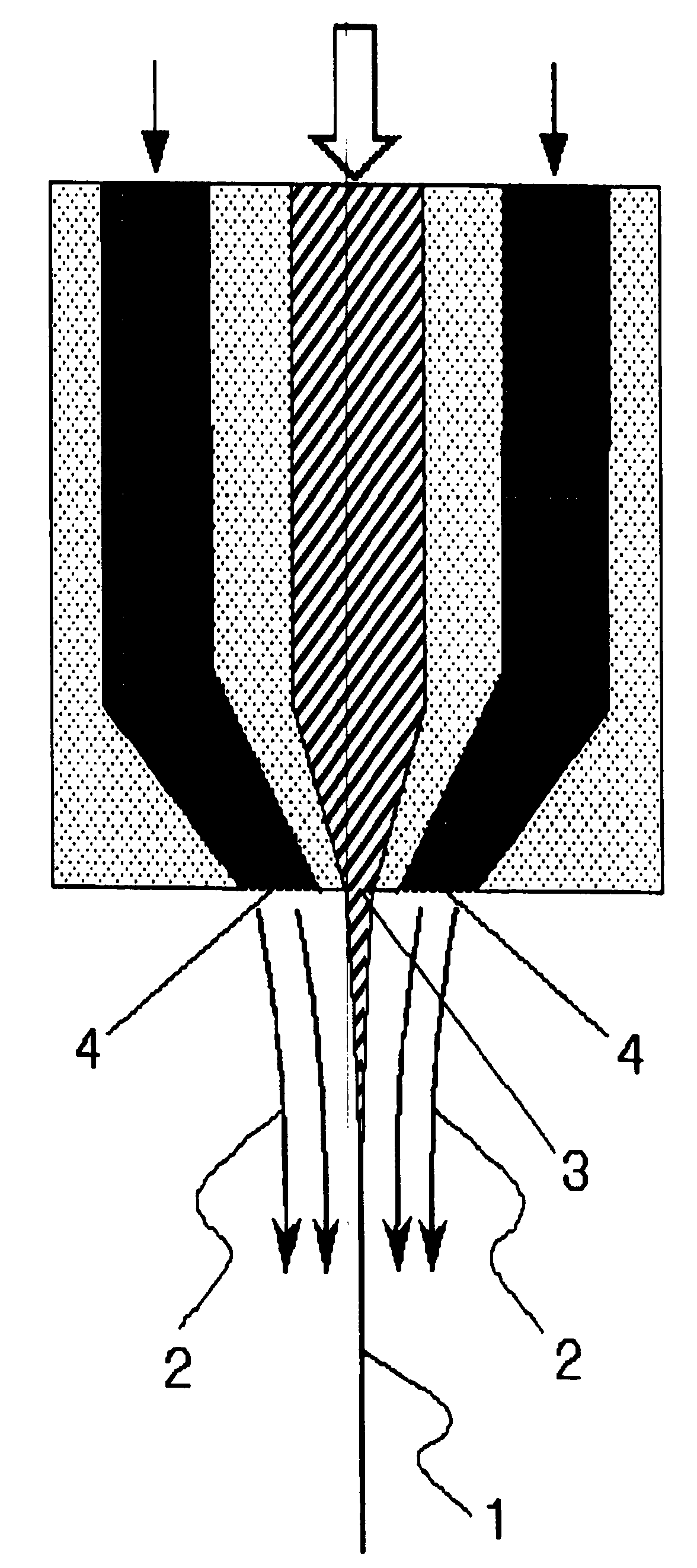
Figure 1 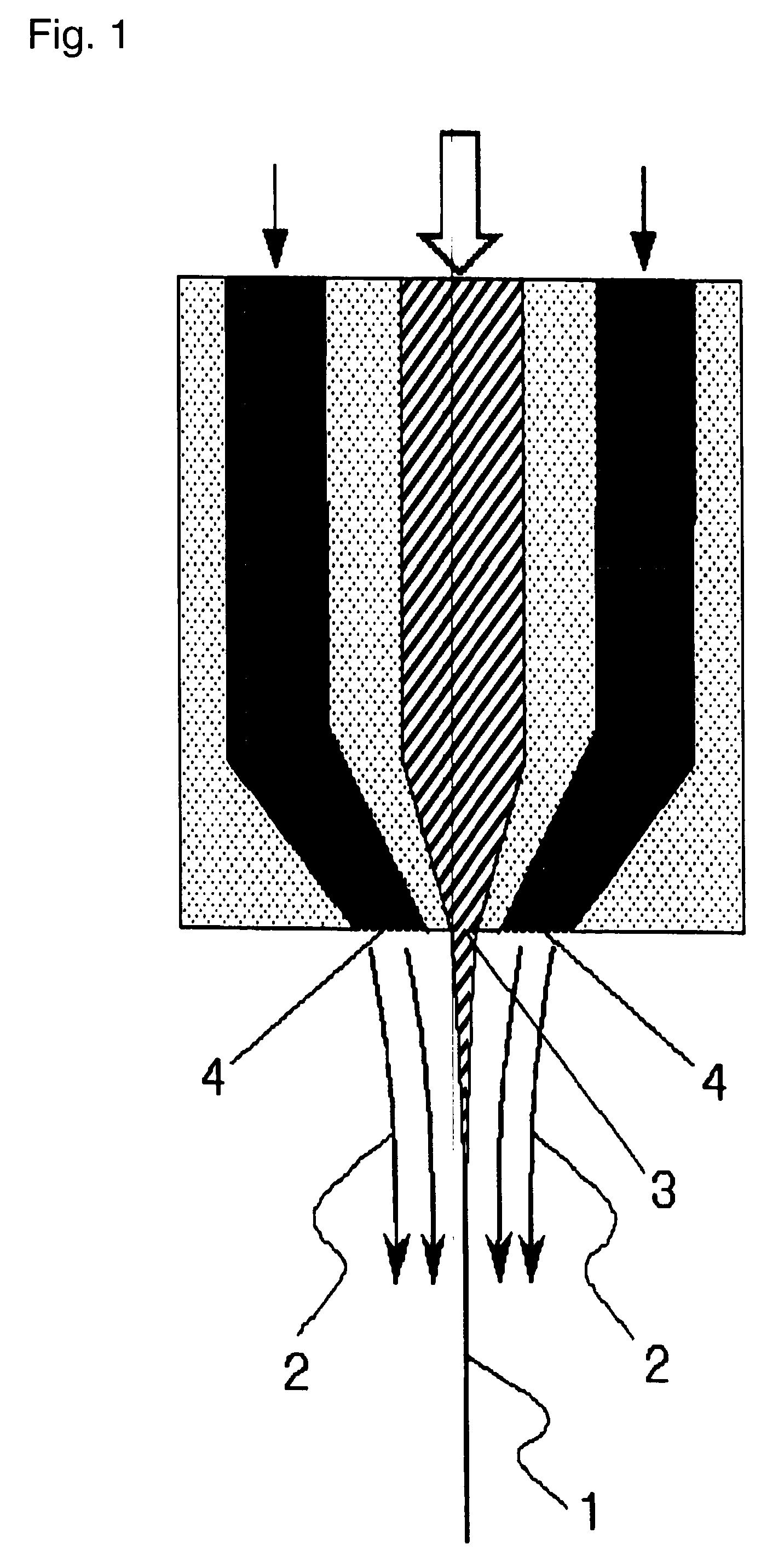
Figure 2 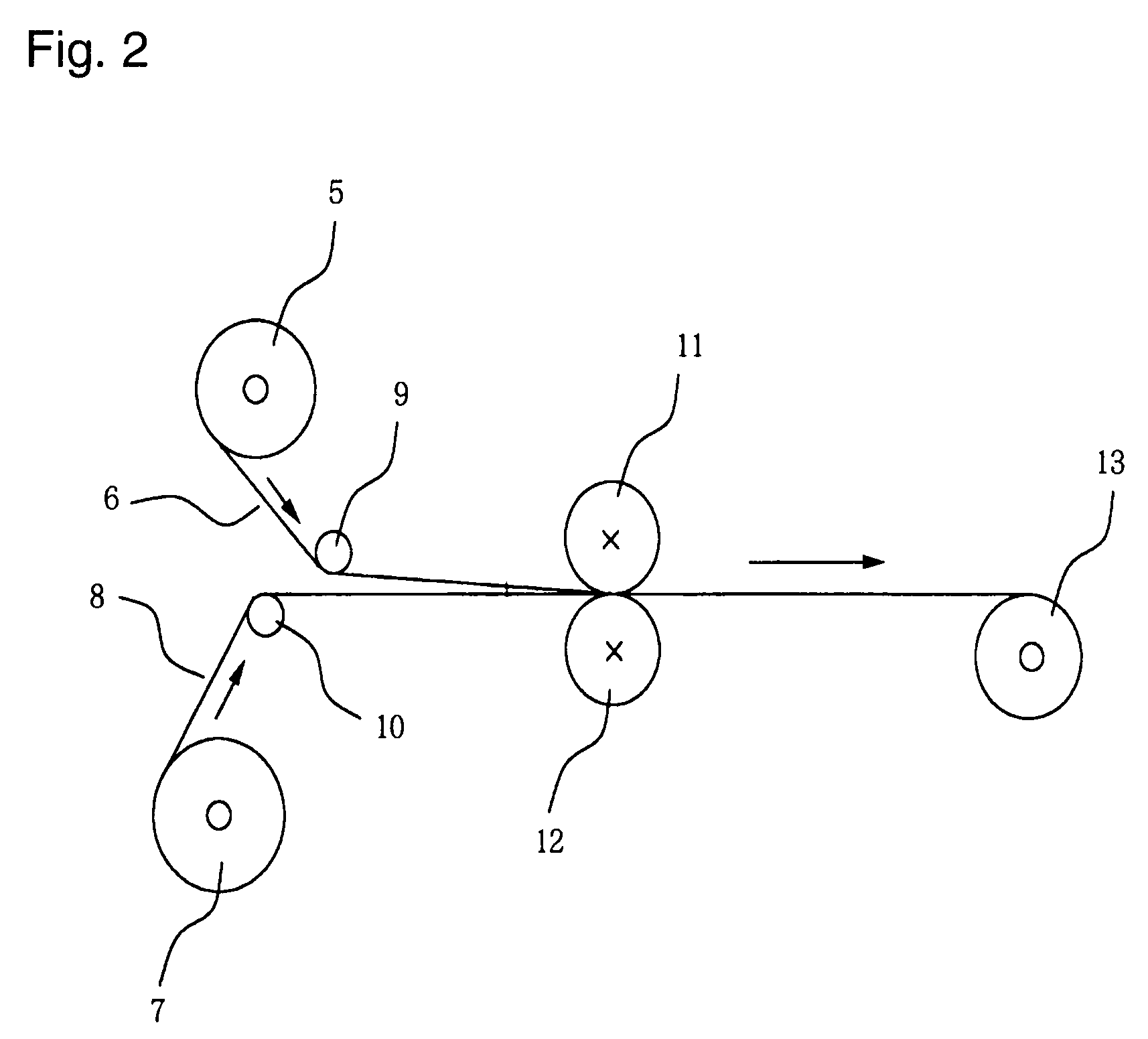
Figure 3
Abstract
Description
BACKGROUND OF THE INVENTION
[0001] 1. Field of the Invention
[0002] The present invention relates to a nonwoven fabric made of an ethylene / tetrafluoroethylene copolymer.
[0003] 2. Discussion of Background
[0004] Nonwoven fabrics are used as fiber materials suitable for reinforcing filters, electrolyte membranes, is etc.
[0005] As polymer materials for the nonwoven fabric, general-purpose materials such as polypropylene resins, polyester resins or polyamide resins have been mainly used. However, a fluororesin which is excellent in heat resistance, chemical resistance, non-stickiness and cleanness has been proposed as a material for an air-cleaning ultra high performance filter or a chemical filter in the field of semiconductors, a filter bag for an antipollution measures, etc.
[0006] There is a method wherein a polytetrafluoroethylene (PTFE) resin as such a fluororesin, is stretched, cut and formed into fibers, followed by a water jet method or a needle punching method to form a nonwoven fabric....
Examples
preparation example 1
[0118](1) A polymerization reactor equipped with a stirrer and having an internal capacity of 94 liters, was deaerated, and 87.3 kg of 1,3-dichloro-1,1,2,2,3-pentafluoropropane (AK225cb, manufactured by Asahi Glass Company, Limited, hereinafter referred to as “AK225cb”) and 860 g of CH2═CH(CF2)4F were charged; the interior of the polymerization reactor was heated to 66° C. with stirring; a mixed gas of TFE / E=89 / 11 (molar ratio) was introduced until the pressure of the polymerization reactor became 1.4 MPaG; and 677 g of an AK225cb solution containing 1 mass % of tert-butyl peroxypivalate was charged as the polymerization initiator to initiate the polymerization. A mixed gas with a composition of TFE / E=60 / 40 (molar ratio) and CH2═CH(CF2)4F in a ratio corresponding to 3.3 mol % relative to the mixed gas, were continuously charged, so that the pressure was kept constant during the polymerization. After 8 hours from the initiation of the polymerization, and at the time when 7.1 kg of th...
preparation example 2
[0121](1) Into an evacuated autoclave made of stainless steel having an internal capacity of 430 liters, 164.8 kg of CF3(CF2)5H, 168.0 kg of AK-225cb, 3.37 kg of CF2═CH(CF2)4F and 89 kg of deionized water were charged; the interior of the autoclave was heated to 65° C. with stirring; a mixed gas of TFE / E=89 / 11 (molar ratio) was introduced until the pressure of the autoclave became 1.4 MPaG; and 40.1 g of an AK-225cb solution wherein 50 mass % of tert-butyl peroxypivalate was diluted with CF3(CF2)5H so that tert-butyl peroxypivalate became 1 mass %, was charged to initiate the polymerization. A mixed gas with a composition of TFE / E=59 / 41 (molar ratio) and CH2═CH(CF2)4F in a ratio corresponding to 3.3 mol % relative to the mixed gas, were continuously charged, so that the pressure was kept at 1.4 MPaG during the polymerization. 30 kg of a mixed gas of tetrafluoroethylene / ethylene was charged. Then, the autoclave was cooled, and residual gas was purged to terminate the polymerization. ...
preparation example 3
[0124]29 kg of granular ETFE (hereinafter referred to as “ETFE 3” ) was obtained in the same manner as in Preparation Example 2, except that 192.4 kg of CF3(CF2)5H, 141.7 kg of AK-225 and 45 g of an AK-225cb solution wherein 50 wt % of tert-butyl peroxypivalate was diluted with CF3(CF2)5H so that tert-butyl peroxypivalate became 1 wt % were charged. The time required for the polymerization was 390 minutes.
[0125]The polymer composition of the ETFE 3 was repeating units based on TFE / repeating units based on E / repeating units based on CH2═CH(CF2)4F=57.7 / 39.2 / 3.1 mol %, and the melting point was 230° C., and the melt viscosity at 240° C. was 1,250 Pa·s.