

Polypeptide having hadh dependent hmf reductase activity
Patent Information
- Authority / Receiving Office
- US · United States
- Current Assignee / Owner
- Publication Date
- 2010-10-21
- Estimated Expiration
- Not applicable · inactive patent
Smart Images
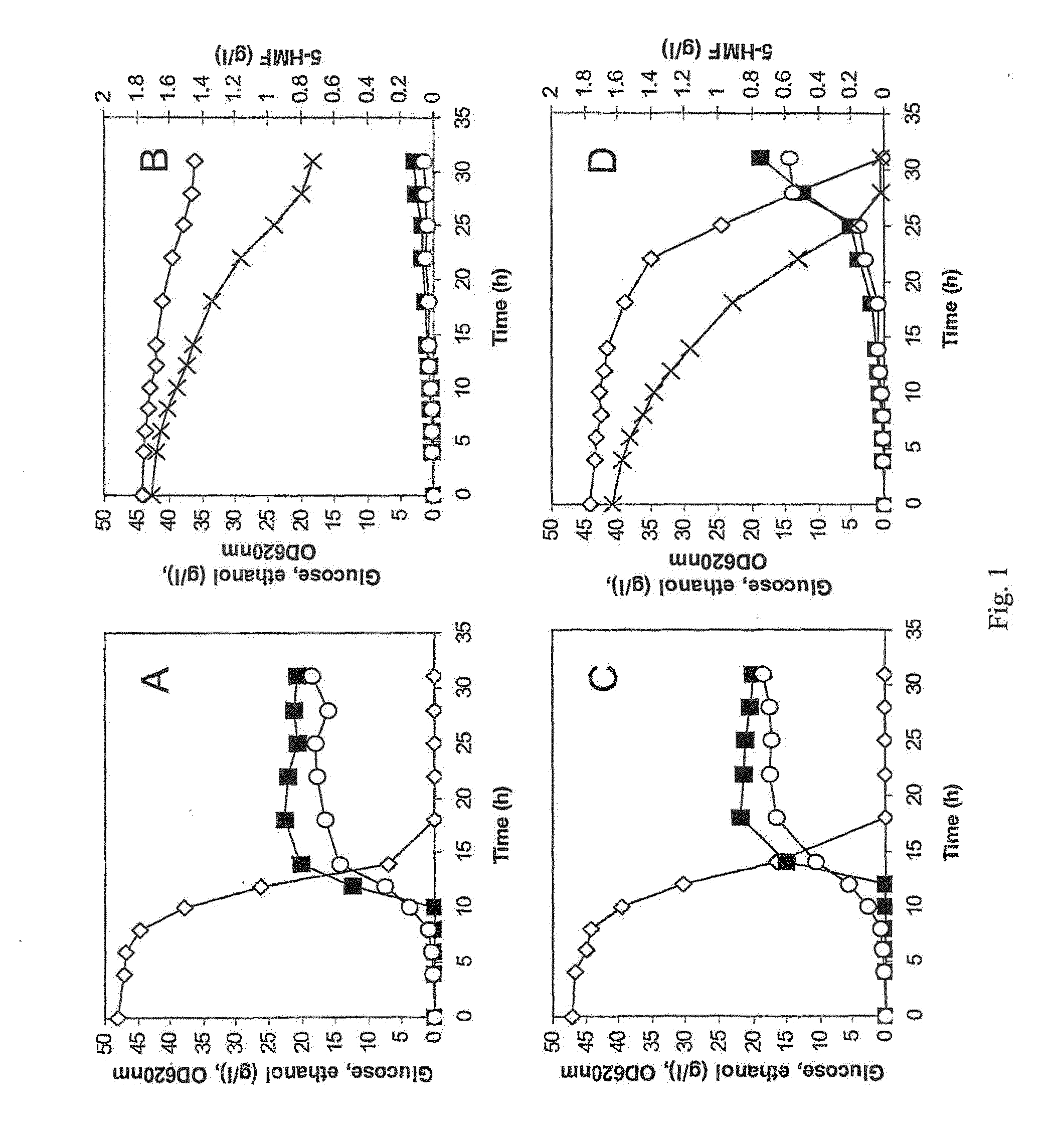
Figure 1 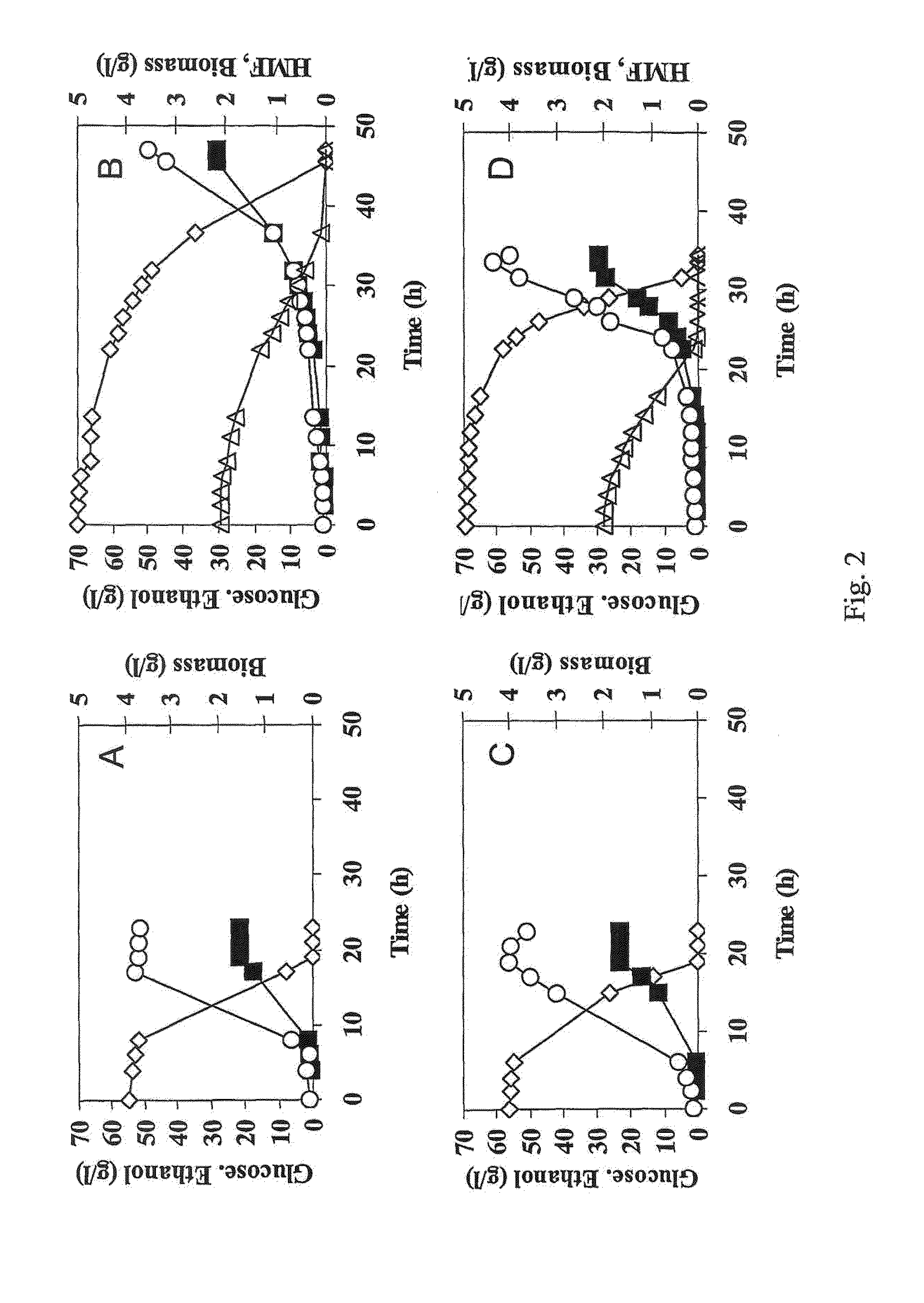
Figure 2 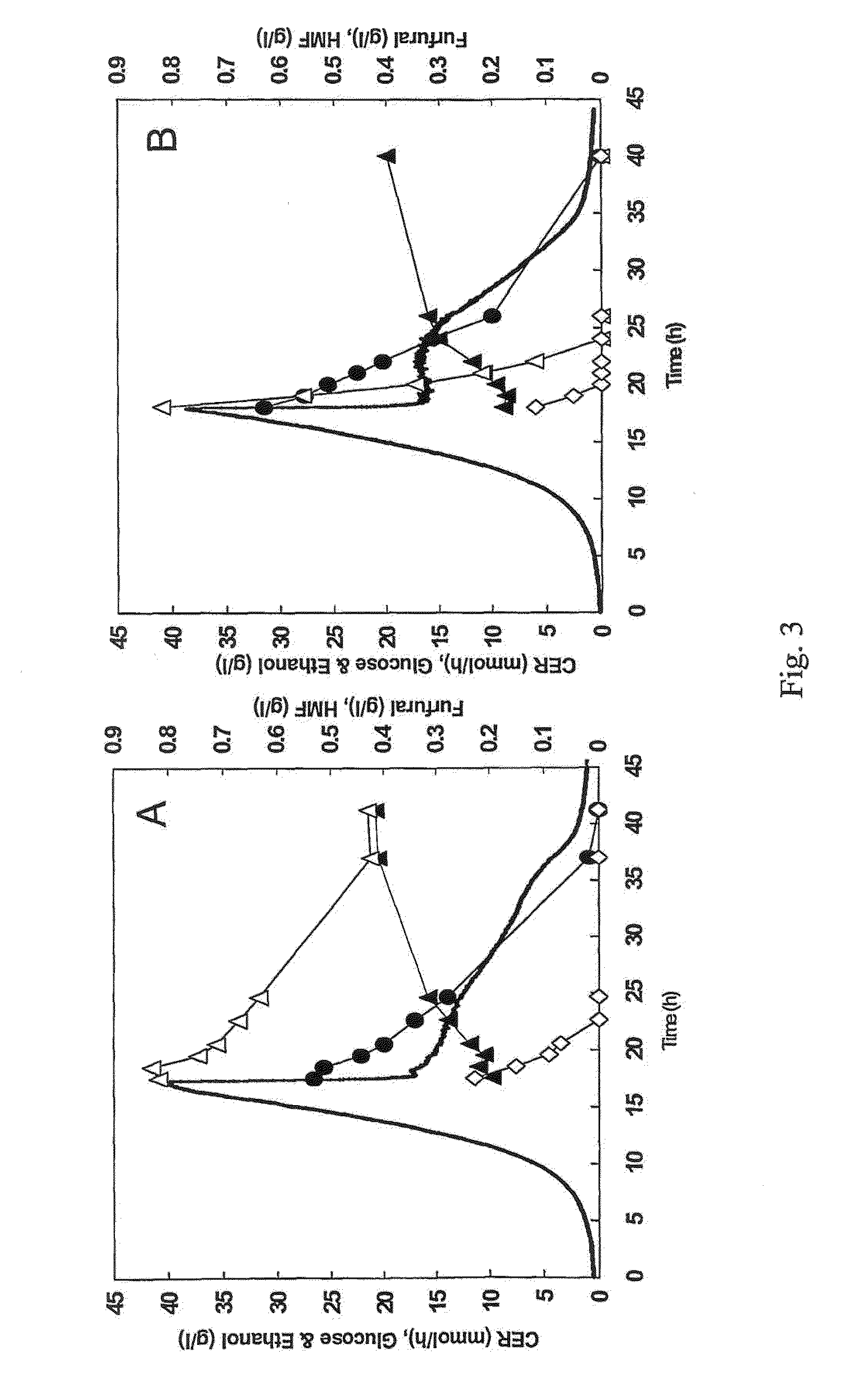
Figure 3
Abstract
Description
FIELD OF INVENTION
[0001] The invention relates to an isolated polypeptide having NADH dependent HMF reductase activity, wherein said polypeptide shows 80% homology to the amino acid sequence shown in SEQ ID NO:2 and which differs from SEQ ID NO:2 in that at least S117L and Y295 or S110 are substituted, a nucleotide sequence coding for said polypeptide, a vector comprising said polypeptide or nucleotide sequence, host comprising said nucleotide sequence or vector as well as the use of the polypeptide for the reduction of furan or carbonyl compounds in lignocellulosic material or in any furan or carbonyl containing material.BACKGROUND OF INVENTION
[0002] Bioethanol production from renewable feedstock by baker's yeast Saccharomyces cerevisiae has become an attractive alternative to fossil fuels. However, the availability of starch or sucrose based feedstock such as corn grain or sugar cane is expected to be insufficient to cover future worldwide needs for bioethanol (Gray et al., 2006. Bi...
Examples
example 1
Identification of NADH-Dependent HMF Reductase
Purification of NADH-Dependent HMF Reductase
[0054]The industrial strain TMB3000 (ATCC96581) (Lindén et al., 1992, Isolation and characterization of acetic acid-tolerant galactose-fermenting strains of Saccharomyces cerevisiae from a spent sulfite liquor fermentation plant. Applied Environmental Microbiology 58(5):1661-1669) was grown in rich medium containing 10 g / l yeast extract, 20 g / l peptone and 20 g / l glucose supplemented with 10% spruce hydrolysate (Nilvebrant et al., 2003, Limits for alkaline detoxification of dilute-acid lignocellulose hydrolysates. Applied Biochemistry Biotechnology. 105-108:615-628) adjusted to pH 5.5. The hydrolysate was centrifuged for 10 minutes at 5000 g and supernatant was injected through 2μ filter (Sarstedt, Nümbrecht, Germany) before addition to the autoclaved medium. Growth took place in 1 L shake flasks (non-baffled), containing 250mL medium at 200 rpm and 30° C. Inoculation from a 5 ml over-night pre...
example 2
In Vivo HMF Uptake with Strain Expressing NADH-Dependent Reductase
[0063]Overexpression in S. cerevisiae CEN.PK 113-5D
[0064]Plasmid YEplac-HXT-ADH1-mut encoding the mutated ADH1 gene (as described in example 1), as well as the corresponding empty plasmid YEplacHXT (Karhumaa et al., 2005, Investigation of limiting metabolic steps in the utilization of xylose by recombinant Saccharomyces cerevisiae using metabolic engineering. Yeast. 22(5):359-368) were used to transform S. cerevisiae CEN.PK 113-5D (SUC2, MAL2-8c, MEL, ura3), resulting in strains TMB3206 and TMB3280, respectively. As expected, NADH-dependent HMF reductase activity was only detected in the strain carrying the mutated ADH1 gene (data not shown).
Aerobic In Vivo HMF Reduction
[0065]Strains TMB3206 and TMB3280 were pre-grown overnight in 5 ml defined medium (Verduyn et al., 1992. Effect of benzoic acid on metabolic fluxes in yeasts: a continuous-culture study on the regulation of respiration and alcoholic fermentation. Yeast...
example 3
Site-Directed Mutagenesis on NADH-Dependent HMF Reductase
[0071]Plasmid YEplacHXT-ADH1-mut encoding the mutated ADH1 gene from TMB3000 (as described in example 1) as well as plasmid YEPlac-HXT encoding the native ADH1 gene from CEN.PK 113-5D (named YEplacHXT-ADH1-nat) were used for site directed mutagenesis in order to investigate the influence of various amino acid mutation on NADH-dependent furan reductase activity.
[0072]Site-directed mutagenesis was performed according to the following protocol: A two-step PCR was used for the generation of an ADH1 gene with the chosen amino-acid changes. Six primers were designed for reverse mutagenesis of the mutated ADH1 gene at position 110 (P110S), 117 (S117L) and 295 (C295Y) and four other primers were designed for the mutagenesis of the native ADH1 gene at position 110 (S110P) and 295 (Y295C) (Table 3). Two primers for the amplification of ADH1 gene (mutated or not) were also created: primer ADH1 sense (5′-GGGGGGATCCATGTCTATCCCAGAAACTC-3′),...