
Crimsonleaved maple suspension cell line for highly producing gallic acid
A technology of gallic acid and suspension culture cells, which is applied in the field of bioengineering, can solve the problems of difficulty in ensuring the quality and quantity of raw materials, waste of Acer japonica gene resources, and low content of gallic acid, and achieve low cost, short cycle and fast growth Effect
Inactive Publication Date: 2010-09-08
NORTHEAST FORESTRY UNIVERSITY +2
View PDF0 Cites 2 Cited by
- Summary
- Abstract
- Description
- Claims
- Application Information
AI Technical Summary
Problems solved by technology
This method causes a lot of waste and damage to the genetic resources of Acer japonica, and it is difficult to guarantee the quality and quantity of raw materials. In addition, the leaves are also limited by seasons. At the same time, the content of gallic acid in natural leaves is very low.
Method used
the structure of the environmentally friendly knitted fabric provided by the present invention; figure 2 Flow chart of the yarn wrapping machine for environmentally friendly knitted fabrics and storage devices; image 3 Is the parameter map of the yarn covering machine
View moreImage
Smart Image Click on the blue labels to locate them in the text.
Smart ImageViewing Examples

Examples
Experimental program
Comparison scheme
Effect test
example 1
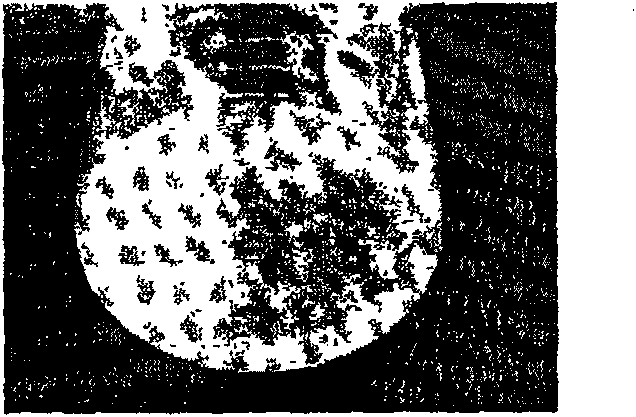
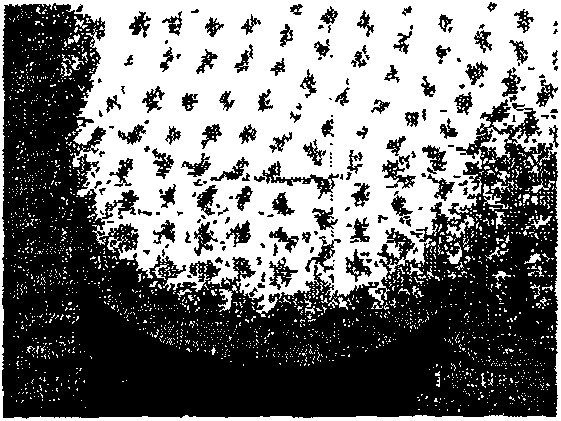
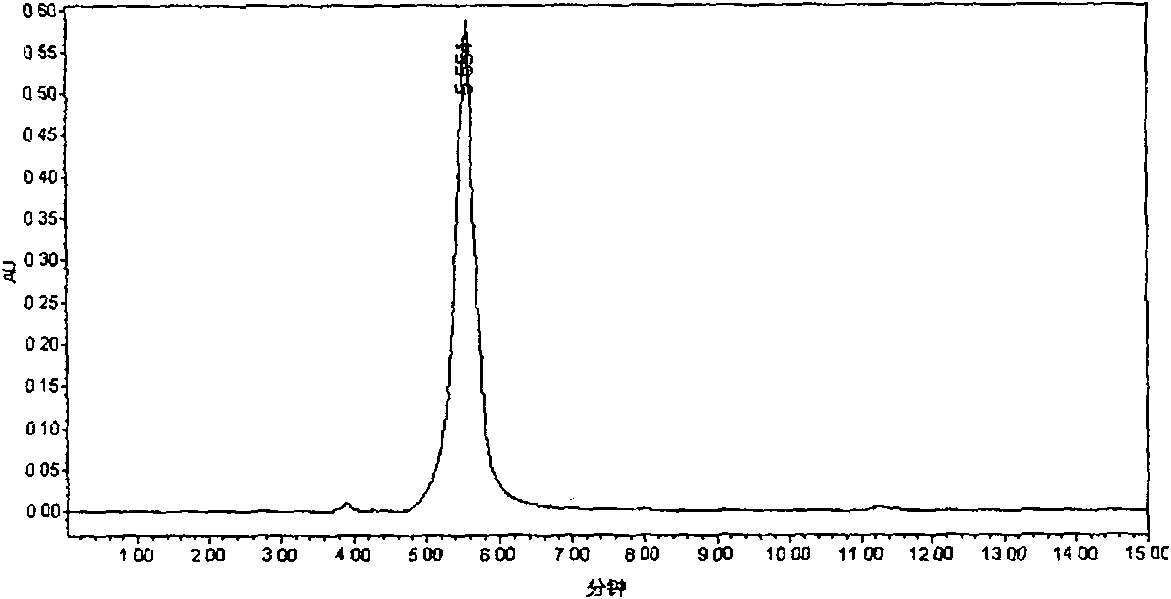
[0018] Example 1: Under aseptic conditions, take 20g / L of the callus of Acer truncatum shown in Figure 1 and add it to 50-100ml of 3WPM liquid medium. The hormones are TDZ0.004mg / L and 6-BA0.1mg / L, sucrose is 2%, and the pH is 5.8-6.0. After culturing under the above-mentioned culture conditions, the cell line as shown in Figure 2 was obtained. The result of collecting the cells was: fresh weight of 47.82g, dry weight of 2.23g, and gallic acid content of 0.229%.
[0019] Example 1 shows that suspension cells grow fast, have a short cycle, and have high gallic acid content.
the structure of the environmentally friendly knitted fabric provided by the present invention; figure 2 Flow chart of the yarn wrapping machine for environmentally friendly knitted fabrics and storage devices; image 3 Is the parameter map of the yarn covering machine
Login to View More PUM
 Login to View More
 Abstract
The invention provides a suspension-cultured cell of Acer ginnala Maxim for producing gallic acid, which is characterized in that a proper amount of callus of Acer ginnala Maxim is inoculated in a solid cultivation medium containing WPM+TDZ 0.002-0.01 mg / L+6-BA 0.05-0.15 mg / L for successive transfer culture for 15 to 20 days to obtain a first successive generation; a well-growing callus is transformed into a triple WPM liquid medium containing a large amount of elements and having a pH value of 5.8 to 6.0, in the presence of a hormone including TDZ 0.002 to 0.010 mg / L and 6-BA 0.05 to 0.15 mg / L and 2% to 3% sugar to obtain the fresh weight of an inoculum size of 20 to 40 g / L; and the culture conditions comprises the temperature of 23 to 25 DEG C, the rotation speed of 110 to 130 rpm, the illumination time of 8 to 10 h / d, the illumination intensity of 1,400 to 1,700 Lx, and the culture period of the first successive generation of 7 to 15 days. The cells are collected after one period of 20 to 30 days, with the fresh weight up to 478.2 g / L and the dry weight up to 22.3 g / L, wherein the content of gallic acid is up to 2.29%, the output of gallic acid is 0.51g / L, and the gallic acid with the amount of 6.1227 g / L can be collected in one year. The invention can improve the output of suspension of gallic acid in Acer ginnala Maxim by cell engineering method for the first time, which solves the raw material problem for the production of gallic acid. The invention has the advantages of easy operation, short cycle, low cost as well as greatly saved labor force and material resource,improved labor productivity and protection of environment and Acer ginnala Maxim resources.
Description
Technical field [0001] The invention relates to a gallic acid-producing Acer squamosa suspension culture cell, in particular, it uses plant cell culture technology as a means to culture Acer squash suspension cell in a cell culture device, and separates and produces gallic in the suspension cell acid. The invention belongs to the field of bioengineering. Background technique [0002] Acer ginnala Maxim (Acer ginnala Maxim) belongs to Acer ginnala family, genus Acer; it is a small deciduous tree or shrub with a plant height of 8-10 meters. It is of great ornamental value and is a landscaping and ornamental tree species. Acer serrata is mainly distributed in the mountains of Northeast my country, Inner Mongolia and North China. It also grows in the Yangtze River valley. In Heilongjiang Province, it is mainly distributed in mountainous areas such as Xiaoxing'anling, Wandashan and Zhangguangcailing. It is resistant to cold and wind and snow, so it is a rare occurrence. Greening tre...
Claims
the structure of the environmentally friendly knitted fabric provided by the present invention; figure 2 Flow chart of the yarn wrapping machine for environmentally friendly knitted fabrics and storage devices; image 3 Is the parameter map of the yarn covering machine
Login to View More Application Information
Patent Timeline
 Login to View More
 Patent Type & AuthorityPatents(China)
IPC IPC(8): C12N5/04C12P7/42
Inventor詹亚光董杰齐凤慧曾凡锁范桂枝由香玲李淑娟
OwnerNORTHEAST FORESTRY UNIVERSITY