

Low temperature superconducting assembly with low joint resistance for high temperature superconducting current lead cold end
A current lead, low-temperature superconducting technology, applied in superconducting magnets/coils, electrical components, connecting contact materials, etc., can solve problems such as easy leakage and difficult to repair
- Summary
- Abstract
- Description
- Claims
- Application Information
AI Technical Summary
Problems solved by technology
Method used
Image

Examples
Embodiment Construction
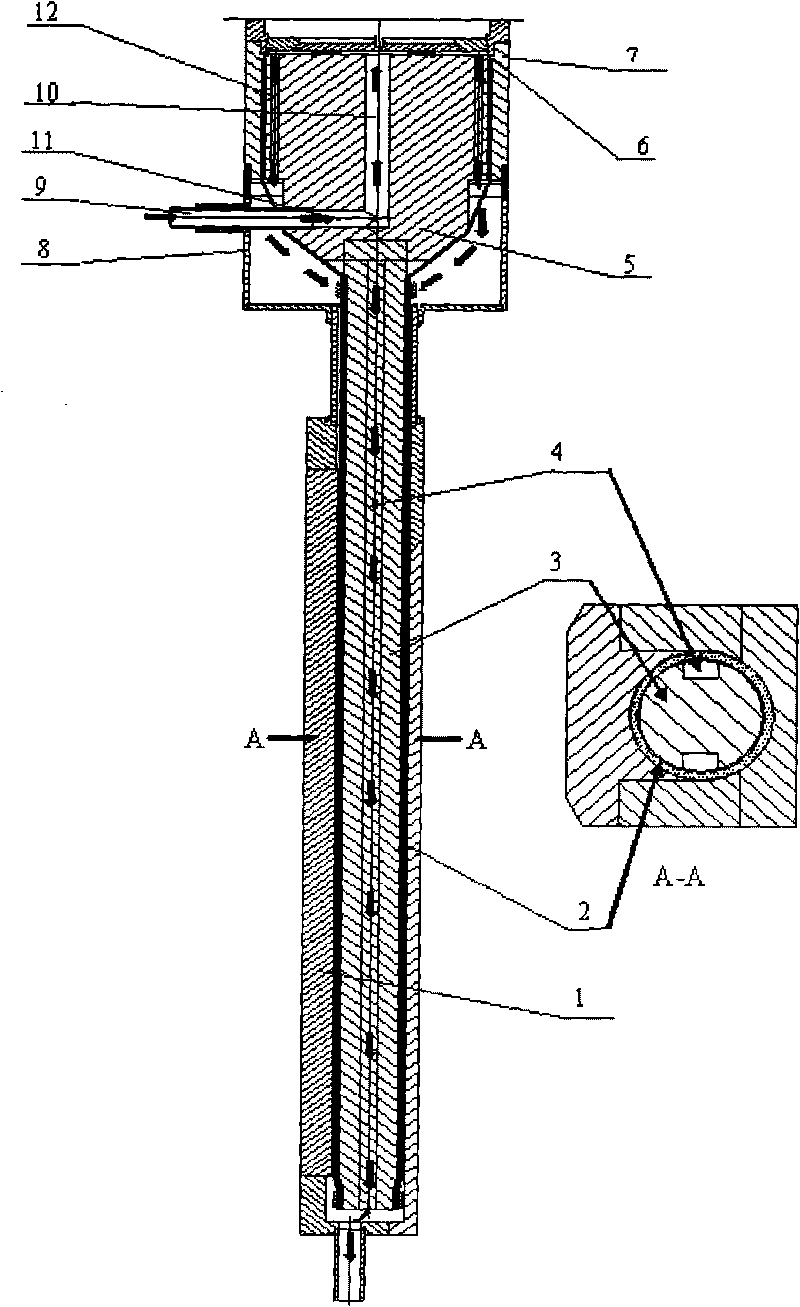
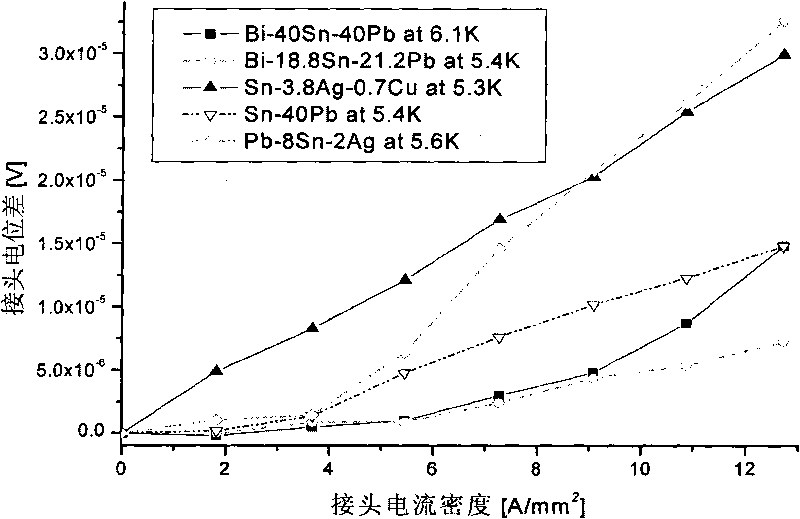
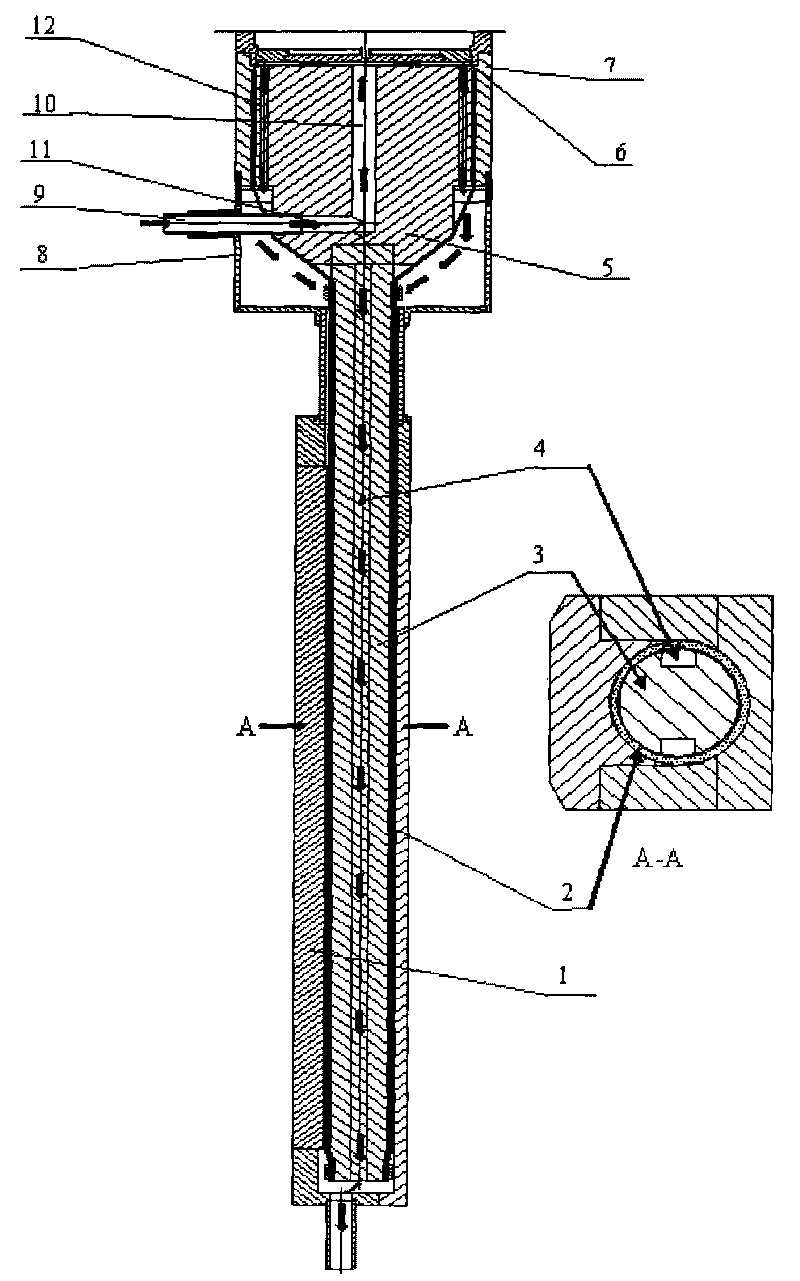
[0032] A low-temperature superconducting component used for the cold end of high-temperature superconducting extra-large current leads and low joint resistance, specifically a joint box 1, the joint box 1 is composed of a base and a cover plate, and the base and cover plate are made of copper plate and stainless steel The board is integrated by explosive welding, and there is a semicircular groove on the copper layer of the base and the cover; the cross-sectional area is 1×2.7mm 2 Rectangular niobium-titanium superconducting wire bundle 2, the number is 90, the spiral narrow side is wrapped around the copper rod 3, and the side wall of the copper rod 3 has a groove 4; the base of the rectangular niobium-titanium superconducting wire 2 and the joint box 1 is connected with The surface of the copper plate layer of the cover plate is hot-plated with Sn-40Pb solder in advance, and no flux remains, and then the rectangular niobium-titanium superconducting wire bundle 2 and the coppe...
PUM
| Property | Measurement | Unit |
|---|---|---|
| current | aaaaa | aaaaa |
Abstract
Description
Claims
Application Information
 Login to View More