
Improvements in and relating to reconfigurable antenna
A technology for antennas and antenna elements, which is applied in the direction of feeding and resonant antennas in the middle position between antennas and antenna endpoints, and can solve problems such as low intermodulation products
Patent Information
- Authority / Receiving Office
- CN · China
- Patent Type
- Applications(China)
- Current Assignee / Owner
- Publication Date
- 2010-06-16
Smart Images
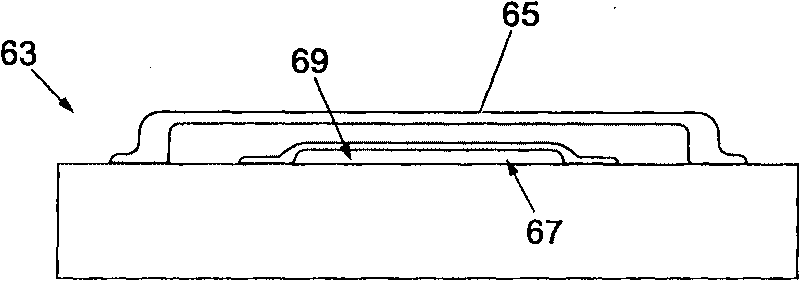
Figure 1 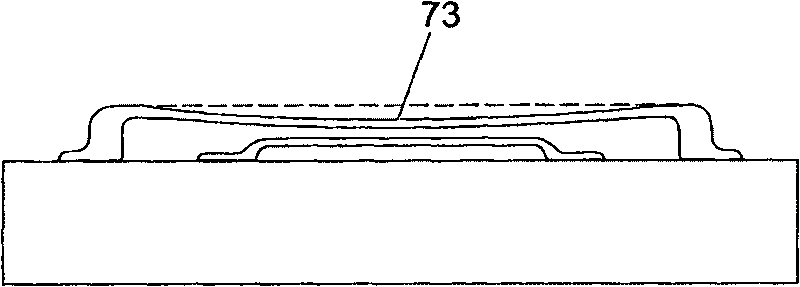
Figure 2 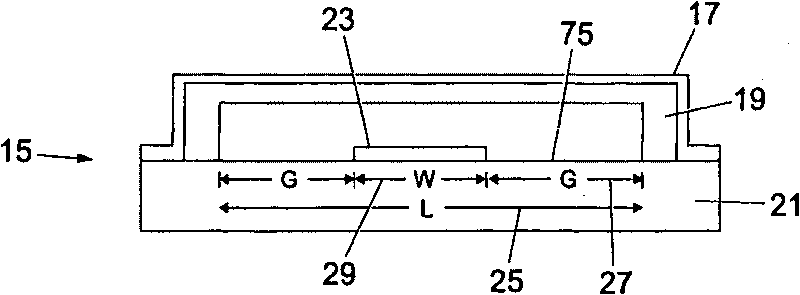
Figure 3
Abstract
Description
technical field
[0001] The present invention relates to reconfigurable antennas for use in wireless communications incorporating microelectromechanical (MEMS) components including novel switches. Background technique
[0002] Wireless communication systems that can dynamically adapt to changing propagation characteristics of the environment will be the key to next-generation communication applications.
[0003] An antenna is an extremely important component in any wireless device because it transmits and receives radio waves. Antennas are used as matching devices from transmission lines to free space and vice versa. An ideal antenna radiates all energy entering from a transmission line feeding the antenna from one or more predetermined directions. The performance of the antenna represents the performance of most wireless devices, so the performance of the antenna is a critical part of the system.
[0004] Antenna configuration determines antenna characteristics including ...
Examples
Embodiment Construction
[0122] image 3 An embodiment of the device according to the invention is shown. Device 15 includes an uppermost metal layer 17 extending across the bridge structure formed by polymer layer 19 . The polymer layer includes polymonochloroparaxylylene (parylene-C).
[0123] The space below the polymer layer 19 accommodates the coplanar waveguide 23 and the second plate 75 on the substrate 21 . The total support distance L is provided by the distance W and the distance G of the width of the coplanar waveguide, where the two distances G are equal and provide the remaining distance between the edge of the coplanar waveguide and the vertical portion of the polymer 19 .
[0124] Parylene is commonly used as a waterproof material in MEMS fabrication. It is a plastic like a polymer with a very low spring constant (ie high elasticity). Dichloro-p-xylylene dimer is used in this embodiment of the invention because it contains suitable softness, dielectric strength, and other properties...